A simple stop at a marina gas station should be a non-event, but for many boaters, it's where the day can go sideways. What starts as a routine fill-up can quickly turn into a messy, stressful, and expensive ordeal, all because of the hidden risks that come with fueling on the water.
The High Stakes of Fueling Your Boat
When you fill up your car, it’s second nature. The pump clicks off automatically when the tank is full, and you're good to go. But at the fuel dock, it’s a whole different story. There's no automatic shutoff, and you can’t see the tank, so you're left guessing how much fuel you actually need.
This completely manual process is a recipe for disaster. One moment of distraction or a slight miscalculation can send fuel gushing from the vent, spewing all over your deck and, worse, straight into the water. This isn’t just a minor inconvenience; it's a major headache for boat owners and a serious threat to the marine environment.
The Problem Starts with Human Error
At its core, the issue is that a simple mistake during a routine task is one of the biggest causes of pollution and boat damage. Unlike a spill on a concrete gas station lot, fuel on the water spreads in an instant, creating an ecological nightmare and a financial mess for the boat owner.
The data backs this up. Operational mistakes are behind most preventable accidents on the water. A detailed report from the European Maritime Safety Agency revealed that between 2014 and 2023, human factors played a role in a staggering 80.1% of all marine accidents. It just goes to show how often a simple slip-up at the fuel dock can spiral into something much bigger. You can dig into the numbers yourself in the full EMSA incident overview.
The anxiety is real. Every boater knows that feeling—listening for the gurgle from the fuel vent, knowing that a split-second delay means a messy, damaging spill.
This shared stress highlights a fundamental flaw in how we've always fueled boats. Even the most careful boater is at risk of an overfill. The fallout from these spills is significant, hitting you in several ways:
- Financial Costs: Spills can lead to hefty fines, mandated cleanup costs, and expensive repairs to your boat’s finish. Fuel eats away at gelcoat, rubber seals, and upholstery in no time.
- Environmental Damage: A single gallon of spilled fuel can contaminate a huge area of water, poisoning aquatic life and damaging sensitive shoreline habitats.
- Safety Hazards: Spilled fuel makes docks and decks incredibly slippery, creating a serious risk of falls. And let's not forget the fire hazard posed by fuel vapors.
The bottom line is that the traditional way of fueling at a gas station for boats is outdated and fundamentally risky. It puts all the pressure on you to prevent a spill, setting the stage for the very accidents we're here to help you solve.
Comparing Your Boat Fueling Options
When it's time to fuel up, every boater has to make a call. This isn't just about topping off the tank; it's a constant juggle between convenience, cost, and keeping fuel out of the water. Knowing the real-world pros and cons of each method is key to a safer, less stressful day on the boat.
The most familiar option is, of course, the gas station boat dock at your local marina. It's the standard for a reason—the fuel is right there, waiting for you on the water. You just pull alongside, tie off, and grab the pump.
But as we've covered, that incredible convenience comes with a major catch: the constant risk of spills and overfills. Without a reliable auto-shutoff, it’s all on you to guess when the tank is getting full, and a moment's distraction can lead to a costly, messy mistake.
The Alternatives to Marina Fueling
For boaters who’d rather skip the guesswork at the dock, a couple of other methods are pretty common. Each one, however, comes with its own unique set of headaches.
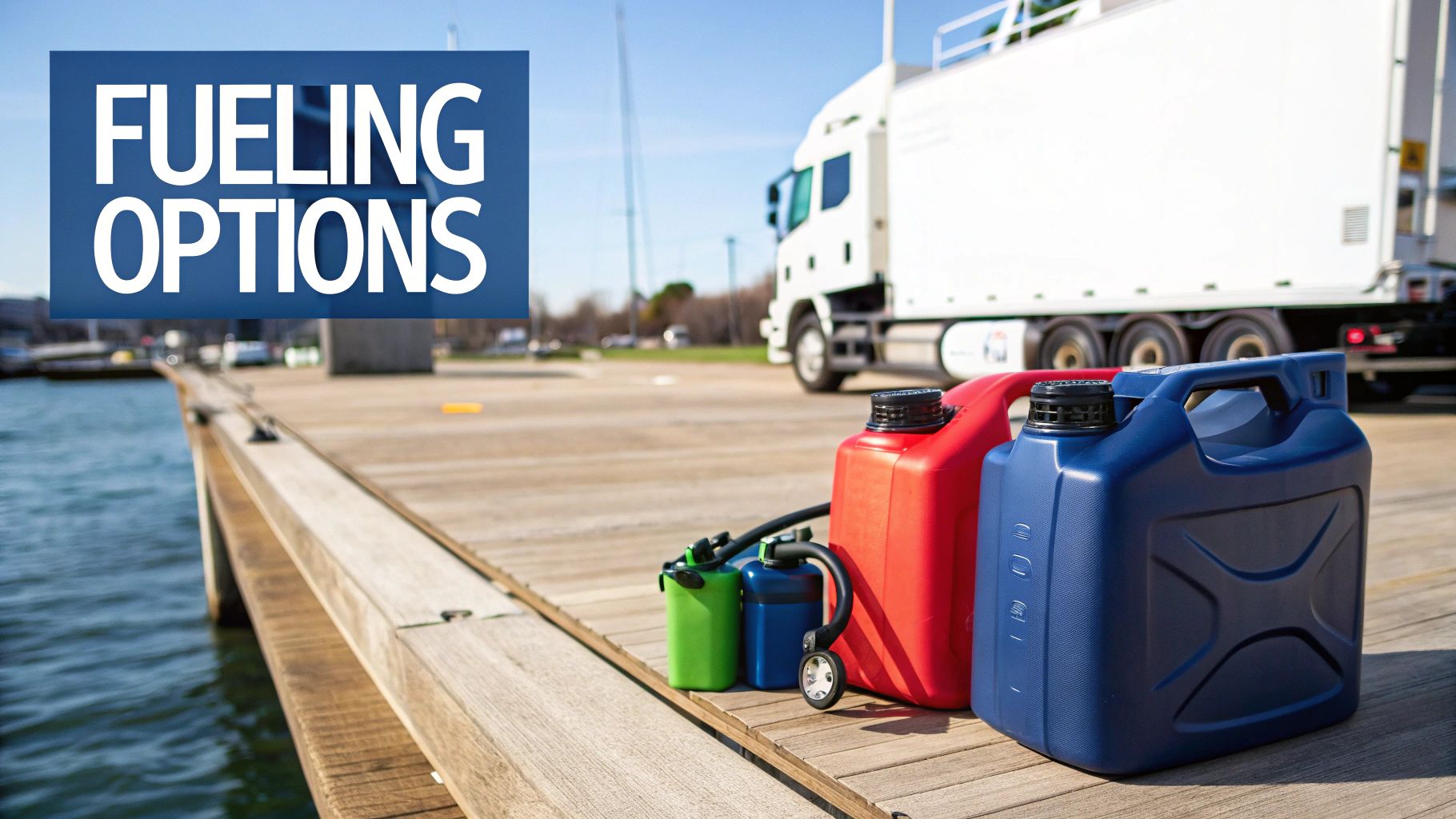
The most hands-on approach is lugging portable jerry cans back and forth. This means filling up a small army of fuel containers at a roadside gas station, then carefully hauling them down to the dock and onto your boat. While you might save a few bucks per gallon, you’re trading money for manual labor and risk.
- Physical Strain: Let’s be honest, it’s hard work. A single 5-gallon can of gas weighs over 30 pounds, and carrying that much sloshing weight across a wobbly dock is an accident waiting to happen.
- Increased Spill Potential: Every time you tip a heavy can to pour fuel into your boat’s small intake, you create another chance for a spill. It’s a delicate balancing act.
- Time-Consuming: This whole process chews up a ton of time you could be spending cruising. The drive to the station, the filling, the hauling—it all adds up.
Another route is hiring a dedicated fuel delivery service. These companies bring a fuel truck right to your slip, offering a premium, worry-free experience. It’s easily the most convenient and often the safest manual method since the pros are handling it. The main drawback? It’s usually the most expensive option and requires you to schedule it, which kills any chance of a spontaneous trip. You can dive deeper into the different types of marine fueling stations in our detailed guide.
Comparing Boat Fueling Methods
To make the decision a little easier, it helps to see how these options stack up against each other. Each method forces a trade-off between ease, price, and the potential for a spill.
| Fueling Method | Convenience | Typical Cost | Spill Risk |
|---|---|---|---|
| Marina Gas Station Dock | High | High | Very High |
| Portable Jerry Cans | Low | Low | Moderate |
| Fuel Delivery Service | Very High | Very High | Low |
This quick comparison makes one thing crystal clear: boaters are often stuck between a rock and a hard place. You can either choose the on-the-water convenience of a gas station boat and accept the high risk of a spill, or opt for a safer but far less practical alternative.
Key Takeaway: The marina fuel dock remains the most popular choice due to its unmatched on-water convenience, yet it carries the highest inherent risk of accidental overfills.
This is precisely the problem. Finding a way to make fueling at the marina safer isn't just a nice-to-have feature—it’s an absolute necessity for protecting your investment, your wallet, and the waters we all love.
The True Cost of a Small Fuel Spill
A few shimmering drops of fuel on the water's surface might not seem like a big deal, but that tiny spill has a real cost—one that's immediate, expensive, and surprisingly far-reaching. It’s a classic mishap at a gas station boat dock, but the consequences spread out quickly, hitting your wallet just as hard as the marine ecosystem you love.
The environmental price is paid the second that fuel hits the water. Gasoline and diesel are toxic, and they don’t just magically disappear. In fact, a single gallon of spilled fuel can contaminate up to a million gallons of water, creating a toxic sheen that starves aquatic life of oxygen. It poisons everything from the smallest organisms at the bottom of the food chain to the fish you see every day, and it can coat a seabird's feathers, making it impossible for them to fly or regulate their body temperature.
More Than Just an Environmental Issue
Beyond the obvious ecological harm, a fuel spill has a direct financial impact. Regulators don't mess around with this stuff, and pleading ignorance won't get you anywhere. If there's a visible sheen on the water tracing back to your boat, you can expect some unwanted attention and serious penalties.
There’s an old saying on the water for a reason: "If you can see it, you can be fined for it." Even a minor overfill can put you in violation of laws like the Clean Water Act, and those fines can easily climb into the thousands of dollars, even for a recreational boater.
The financial pain doesn't end there. You're also on the hook for the cleanup, and that almost always means calling in a professional marine cleanup service. These crews are specialists and their services don't come cheap, turning a simple fueling mistake into a massive, unexpected bill. To get a better idea of what's involved, check out our expert guide on fuel spill cleanup procedures and why a rapid response is critical.
The Hidden Damage to Your Vessel
Finally, let's not forget what that spilled fuel is doing to your boat. Gasoline is a powerful solvent, and it goes to work immediately on some of your vessel’s most sensitive and expensive parts.
- Gelcoat and Decals: Fuel will stain and begin to eat away at your boat's protective gelcoat, leaving behind dull patches that are a pain to repair. It also dissolves the adhesive on vinyl graphics and decals, causing them to bubble and peel.
- Seals and Gaskets: Any rubber or plastic components, like window seals and gaskets, can become brittle and crack after being exposed to fuel, which is a perfect recipe for future leaks.
- Upholstery: Spilled fuel can permanently discolor and degrade marine-grade vinyl and fabrics, ruining costly cushions and seating in an instant.
While massive oil tanker spills make the national news, it’s the thousands of smaller, everyday spills from simple fueling errors that do persistent damage to our local waterways. As global spill data statistics on itopf.org show, these frequent, small-scale incidents are a huge collective problem. Preventing spills isn't just about being a good environmental steward—it's about protecting your financial investment and the boat you've worked so hard for.
Essential Safety Steps for Marina Fueling
Fueling up your boat should be a simple, routine part of any day on the water. But pulling up to a gas station boat or marina fuel dock involves more than just sticking a nozzle in the tank. It’s a process that demands your full attention to keep everyone safe and protect the environment. Get it right, and it's a quick, incident-free stop.
Before you even think about grabbing the fuel nozzle, your first job is to hunt down and kill every possible source of a spark. Gasoline vapors are sneaky; they're heavier than air and can pool in your bilge or other low spots, just waiting for something to set them off. It only takes one tiny spark.
That means everything gets shut down. Cut the engines, kill the generator, and turn off all the electronics—yes, even the cabin lights, fans, and stereo. Make sure any open flames like a galley stove are out, and tell everyone to put out their cigarettes.
Securing Your Vessel and Preparing for Fueling
With all potential ignition sources eliminated, it’s time to make sure your boat isn't going anywhere. Tie it up securely to the fuel dock using proper mooring lines. A good set of bow, stern, and spring lines will keep the boat snug against the dock. You don't want a sudden shift to yank the nozzle out of the fill pipe, which is a surefire way to cause a big spill.
Once you’re tied up, have anyone not helping with the fueling step off onto the dock. This keeps them out of harm's way and gives you clear, uncluttered space to work. Now, go around and close up all the hatches, windows, and portholes. This simple step prevents any stray fuel vapors from getting trapped inside your boat.
You're finally ready to fuel. Run through this quick checklist every single time to stay safe:
- Check the Fuel Type: It sounds obvious, but always double-check you’re grabbing the right nozzle. Putting diesel in a gas engine or vice-versa is a quick way to ruin your day and your engine.
- Keep the Nozzle Grounded: Make sure the metal nozzle stays in direct contact with your boat's metal fill pipe the entire time you're fueling. This simple trick grounds the connection and prevents a static spark from building up.
- Use an Absorbent Pad: Before you start, wrap an absorbent pad or a "fuel bib" around the deck fill. It'll catch any drips that escape when you pull the nozzle out, keeping your deck clean and fuel out of the water.
Understanding Key Regulations and Best Practices
One of the biggest rules to know is the "no-sheen" regulation from the Clean Water Act. It’s simple: if a spill from your boat leaves that rainbow-like sheen on the water, you're breaking the law and could face some hefty fines. This is exactly why stopping even the smallest drips is so important.
Crucial Takeaway: The real goal isn't just avoiding a massive spill—it's preventing any fuel from hitting the water. Being a responsible boater means leaving the water as clean as you found it, and that commitment starts right here at the fuel dock.
Beyond your actions at the pump, keeping your boat's fuel system in top shape is your best defense against leaks. This includes things like ensuring comprehensive Boat Safety Scheme (BSS) compliance for your entire setup.
The chart below shows how quickly the costs of a fuel spill can add up.
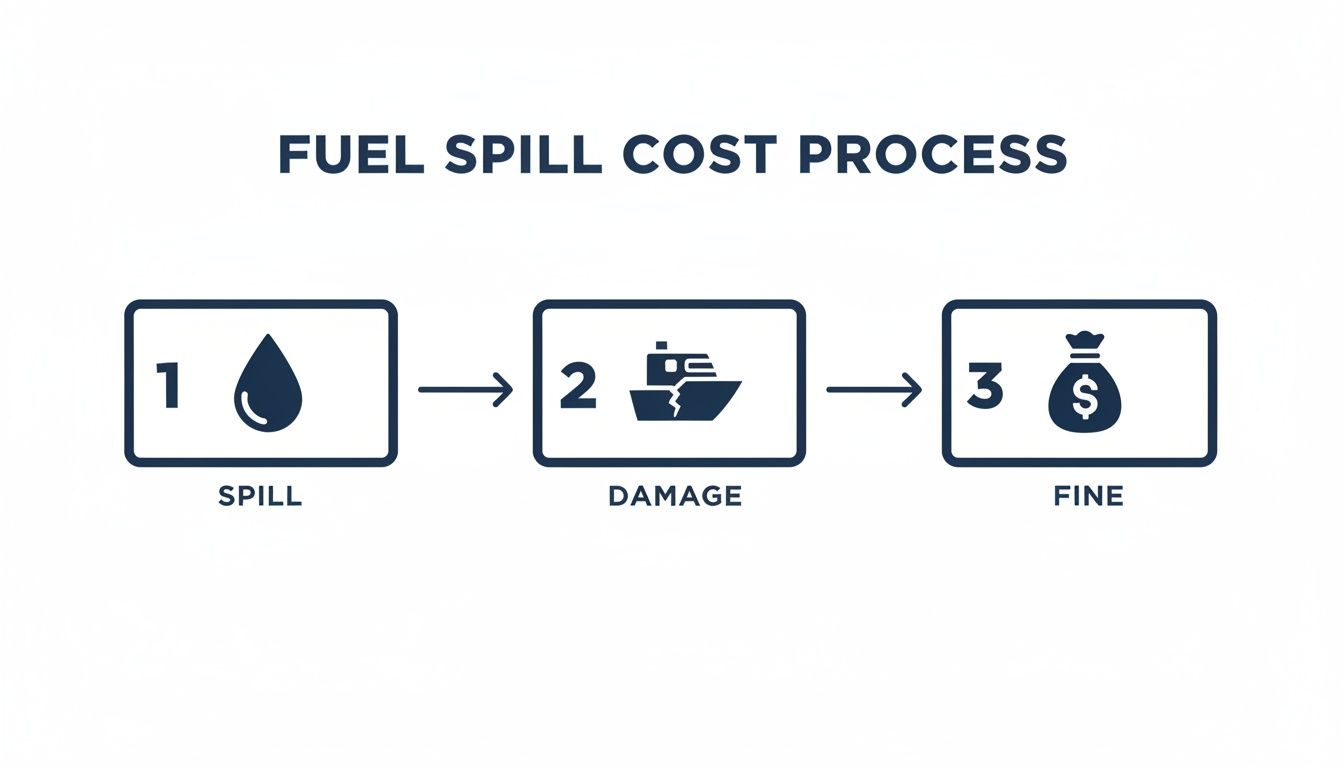
As you can see, a single spill can lead to a painful combination of boat damage and financial penalties. The frustrating part is that even if you follow every safety step perfectly, the manual nature of fueling means human error or a faulty pump can still cause an overfill. This is the exact problem that modern fueling solutions are designed to solve once and for all.
So, How Does CLiX Actually Stop Spills Automatically?
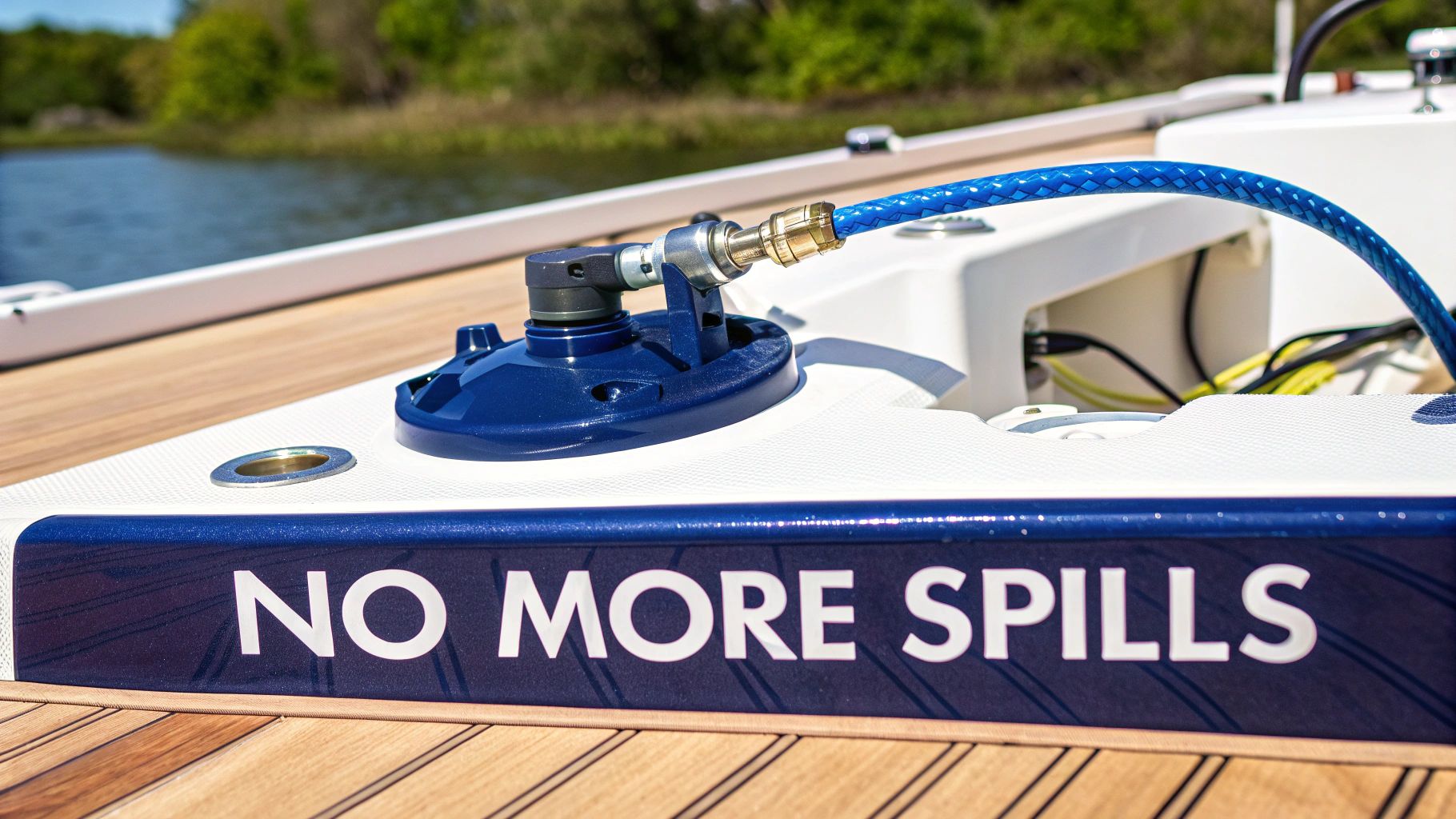
The anxiety of fueling up at a gas station boat dock boils down to a single, frustrating problem: you have to guess when your tank is full. No matter how careful you are, human error is always a factor. One quick glance away is all it takes to cause a messy, expensive, and polluting fuel spill.
But what if you could eliminate the guesswork entirely?
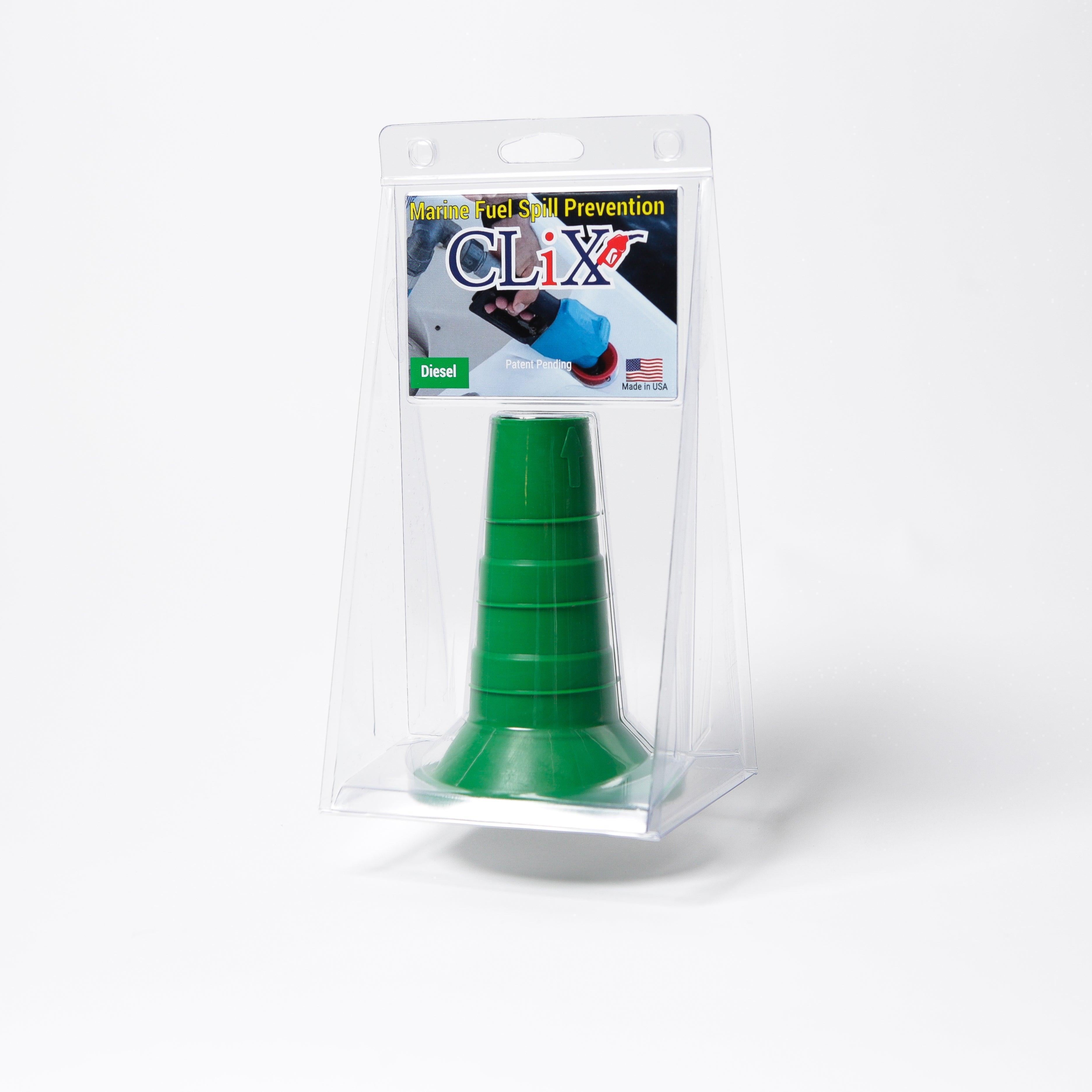
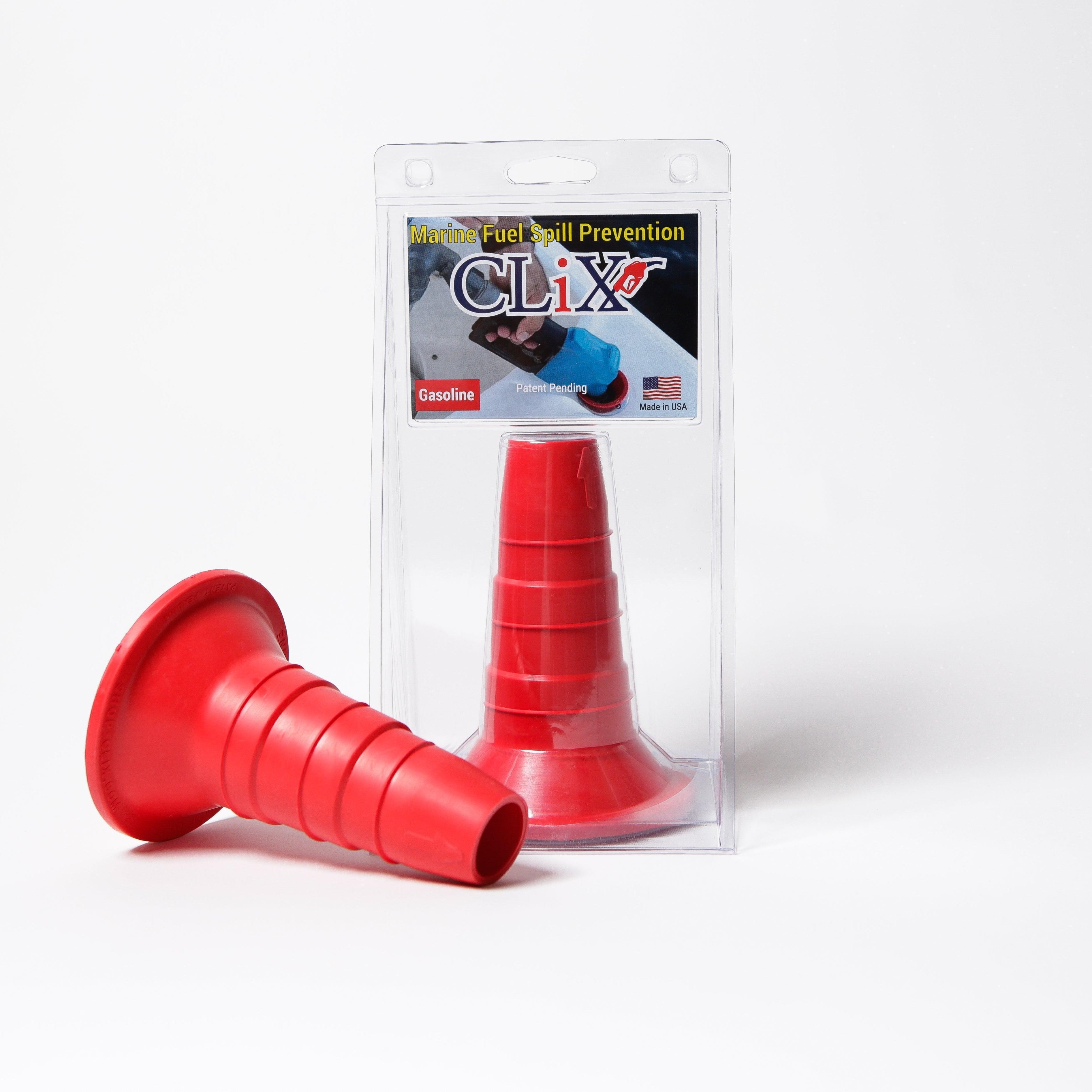
Think about the gas pump at your local land-based station. You stick the nozzle in, lock the handle, and it just knows when to click off. That simple, reliable convenience has been painfully absent from the marine world—until now. CLiX Fueling Solutions was designed specifically to fill this gap, bringing that same automatic shut-off and peace of mind to your boat.
The Simple Mechanics Behind the Magic
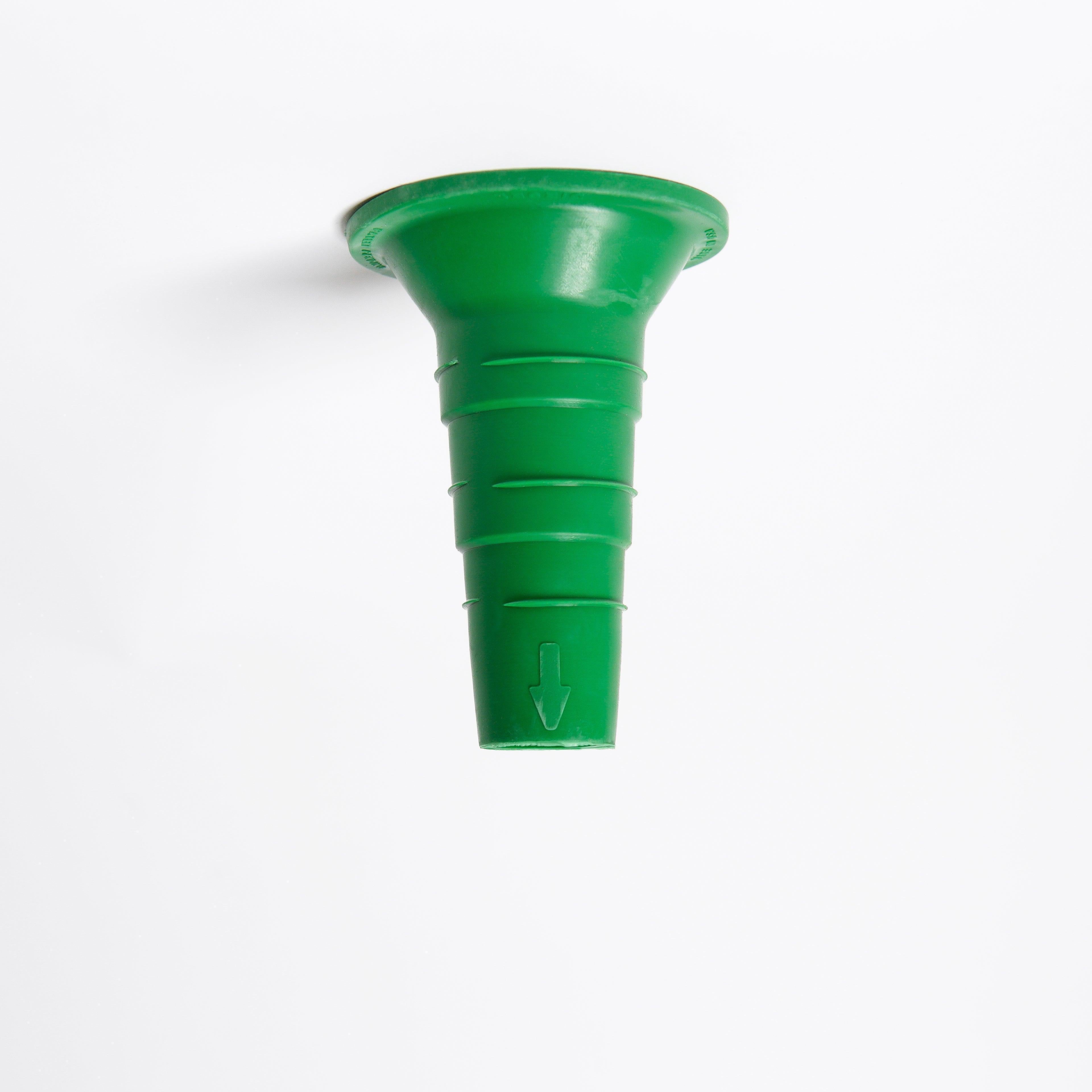
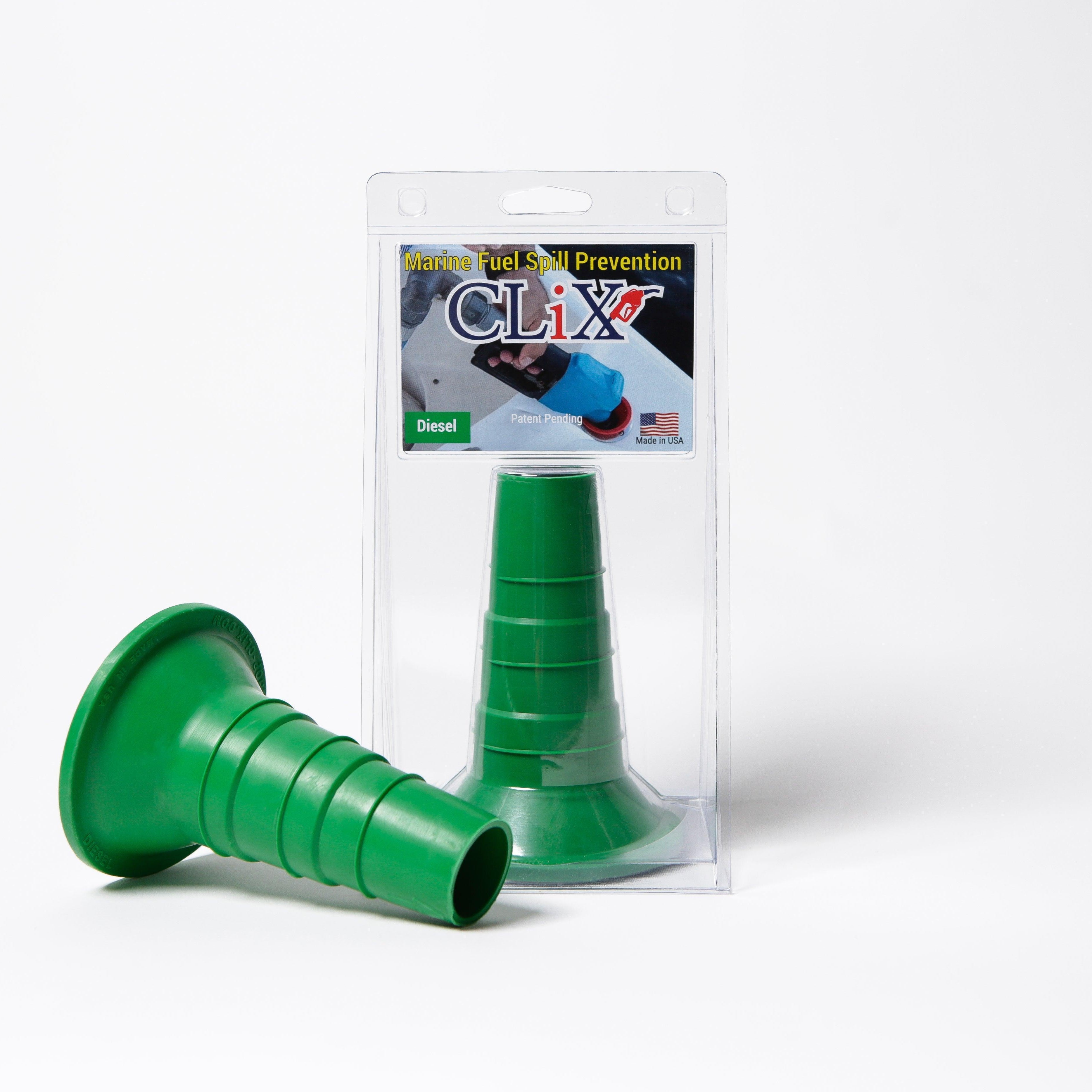
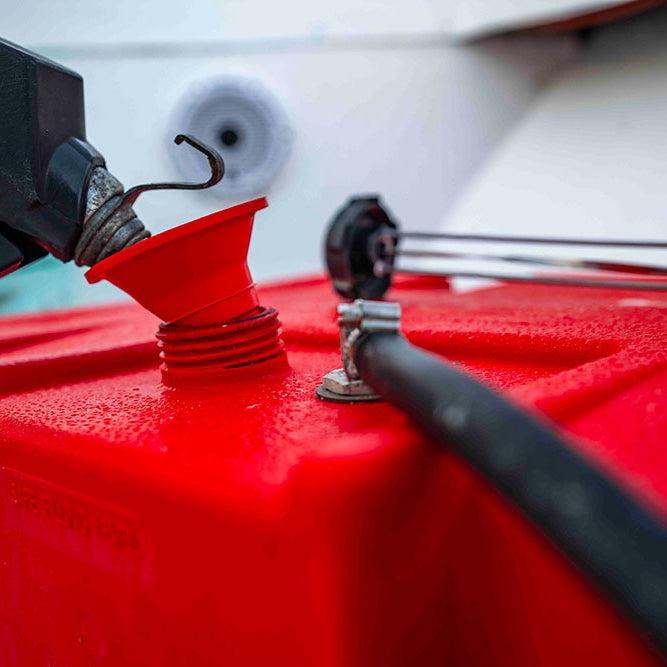
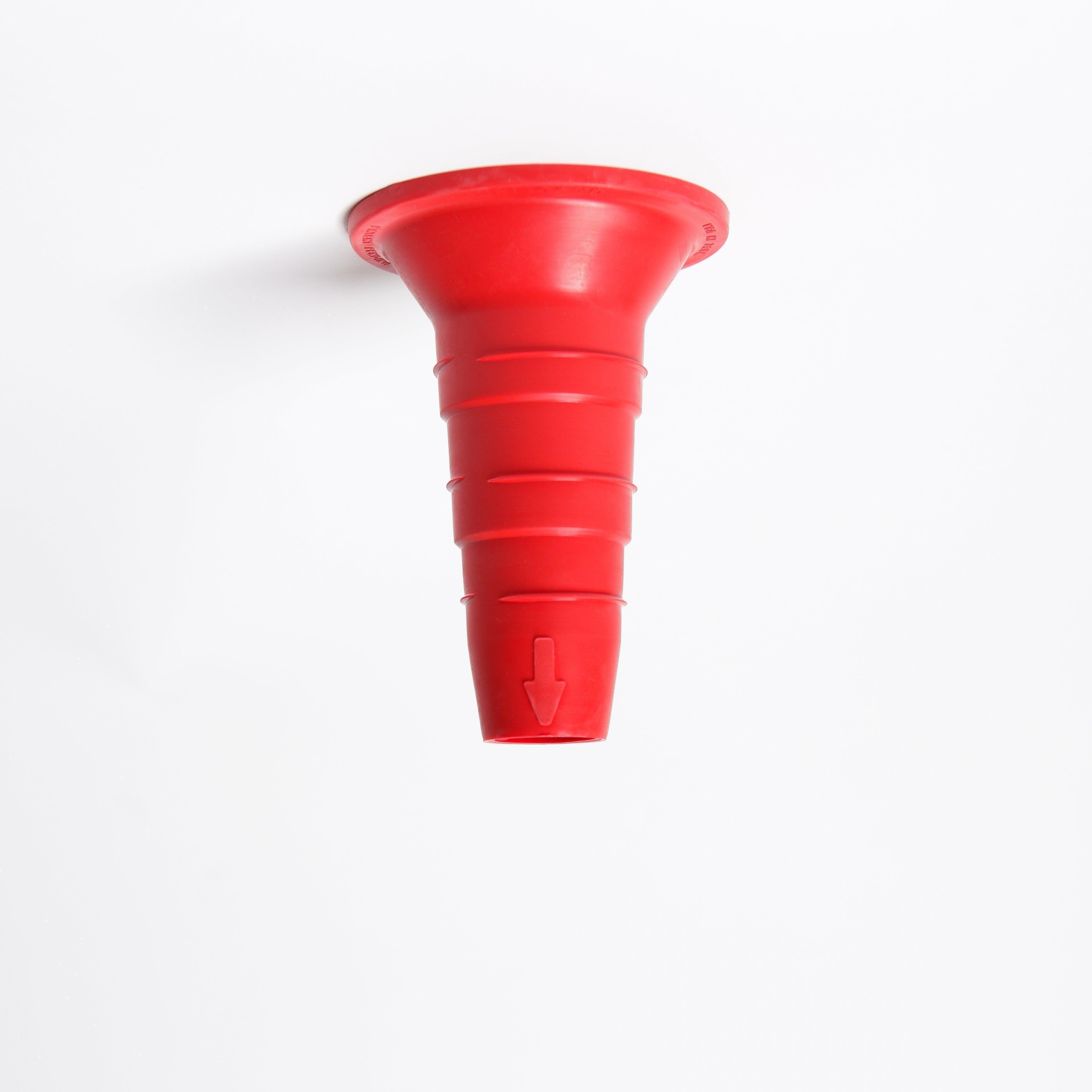
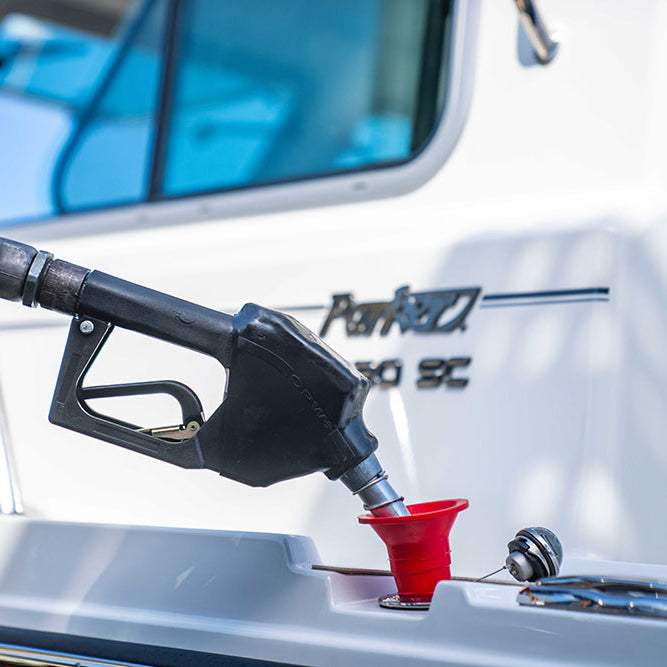
The CLiX system isn't about fancy electronics or complicated wiring. It works because of a simple yet brilliant mechanical principle, backed by a patented design that physically stops the fuel at precisely the right moment. When you connect CLiX, you create a perfect, sealed connection between the marina’s fuel nozzle and your boat’s fuel inlet.
As you pump fuel into the tank, the air inside needs a way out. The CLiX device is engineered to let that air vent just like normal. But the second your tank is full and fuel—not air—starts to back up into the fill pipe, the patented mechanism instantly creates back pressure.
That pressure signal travels right back to the fuel nozzle, triggering its automatic shut-off. It’s the exact same way it works for your car. The whole process is immediate and completely reliable, making the dreaded "fuel geyser" from the vent a thing of the past. You no longer have to listen for gurgling sounds or have a spotter watch the vent; CLiX handles the shut-off for you, every time.
Built Tough for the Marine World
Any piece of gear designed for a boat has to be tough enough to handle the harsh marine environment. CLiX is proudly made in the USA from robust, durable materials that can stand up to saltwater, harsh sunlight, and the bumps and scrapes of regular use.
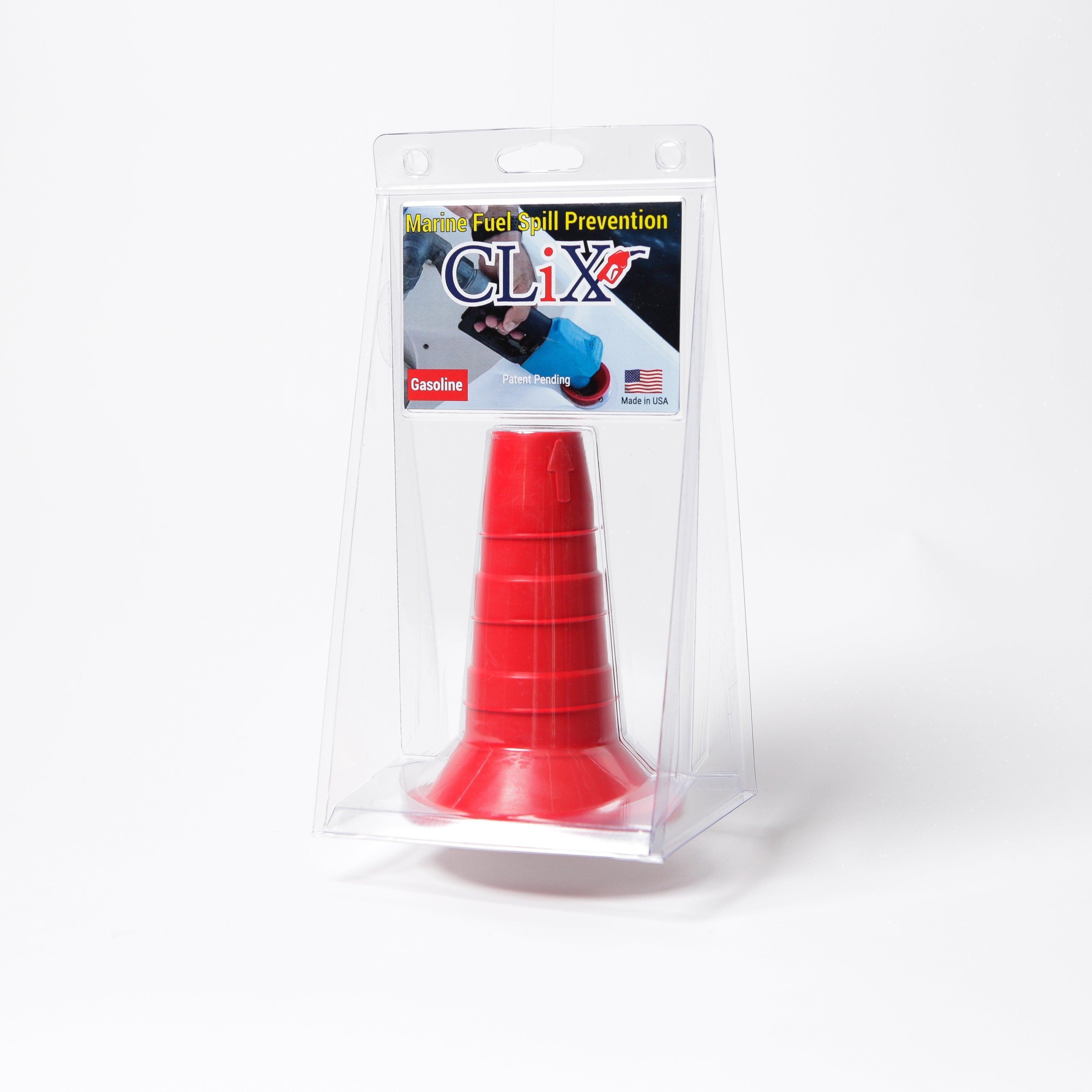
To make sure it works for everyone, the system is available in specific models to match the different nozzles you'll find at a gas station boat dock.
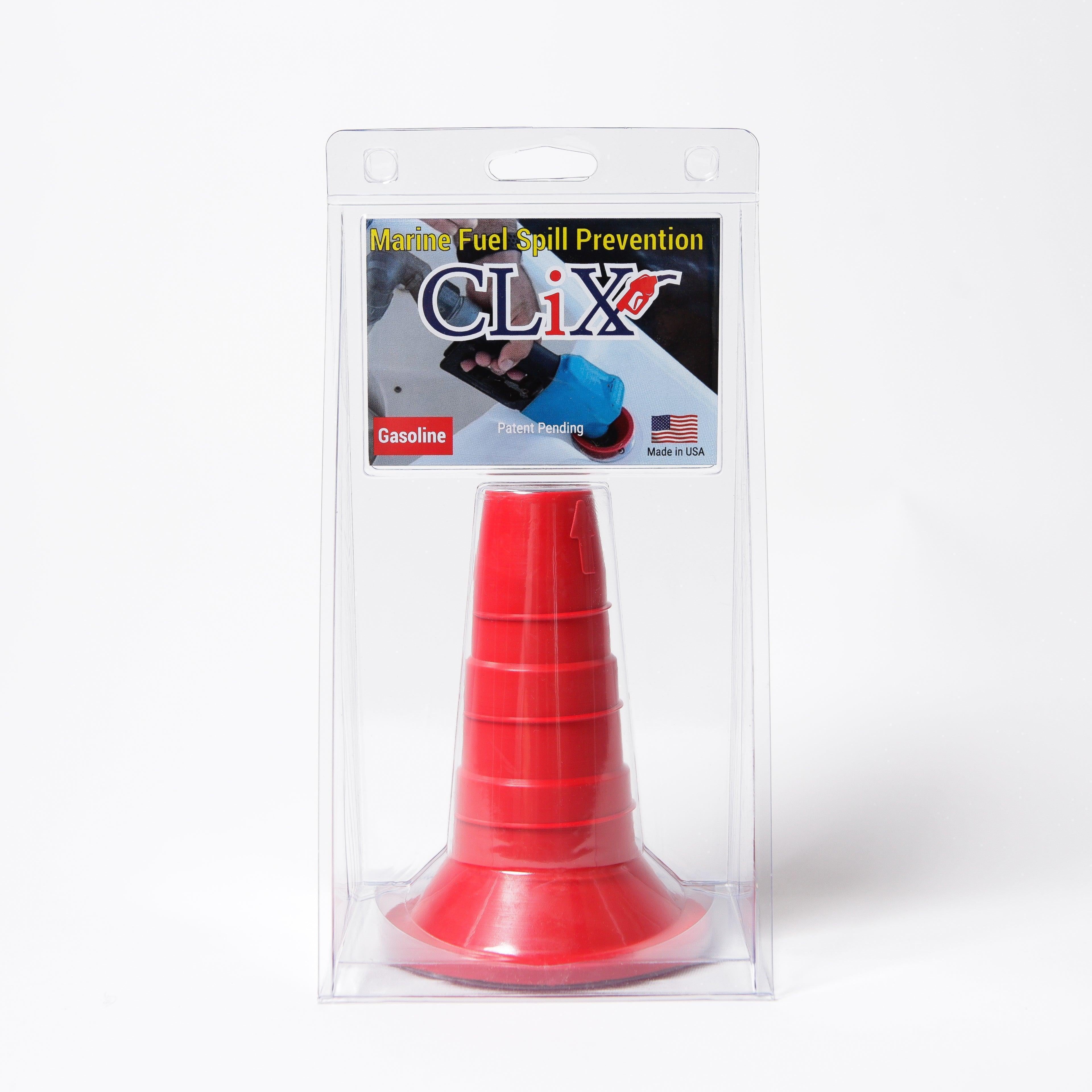
- Gasoline Model (Red): Perfectly engineered to fit the standard unleaded nozzles on most recreational boats.
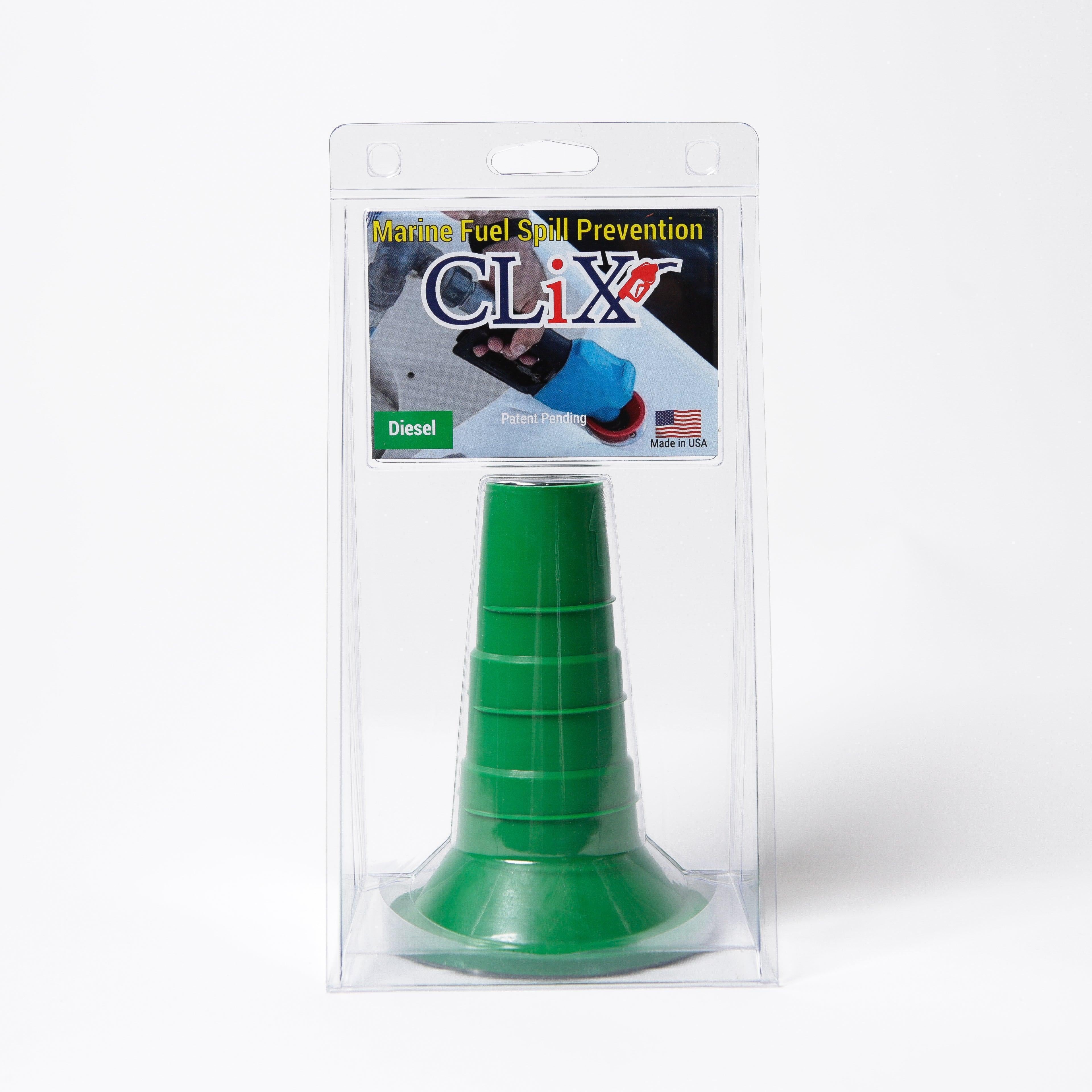
- Diesel Model (Yellow): Specially designed to handle the larger, high-flow nozzles used for diesel engines, ensuring a secure fit and a flawless shut-off.
This smart design means you get a spill-proof experience no matter what kind of fuel your boat takes. What used to be a tense, two-person job becomes a relaxed, one-person task. You can confidently start pumping and know that it will stop on its own, protecting both your boat and the water around it. For a closer look at the standard version, check out the Gas CLiX Single Pack on our product page: https://clixfueling.com/products/gas-clix-single-pack
The Core Benefit: CLiX gives you the one thing that endless practice can't: certainty. You know, without a shadow of a doubt, that the pump will shut off the moment your tank is full. Overfill anxiety is officially over.
More Than Just Spill Prevention
While stopping spills is its main job, the positive effects of using CLiX ripple outward. First and foremost, you're protecting your investment. Fuel is incredibly corrosive; keeping it off your deck means preserving your boat's expensive gelcoat, decals, and seals from being eaten away.
On top of that, every drop of fuel you pay for should end up in your tank, not soaked up by an absorbent pad or spilled into the water. With today's marine fuel prices, preventing even small overflows can lead to real savings over a boating season.
At its heart, this simple device is a practical use of proven engineering concepts. For a deeper dive into the kind of thinking behind automated systems, you could explore various industrial automation solutions. By bringing that level of precision to the fuel dock, you make your life easier and become a better steward of the environment we all love. It’s all about fueling smarter, not harder.
Answering Your Questions About Safer Fueling
Even when you know the risks of fueling at a gas station boat dock, it's smart to have questions before trying something new. We get a lot of great questions from boaters looking to make the switch, and here are the answers to the ones that come up most often.
Will The CLiX Unit Fit My Boat?
This is the first thing everyone asks, and the answer is almost always a confident "yes." We designed the CLiX Fueling Solution to be a universal fit for the huge majority of recreational boats out on the water.
We offer two distinct models: one for diesel (yellow) and another for standard gas (red), so they perfectly match the fuel nozzles at any marina. The unit simply screws into your boat’s existing deck fill. While it’s made for most standard boats, you can always double-check your fuel intake diameter just to be sure. Our team is also on standby to help you confirm a perfect fit for any unique or older models, so you can be guaranteed a secure, spill-proof connection.
Is This System Hard to Install Myself?
Not in the slightest. We built the whole system so any boat owner could install it in a few minutes with no special tools. You don't need to mess with any wiring or call in a professional.
The entire process is really as simple as unscrewing your old fuel cap and screwing the CLiX unit in its place. It’s a true “set it and forget it” upgrade that makes your boat safer and fueling more reliable from that moment on. That easy installation saves you both the time and the cost of hiring a marine mechanic.
The Big Picture: We wanted to make safety easy. A simple installation means more boaters can protect their investment and the environment without having to deal with a complicated or expensive setup.
What If I Forget to Use an Absorbent Pad With CLiX?
Getting into the habit of using an absorbent pad is always a good idea—it’s perfect for catching those last couple of drips from the nozzle when you pull it out. But the real job of CLiX is to prevent the big one: a catastrophic tank overfill.
It automatically shuts off the pump the second your tank is full, so you’ll never see that gusher of fuel that stains the deck and fouls the water. Think of it this way: CLiX protects you from spilling gallons, while a simple pad is there to catch a few drops. You completely avoid the messy, expensive, and damaging spill in the first place.
Are There Other Perks to Using CLiX Besides Preventing Spills?
You bet. Stopping spills is its main job, but that one massive benefit brings a few other great advantages along with it.
- Protect Your Investment: You’ll stop corrosive fuel from eating away at your boat's gelcoat, striping, and seals, which goes a long way in protecting its value.
- Save Money on Fuel: Every last drop of that expensive fuel goes right where it belongs—in your tank, not in the water.
- Gain Peace of Mind: Fueling can be a tense, two-person job. This turns it into a relaxed, one-person task you can do with total confidence.
- Be a Better Steward: You become part of the solution to marine pollution, and that’s something any responsible boater can be proud of.
At the end of the day, it’s all about making every trip to the fuel dock safer, cleaner, and a lot less stressful.
Ready to take the anxiety out of fueling up? Head over to CLiX Fueling Solutions and see how our spill-proof system can protect your boat and the water you love. Check out our products at https://clixfueling.com today.