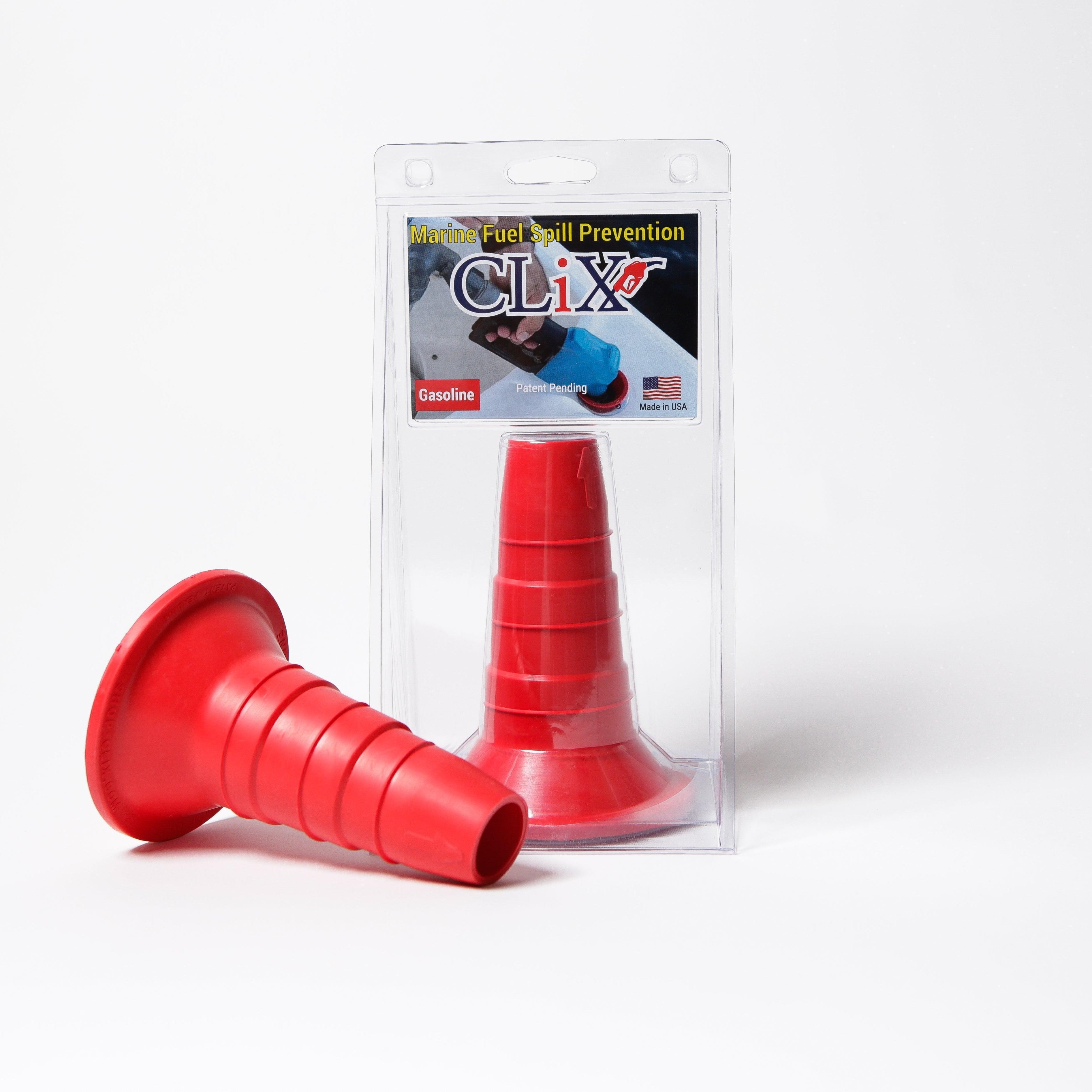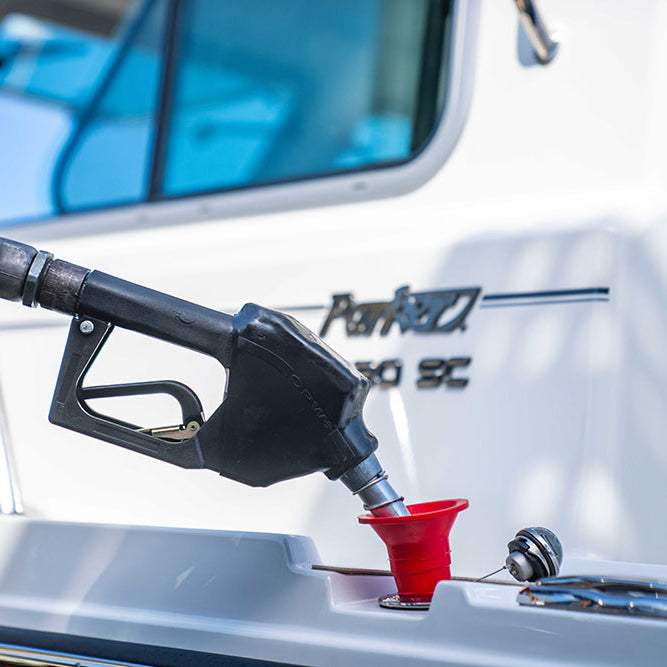
Think of a gas funnel filter as your engine's first line of defense, a simple but crucial gatekeeper that stands guard every single time you refuel. It's essentially a specialized strainer, but one designed to catch the tiny, often invisible threats like water, dirt, and rust before they can slip into your fuel tank and wreak havoc.
For any boater who takes their time on the water seriously, this little tool isn't just a nice-to-have—it's essential gear.
Why Bother With a Gas Funnel Filter?
Every time you fill up, whether at the marina dock or from a jerry can, you're rolling the dice on contamination. These impurities are far more common than most people realize and are the root cause of sputtering engines, sudden stalls, and eye-watering repair bills down the road.
A good funnel filter is the simplest way to stop these problems before they even start.
The Hidden Threats in "Clean" Fuel
So, where does all this gunk come from? Fuel contamination can sneak in from several places, each posing a unique risk to your engine's sensitive parts. Knowing the sources makes it crystal clear why filtering every gallon is so important.
- Marina Storage Tanks: Those big underground tanks can collect water from condensation and are prone to rust and sediment buildup, all of which can end up in your boat.
- Portable Gas Cans: Old metal cans are notorious for shedding rust flakes. Even plastic cans can get dirt inside or accumulate water from temperature swings.
- Simple Accidents: It only takes a gust of wind to blow dust or debris into an open fuel tank while you're refueling.
A gas funnel filter is the smartest, most effective way to catch these issues right at the source. By stopping contaminants before they even get into your tank, you’re protecting the more complex and expensive filters and injectors that are further down the line.
To give you a clearer picture, here's a quick breakdown of what these filters are up against.
Common Contaminants a Gas Funnel Filter Stops
| Contaminant Type | Common Source | Potential Engine Damage |
|---|---|---|
| Water | Condensation in storage tanks, rain, humid air | Poor combustion, corrosion, fuel line freezing, microbial growth (algae) |
| Dirt & Sand | Dirty fuel nozzles, airborne particles, contaminated cans | Clogged fuel injectors, scored cylinder walls, premature engine wear |
| Rust Flakes | Aging fuel tanks (marina or portable), steel fittings | Clogged filters, fuel pump failure, damaged injectors |
| Debris | Paint chips, plastic shavings, other foreign objects | Blocked fuel lines, engine stalling, fuel system component failure |
This table really highlights how a seemingly small investment can prevent a wide range of serious, and expensive, engine problems.
A Small Price for Serious Peace of Mind
Let's be honest: preventing a problem is always cheaper than fixing one. When you buy a quality gas funnel filter, you're doing more than just buying a piece of equipment. You're investing in your engine's health and your own peace of mind.
This one simple step can save you from the stress of a dead engine miles from shore and the financial pain of replacing fuel pumps or injectors. To learn more about how this tool protects your engine, you can explore our detailed guide on why a fuel filter funnel is a smart investment.
The need for clean fuel isn't just a boater's concern; it's a massive global trend. The market for gas filters was valued at around USD 14.84 billion, and it's expected to keep growing as everyone from industrial giants to weekend boaters demands cleaner, more reliable energy. It just goes to show how critical filtration is at every level.
How a Gas Funnel Filter Separates Water from Fuel
You’ve probably seen these funnels and wondered how they actually pull water out of your fuel. It’s not magic, but it is some pretty slick science. Think of it less like a simple funnel and more like a high-tech security checkpoint for your gasoline.
The first line of defense is a coarse screen that catches the big stuff. This is your bouncer, stopping obvious troublemakers like rust flakes from an old fuel can, dirt, or sand right at the door. They never even get a chance to enter your fuel tank.
After that initial screening, the fuel passes through a much finer mesh. This is the second security check, designed to trap smaller suspended particles that the first layer might have missed.
This diagram gives you a quick visual of how a simple filter can be the only thing standing between contaminants and your engine.

As you can see, that filter is a critical barrier protecting your boat's engine from whatever might be lurking in the fuel from the pump.
The Science of Water Separation
Now for the really clever part: separating out the water. The final stage in a quality gas funnel filter uses a specially coated screen that leverages a principle called hydrophobia, which literally means "water-fearing."
This coating is designed to let hydrocarbon fuel molecules pass right through. But when water molecules hit that same surface, they're actively repelled. Instead of going through the mesh, they bead up and stick together, forming droplets that are too big to pass.
That hydrophobic action is what makes a true water-separating funnel so much more effective than a basic strainer. Gravity does the rest, pulling the collected water down into a sump at the bottom of the funnel, keeping it safely away from the clean fuel going into your tank.
This simple, multi-stage process is incredibly effective. For a deeper dive into how this technology works, you can read our complete guide on water separator funnels.
And this isn't just a niche product for boaters. The industrial fuel filters market was valued at USD 553.5 million and is expected to hit USD 910.3 million within the next ten years. That kind of growth shows just how critical clean, water-free fuel is across every industry. By understanding how this simple tool works, you can see why it’s such a powerful way to protect your engine every single time you refuel.
A Step-by-Step Guide to Safe and Clean Fueling
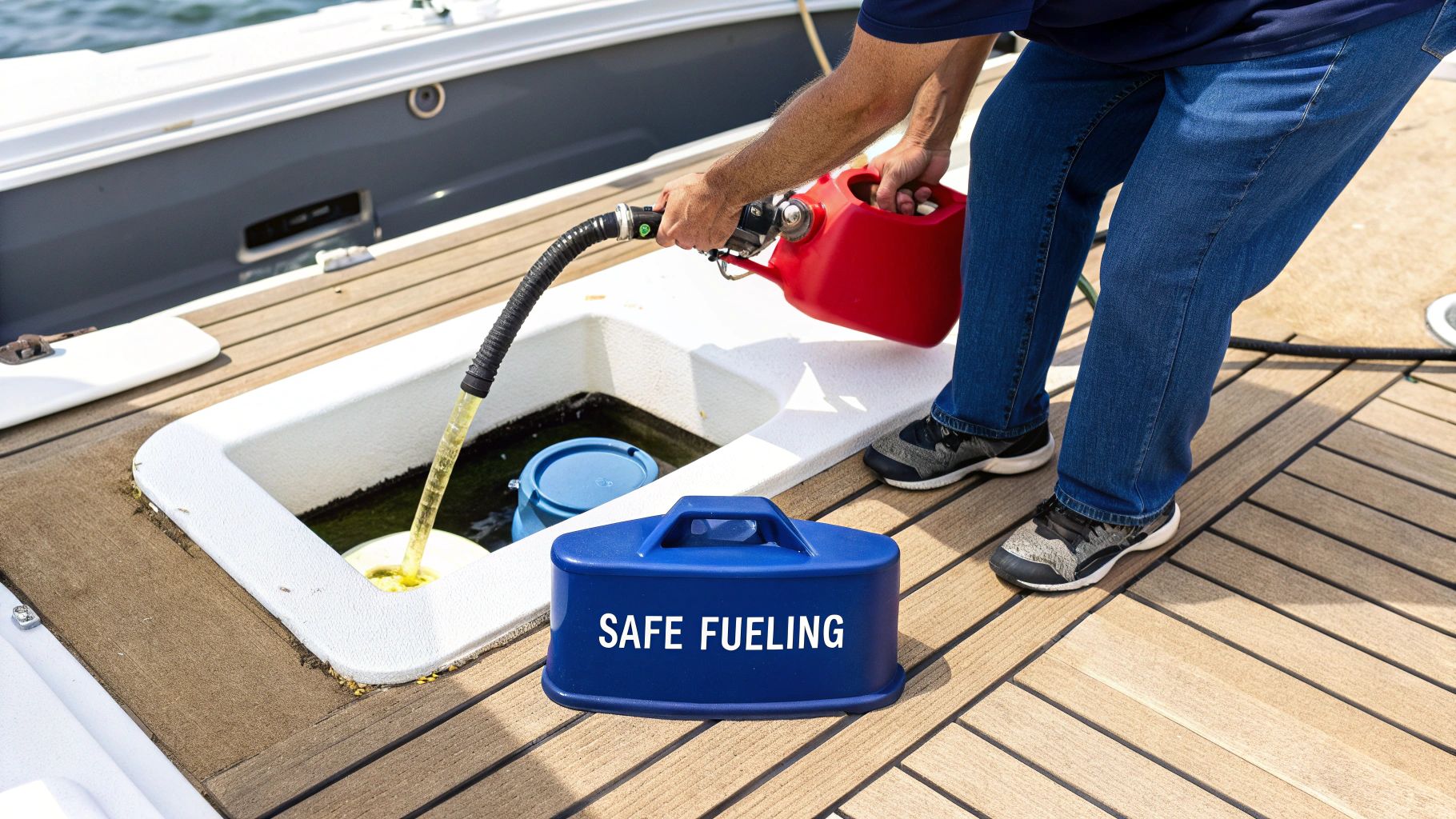
Owning a gas funnel filter is one thing, but knowing how to use it right is what really counts. When you get the hang of it, what used to be a somewhat risky chore becomes a clean, controlled, and safe process.
Think of this checklist as a pre-flight routine for your boat's fuel system. Running through these steps every time you fuel up will keep spills at bay and ensure your engine is only getting the good stuff.
Pre-Fueling Safety Checklist
Before a single drop of gas goes into the tank, a few simple prep steps can make all the difference. This is all about preventing static sparks, catching drips before they happen, and just setting yourself up for a smooth fuel-up. A responsible boater knows that a minute of prep saves a lot of headaches later.
- Prepare for Spills: Keep a stack of absorbent pads or a few good rags within arm's reach. Lay one down around the deck fill opening—it’s the easiest way to catch any stray drips that could stain your deck or end up in the water.
- Ensure Proper Grounding: If your funnel is made of conductive plastic, make sure it’s touching the metal rim of your deck fill. This simple contact grounds the funnel and stops static electricity from building up, which is a serious no-no around fuel vapors.
- Inspect Your Gear: Take a quick look at your funnel. Are there any cracks? Is there any gunk or debris left in the filter screen from last time? You want to make sure you’re not about to wash old contaminants right back into your clean tank.
The Fueling Process Done Right
Once you're prepped, the actual fueling should be totally stress-free. The name of the game is control. You want to be deliberate and let the filter do its job without getting overwhelmed. Slow and steady always wins the race here.
A common mistake is pouring fuel too quickly. This can overwhelm the filter's hydrophobic screen, potentially allowing water to pass through with the fuel. A controlled pour rate gives the filter time to properly separate contaminants.
This allows the gas funnel filter to work exactly as it was designed, collecting water in its sump and trapping debris in the mesh screen.
Here’s the right way to do it:
- Seat the Funnel Firmly: Place the funnel securely into the deck fill. You want it to sit snugly without wobbling, which creates a good seal to guide the fuel and stop it from splashing out.
- Pour at a Controlled Rate: Start pouring slowly and maintain a steady flow. Pay attention to the sound the tank makes as it fills; the pitch will change when it's getting close to full. This is a great old-school trick to help prevent overfills and that dreaded "fuel burp" from the vent line.
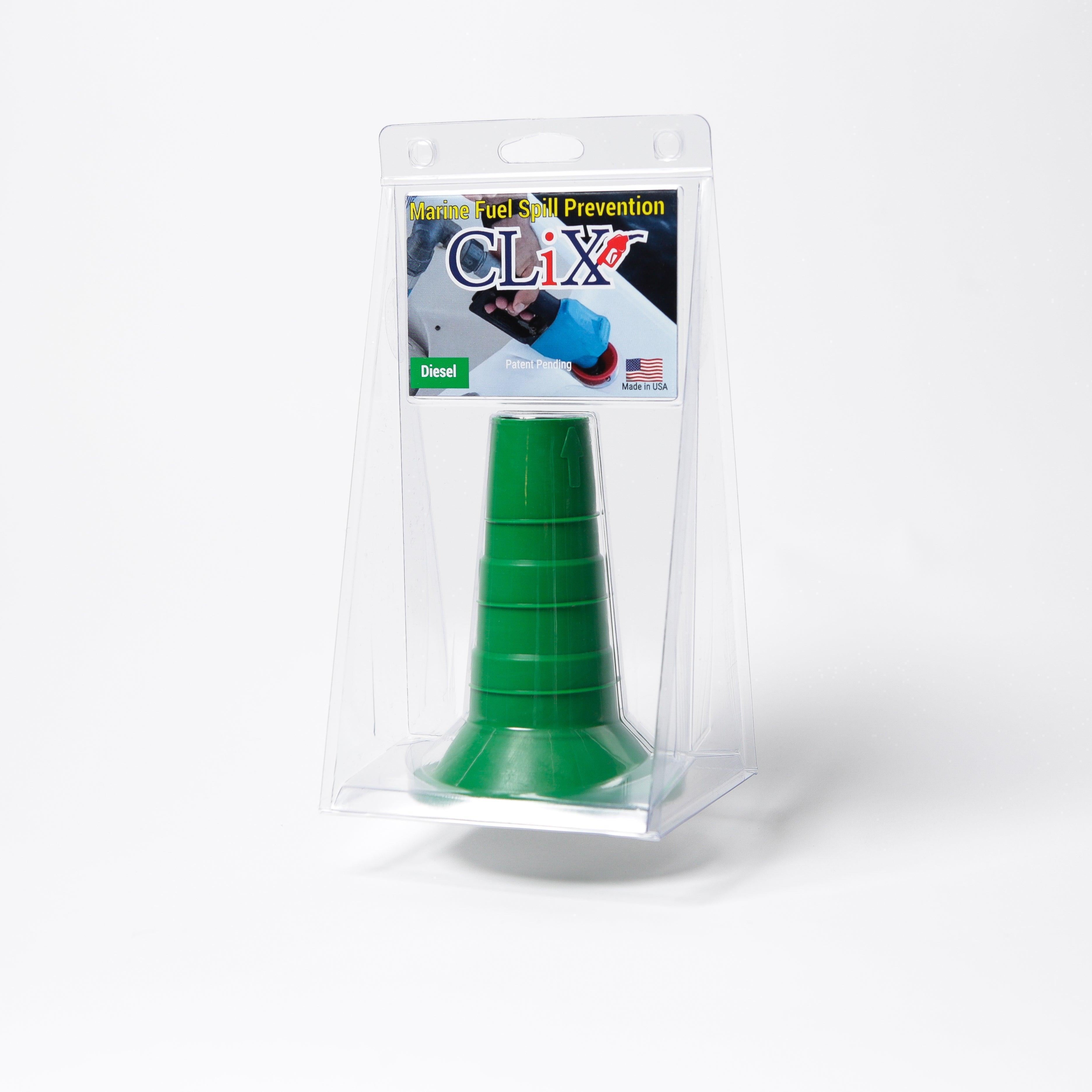
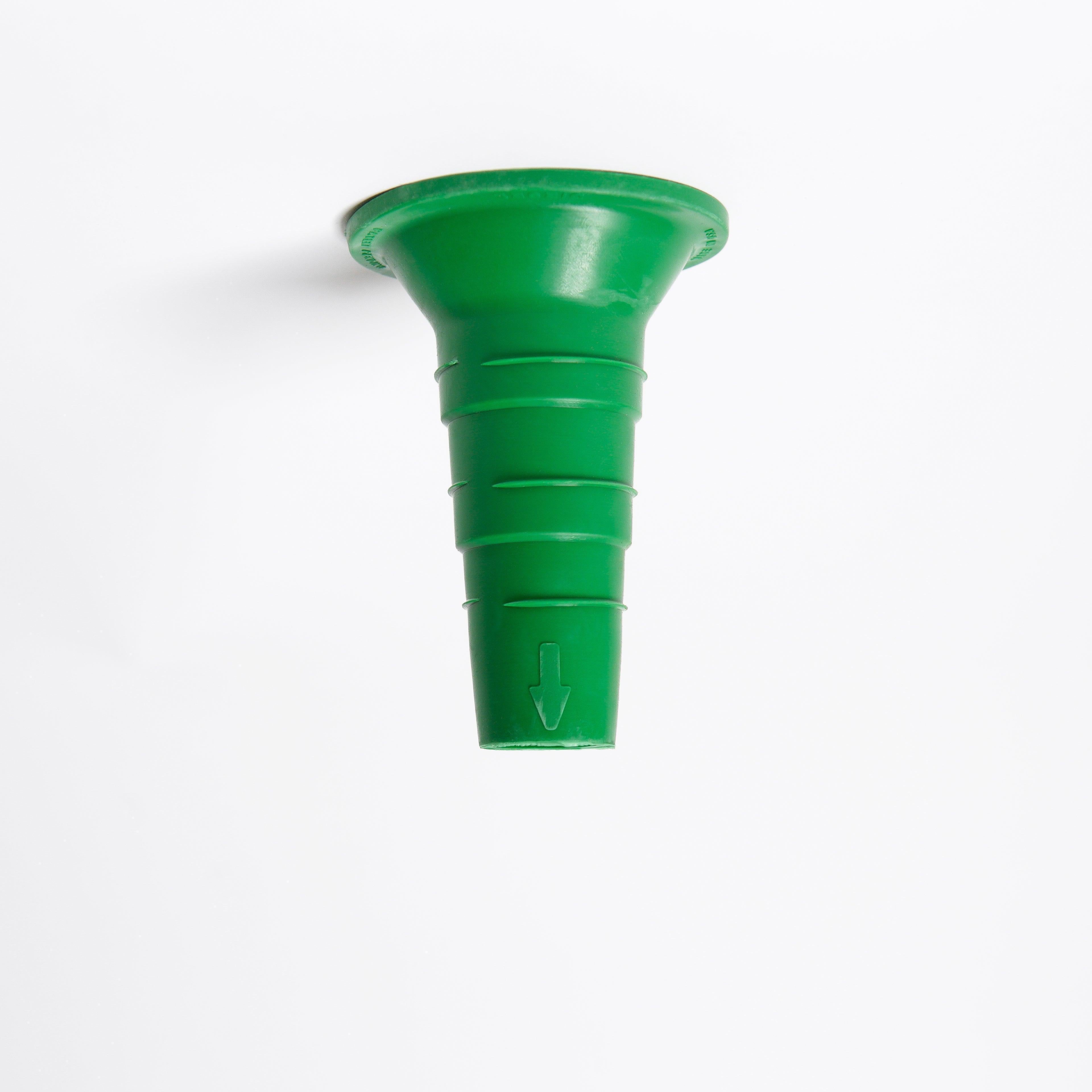
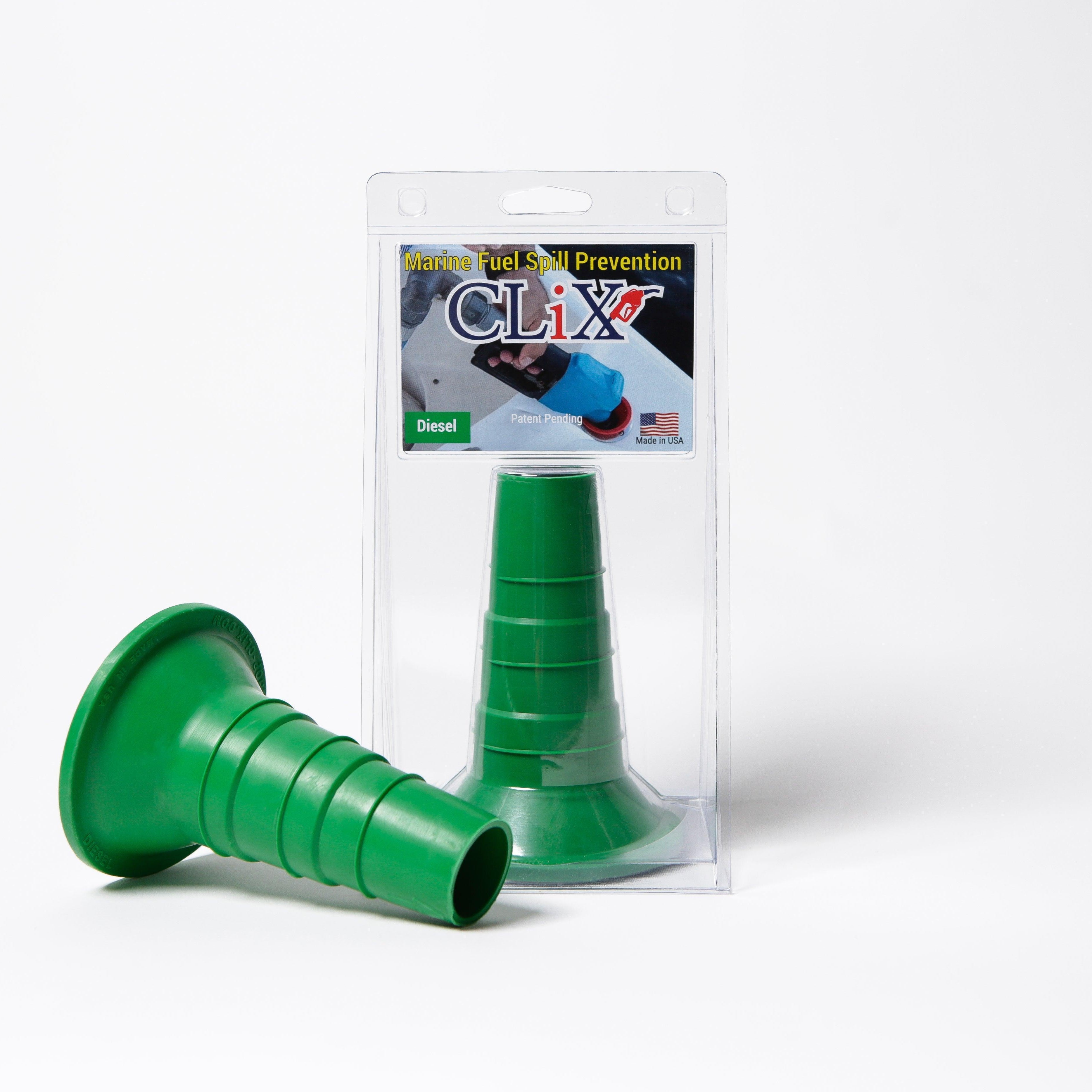
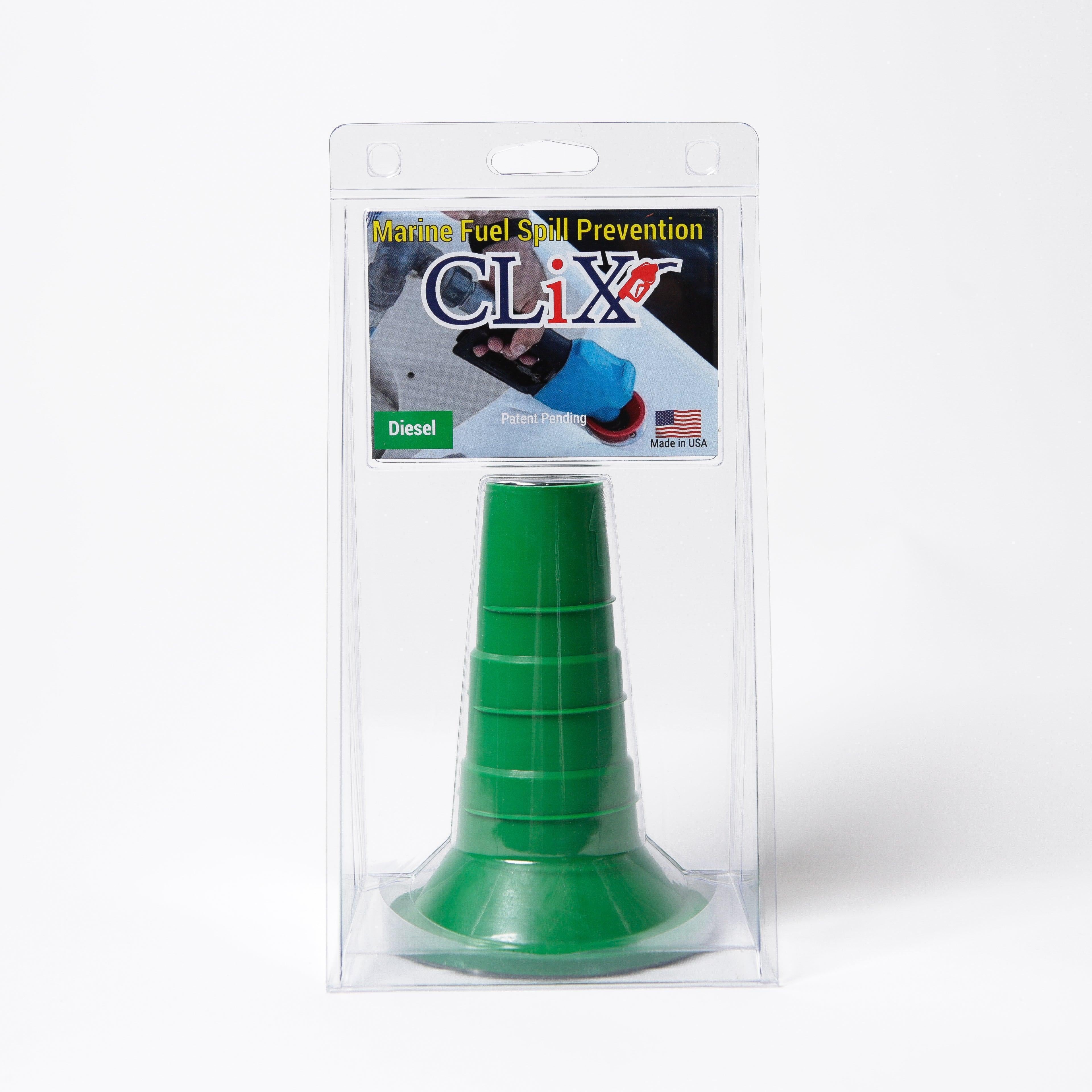
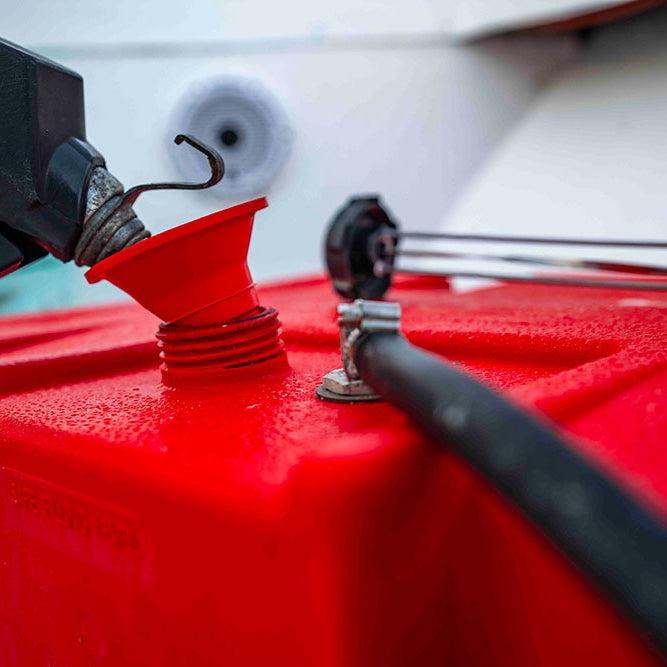
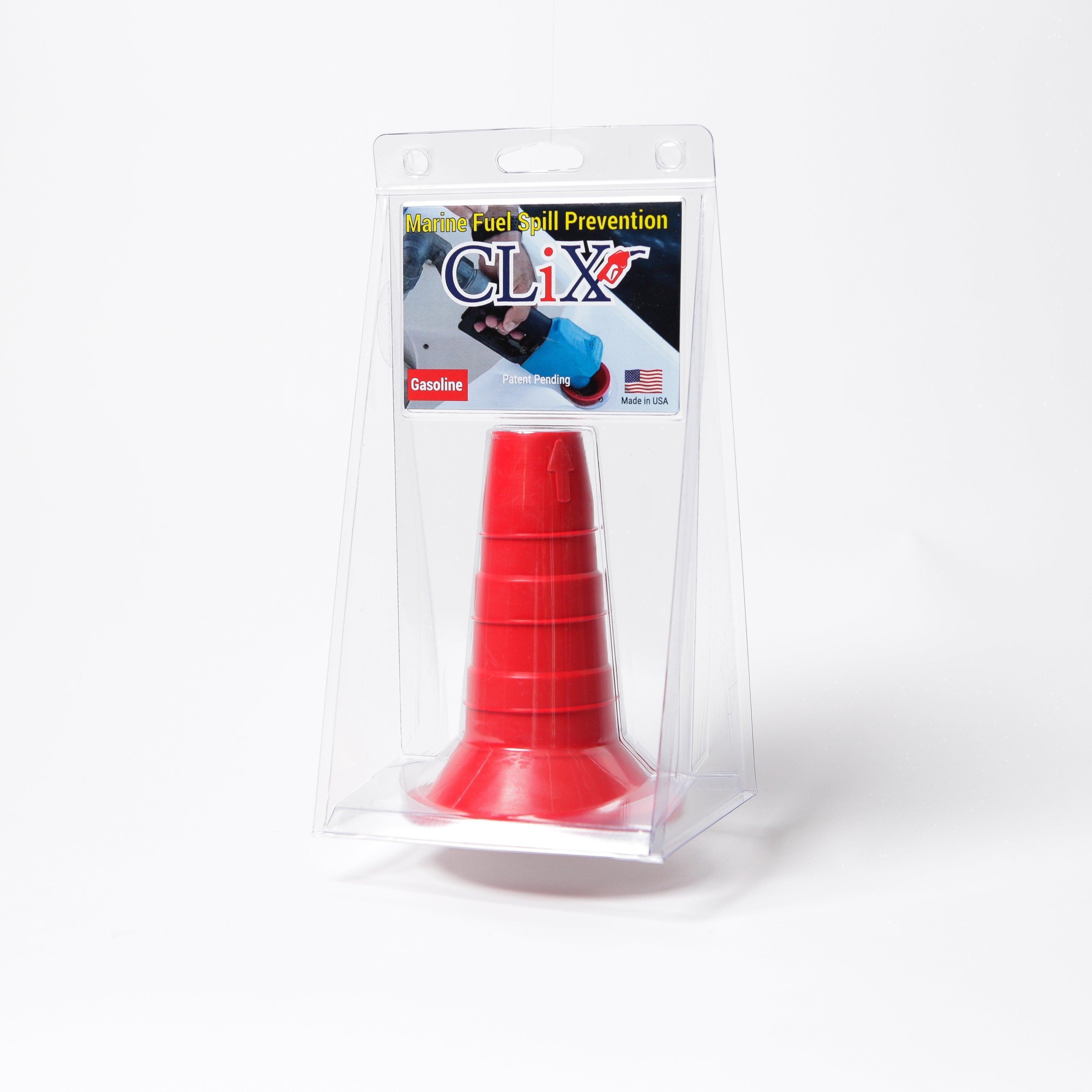
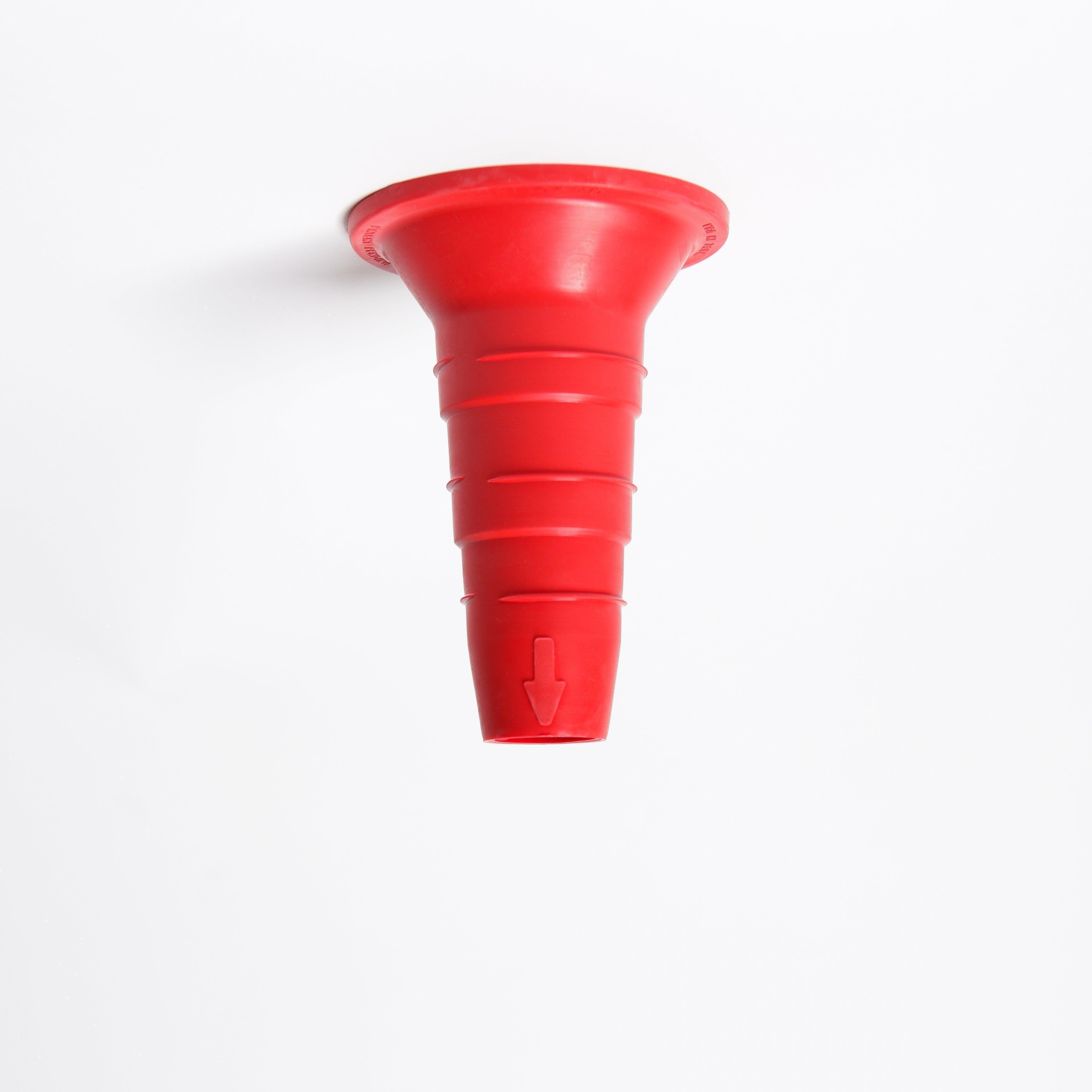
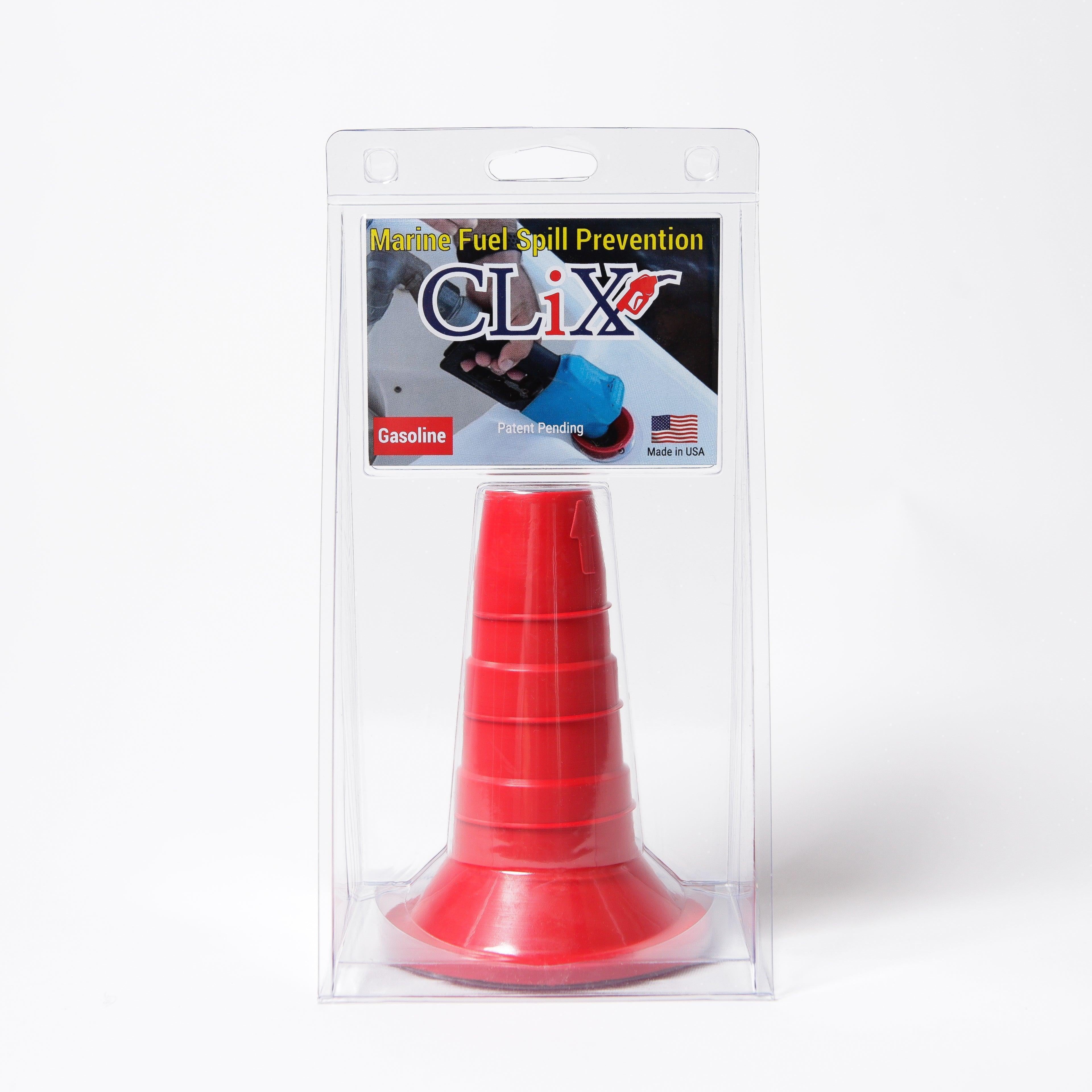
- Monitor the Sump: Every so often, glance down at the funnel’s sump. If you see water pooling in there, great! That means your filter is doing its job perfectly and is a good heads-up about the quality of the fuel you’re using. For a truly complete spill-prevention system, an automatic shut-off device like CLiX can work right alongside your funnel. It stops the flow the second the tank is full, adding that final layer of security against overflows.
Choosing the Right Gas Funnel Filter for Your Boat
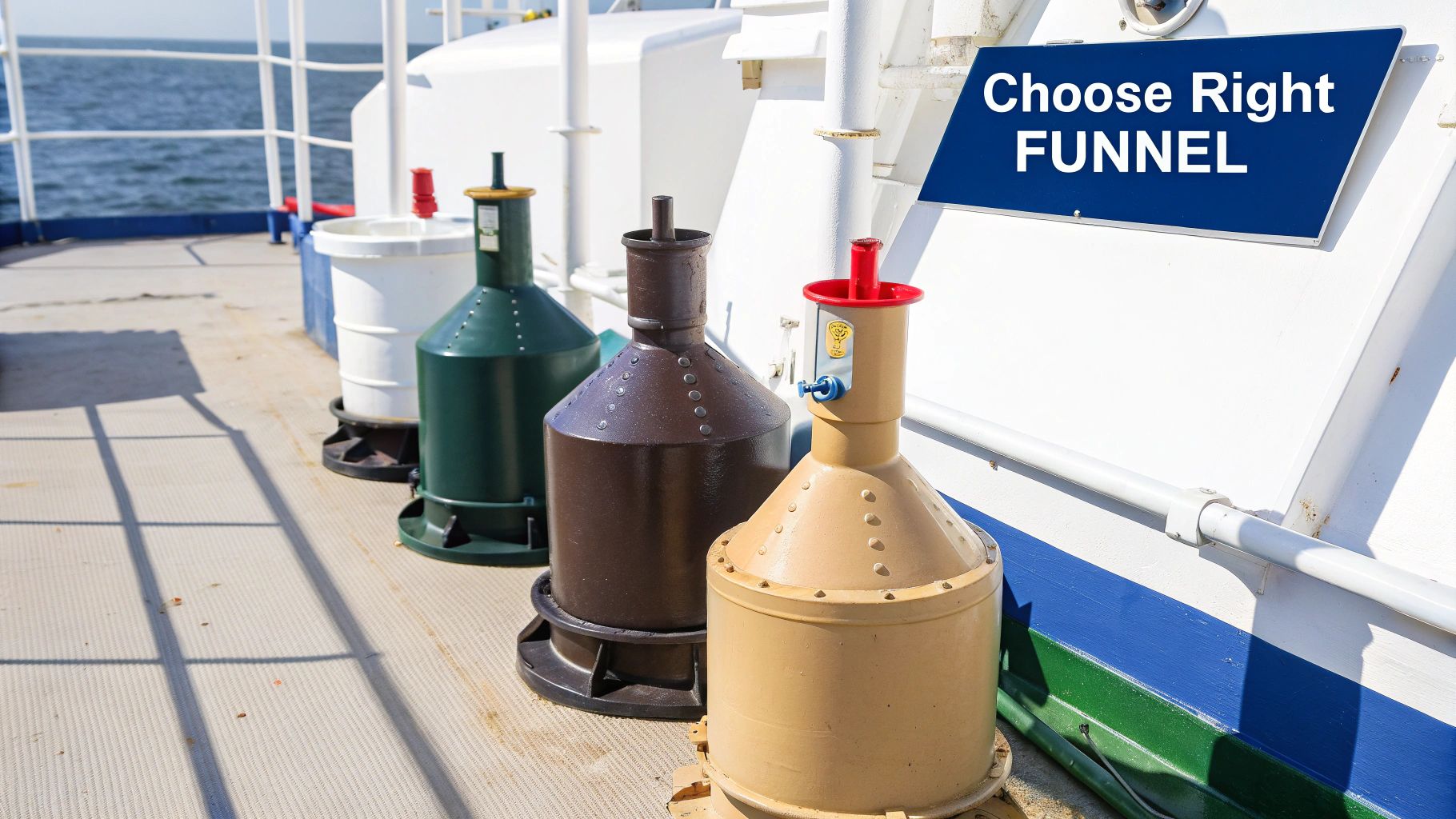
Picking the right gas funnel filter isn’t a one-size-fits-all deal. It's really about matching the tool to your boat and how you refuel. Just like you wouldn't use a tiny bucket to bail out a big boat, the wrong funnel can turn a simple task into a frustrating, messy chore. When you get this choice right, you get maximum protection and convenience every time you're at the pump.
A good gas funnel filter should make refueling faster and cleaner, not slower and more of a hassle. That’s why the first thing you need to look at is the flow rate.
Flow Rate and Material Matters
The flow rate, usually measured in gallons per minute (GPM), is all about how fast you can get the fuel into the tank. A funnel with a painfully slow flow rate will have you standing at the pump or holding a heavy jerry can for what feels like an eternity. For efficient refueling, always look for a model designed with a high flow rate.
What the funnel is made of is just as important. You’ll see metal funnels out there, but modern funnels made from conductive plastic are a much better choice for the marine world. This special material is designed to prevent static electricity from building up—a huge safety feature when you're dealing with gasoline. Plus, it won’t rust or corrode in saltwater, and it won't scratch up your boat’s gelcoat.
Understanding Micron Ratings
The micron rating on a filter sounds technical, but it’s pretty simple. It just tells you how small the particles are that it can trap. The lower the number, the finer the filtration. Your boat's engine already has its own set of very fine filters, usually in the 10-30 micron range, that act as the last line of defense.
A gas funnel filter is really a pre-filter. Its main job is to catch the big stuff—rust flakes, sand, and dirt—before they even get into your tank. Catching them here prevents them from clogging up those more sensitive and expensive engine filters down the line. A rating between 70 and 100 microns is usually the sweet spot for this frontline role.
This two-stage approach keeps your entire fuel system cleaner for much longer. For a deeper dive into the different types and features available, check out our guide on choosing the right fuel funnel for a boat.
Practical Design Features to Look For
Beyond the technical specs, a few practical design features can make a world of difference during fueling. These are the little details that separate a good funnel from a great one.
- Anti-Splash Ring: This is just a raised lip around the top of the funnel. It does a surprisingly good job of containing fuel and stopping messy splashes, especially when the boat is rocking.
- Ergonomic Handle: A solid, comfortable handle gives you a secure grip, making it much easier to hold the funnel steady while you pour.
- Appropriate Size: Make sure the funnel's spout fits snugly into your boat’s deck fill. You also want it to be a manageable size so you can easily store it on board.
In the end, the best gas funnel filter balances effective filtration with a user-friendly design. While it’s a fantastic first step for preventing contamination, remember that its primary job is filtration, not stopping overfills. For a completely spill-proof system, you can’t beat pairing your filter with an automatic shut-off device like CLiX for total peace of mind at the fuel dock.
Funnel Filters vs. Other Fuel Protection Methods
When it comes to keeping your boat’s engine running smoothly, a gas funnel filter is an invaluable piece of gear. But it's not a silver bullet. The smartest approach is to think in layers, creating a complete defense for your entire fuel system. It’s a bit like protecting your house: you have good locks on the doors, but you might also have an alarm system. Each part does a different job.
A gas funnel filter is your first line of defense. It’s the gatekeeper, stopping water, rust, and other gunk before they ever get into your fuel tank. This is its superpower—preventing contamination right at the source, which keeps your tank and the fuel inside it much cleaner from the get-go.
In-Line Fuel Water Separators: The Engine's Bodyguard
While a funnel filter protects what goes in, an in-line fuel water separator acts as your engine's personal bodyguard. This device sits between your fuel tank and the engine, serving as a final, critical checkpoint. Its job is to snag anything the funnel might have missed or—more importantly—any contaminants that develop inside the tank.
Think about condensation. It’s a constant battle in the marine world, and that water can wreak havoc. An in-line separator is specifically designed to catch that moisture, along with any sediment that gets stirred up from the bottom of the tank, before it can reach your engine.
A gas funnel filter and an in-line separator aren't competing for the same job; they're partners. The funnel keeps the big stuff out of the tank, which means the in-line separator has less work to do. This helps its own filter last longer and guarantees your engine is only sipping pure, clean fuel.
Where Do Fuel Additives Fit In?
Fuel additives are the third piece of this protection puzzle. They work at a chemical level to handle things a physical filter can't. You can think of them as the maintenance crew for the inside of your fuel system. Their main jobs include:
- Stabilizing Fuel: They keep gasoline from breaking down and forming sticky gum or varnish, especially when your boat is stored.
- Cleaning Injectors: Many contain detergents that dissolve carbon buildup on fuel injectors and intake valves, keeping performance crisp.
- Managing Moisture: Some additives help small amounts of water mix with the fuel (emulsify), allowing it to pass through the engine and burn away harmlessly.
The need for better filtration is only growing. The market for natural gas filters, for example, was valued at USD 1.28 billion and is expected to hit USD 2.97 billion soon, all driven by the need to get rid of particulates and moisture. North America makes up over 38.4% of this market, showing just how seriously we take clean fuel. You can discover more insights about the natural gas filters market and its growth.
To help you see how these methods stack up, here’s a quick comparison.
Comparing Fuel Protection Methods
| Method | Primary Function | Best For | Key Limitation |
|---|---|---|---|
| Gas Funnel Filter | Prevents contaminants (water, debris) from entering the fuel tank during refueling. | Pre-filtering fuel at the source; keeping the main tank clean. | Doesn't remove contaminants already in the tank or prevent spills. |
| In-Line Separator | Catches water and sediment between the tank and the engine. | Final engine protection; filtering out condensation and settled debris. | Can get overwhelmed if the fuel tank is consistently dirty. |
| Fuel Additives | Chemically treats fuel to stabilize it, clean components, and manage moisture. | Long-term storage; maintaining internal engine cleanliness. | Cannot physically remove larger particles or significant water. |
| Spill-Proof Systems | Automatically stops fuel flow to prevent tank overfills and spills. | Preventing accidental fuel discharge into the water. | Doesn't filter the fuel for contaminants. |
As you can see, each tool has a specific role to play in protecting your boat.
A Layered Approach to Fuel Purity
Putting it all together, you can see how each method complements the others. The funnel stops trouble from getting in, the in-line separator stands guard at the engine, and additives perform ongoing maintenance.
But there's one more piece. While a gas funnel filter is a fantastic first step for fuel quality, it won't stop a tank overfill. For a truly complete fueling solution, you need to address spills, too. Combining your filtration strategy with an automatic shut-off device like the CLiX system gives you the ultimate peace of mind. You get protection against both contamination and spills, ensuring every drop of fuel is clean, safe, and stays where it belongs.
Your Top Questions About Gas Funnel Filters
Even after you get the hang of using a gas funnel filter, some practical questions always seem to pop up at the fuel dock. Let's tackle those common "what-if" moments so you can refuel with confidence every single time.
We've pulled together the most common questions we hear from boaters. The idea is to clear up any confusion on everything from fuel types to cleaning, making you the expert at the pump.
Can I Use the Same Funnel for Both Gas and Diesel?
This is easily the number one question we get. The short answer is usually yes, but there's a big "but" you need to know about. Most quality funnels are built from materials that can handle both gasoline and diesel, but you should always check the manufacturer's label just to be sure.
The real issue isn't the material—it's the fuel's thickness. Diesel is much more viscous than gasoline, so it flows a lot slower. If you use a funnel designed for gas to pour diesel, you might find yourself waiting for a painfully long time. It’ll work, but it will turn a quick fill-up into a major chore.
For best results:
- Check for Compatibility: Read the fine print on the packaging or product page. Make sure it explicitly says it's rated for both fuels.
- Keep Them Separate: If your setup includes gas outboards and a diesel generator, do yourself a favor and get two separate, clearly labeled funnels. This is the best way to prevent cross-contamination and make sure fueling is always quick and easy.
How Often Do I Need to Clean My Funnel Filter?
Simple: look at it after every single use. A quick peek into the sump area at the bottom is all it takes. If you see water or any gunk collected down there, it’s time for a cleanout.
A good habit is to give it a quick rinse with a splash of clean fuel after you're done fueling to wash out any loose bits. But if you notice fuel is flowing slower than usual or you see a lot of sediment, it’s time for a proper cleaning. At the very least, give it a thorough cleaning at the beginning and end of each boating season to keep it from becoming a source of contamination itself.
Will a Gas Funnel Filter Stop Fuel Spills?
This is a really important distinction to make. A funnel filter’s primary job is filtration, not spill prevention. Yes, the funnel shape helps guide the fuel into the tank and can catch a few minor splashes, but it is absolutely not designed to stop the tank from overflowing.
It has no way of preventing that classic "fuel burp" from the vent line when the tank gets full. For total protection against messy, expensive, and environmentally harmful spills, you still need to use absorbent pads and listen for that change in sound as your tank fills up.
A gas funnel filter is your engine's bodyguard, stopping contaminants at the door. It's not a bouncer that stops spills. Think of it as one part of a complete safe-fueling system.
What’s the “Micron Rating” All About?
The micron rating on a gas funnel filter is just a measure of how small a particle the mesh screen can trap. A smaller micron number means it catches finer particles. To give you some perspective, the main filters on your boat's engine are incredibly fine—often rated between 2 and 10 microns—to protect sensitive fuel injectors.
Your funnel filter, on the other hand, acts as a pre-filter. Its job is to catch the big stuff first. That’s why most are rated much higher, usually somewhere between 74 and 100 microns. They are designed to stop the sand, rust flakes, and other gunk that would quickly clog up those more delicate and expensive engine filters.
Answering these questions puts you in a much better position to protect your engine. But for true peace of mind at the pump, you need to pair your clean fuel with a real spill-prevention system. CLiX Fueling Solutions offers an automatic shut-off that stops the flow the instant your tank is full, making sure every drop of that clean, filtered fuel stays exactly where it belongs. Learn more about creating a spill-free fueling experience on clixfueling.com.