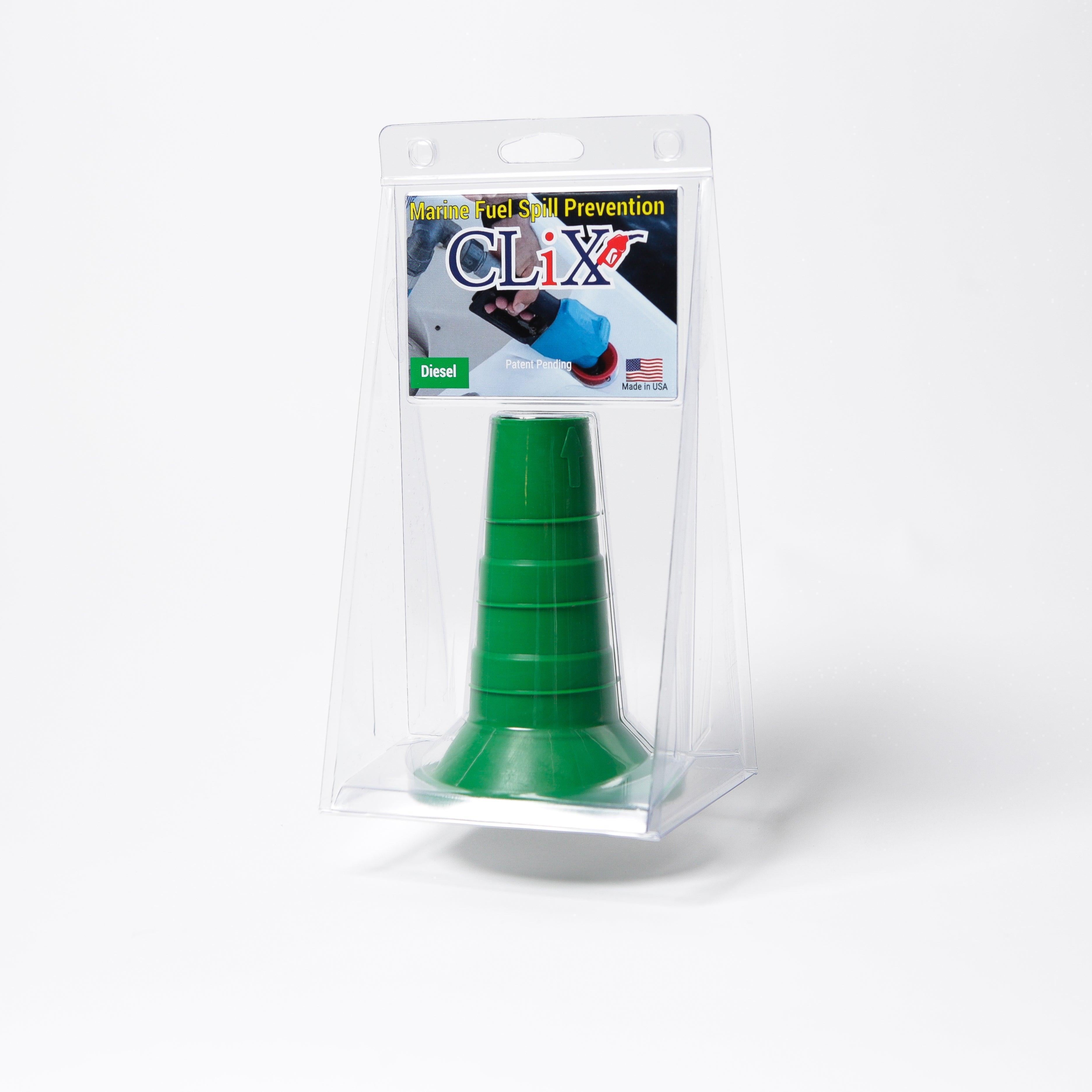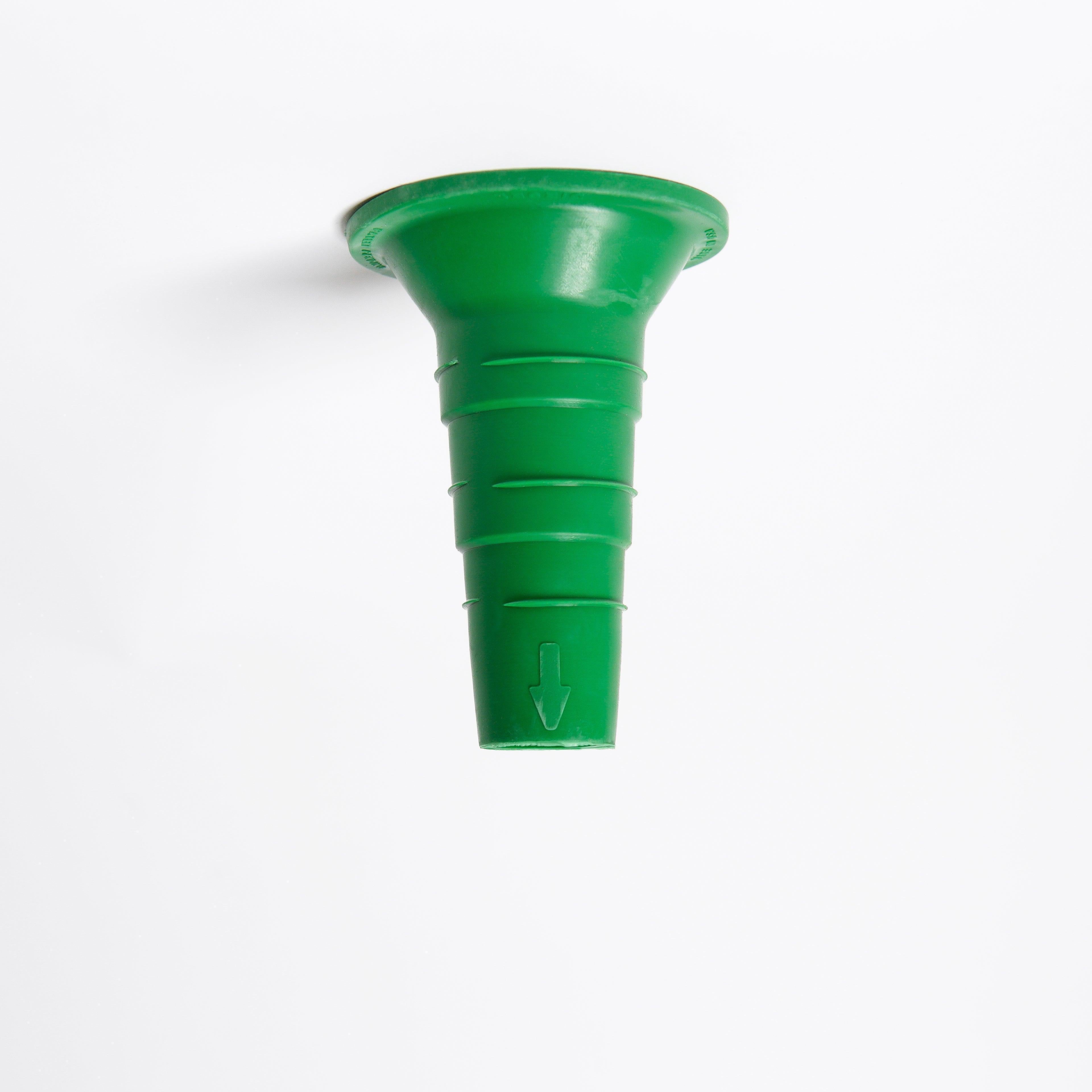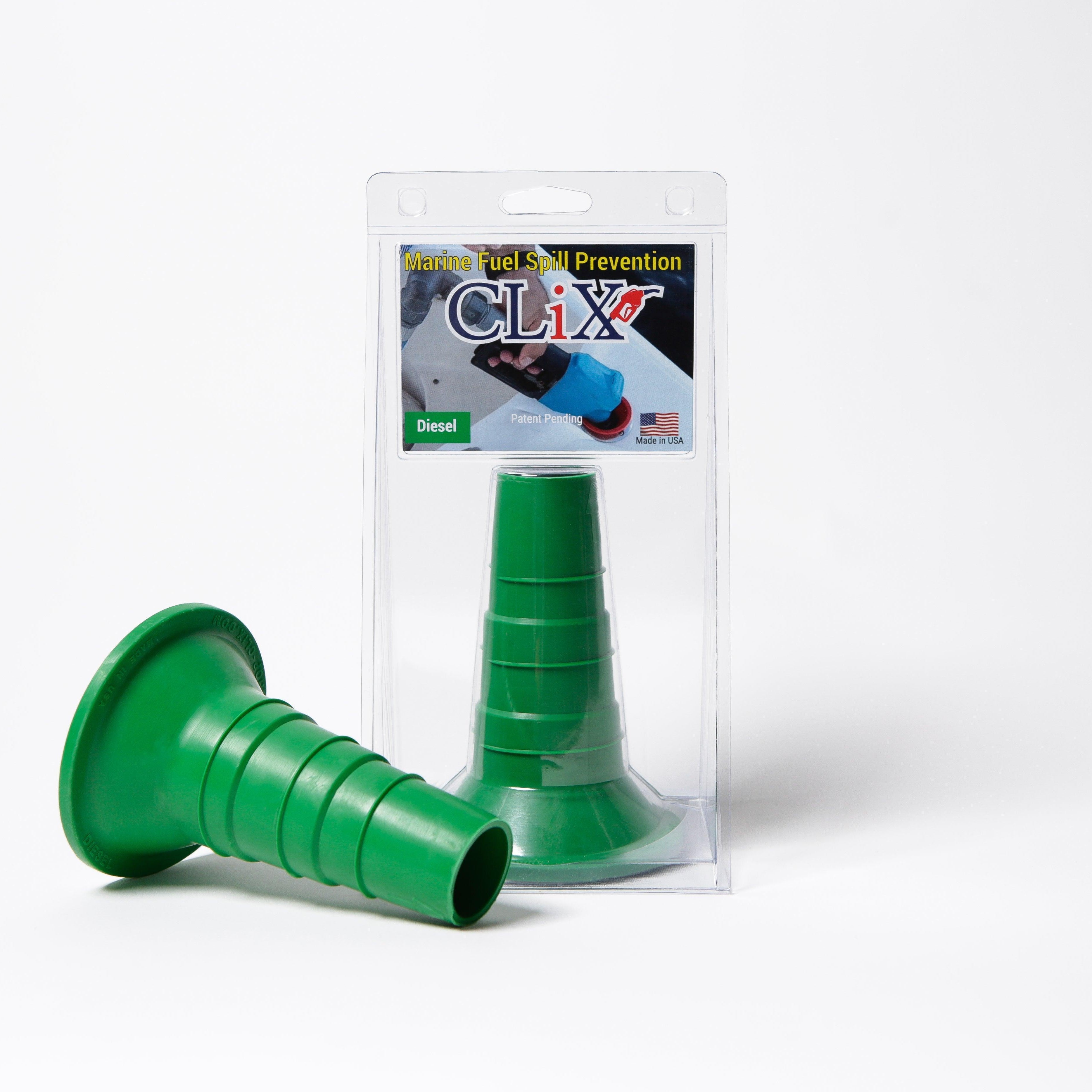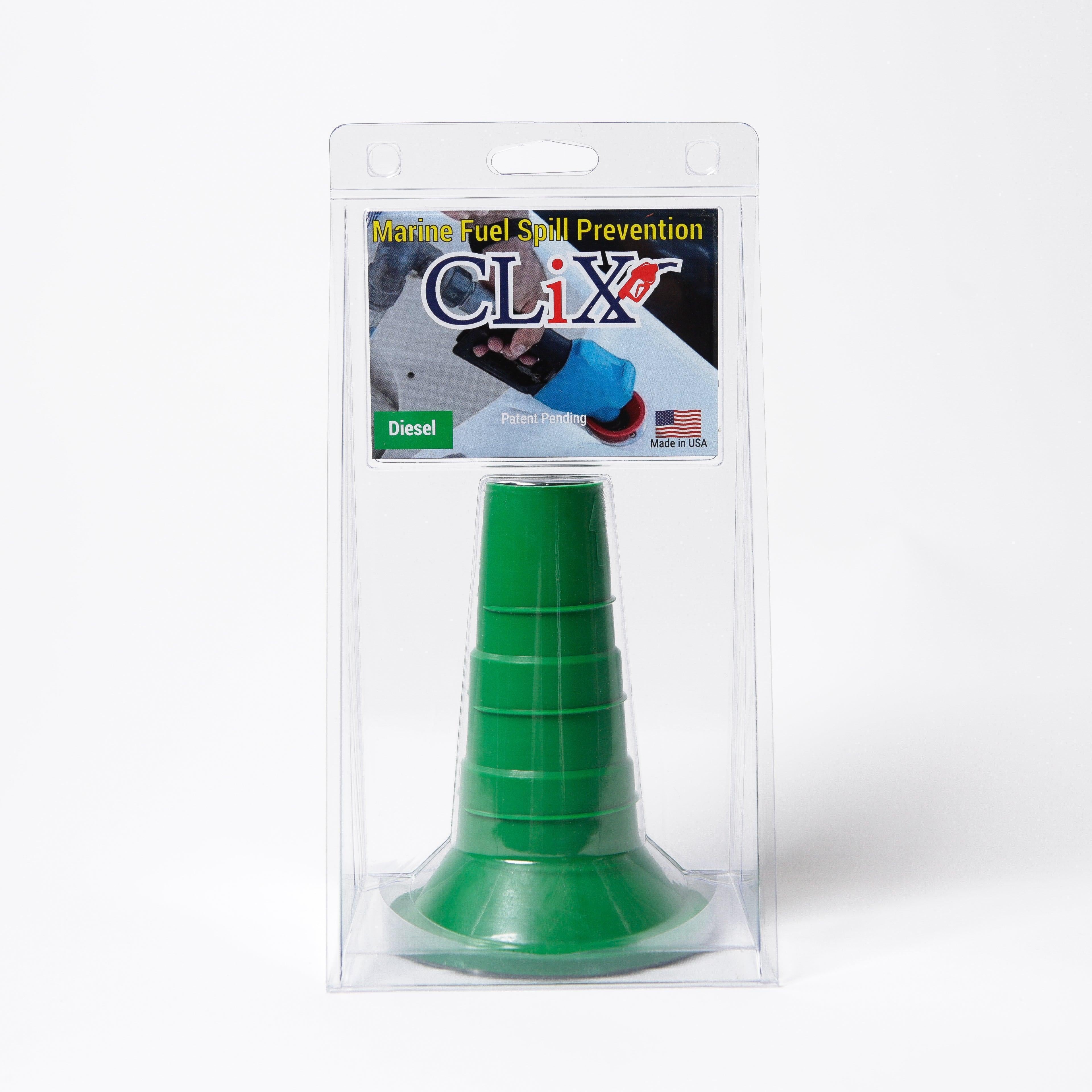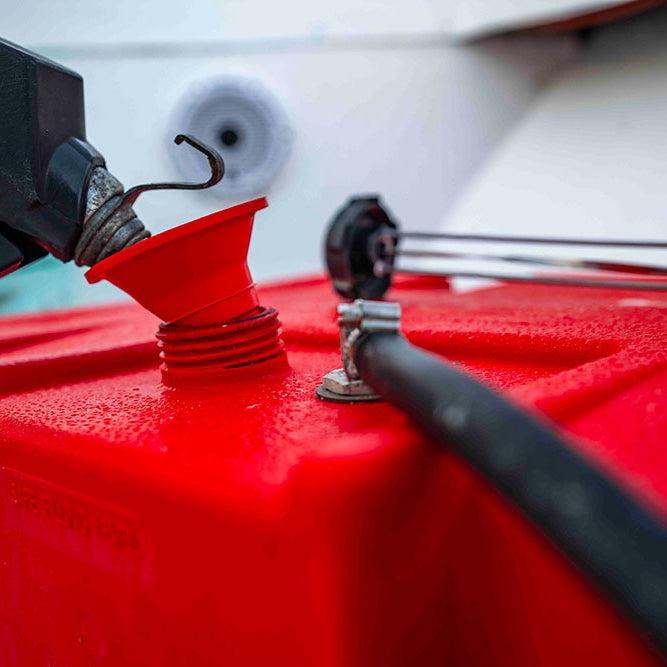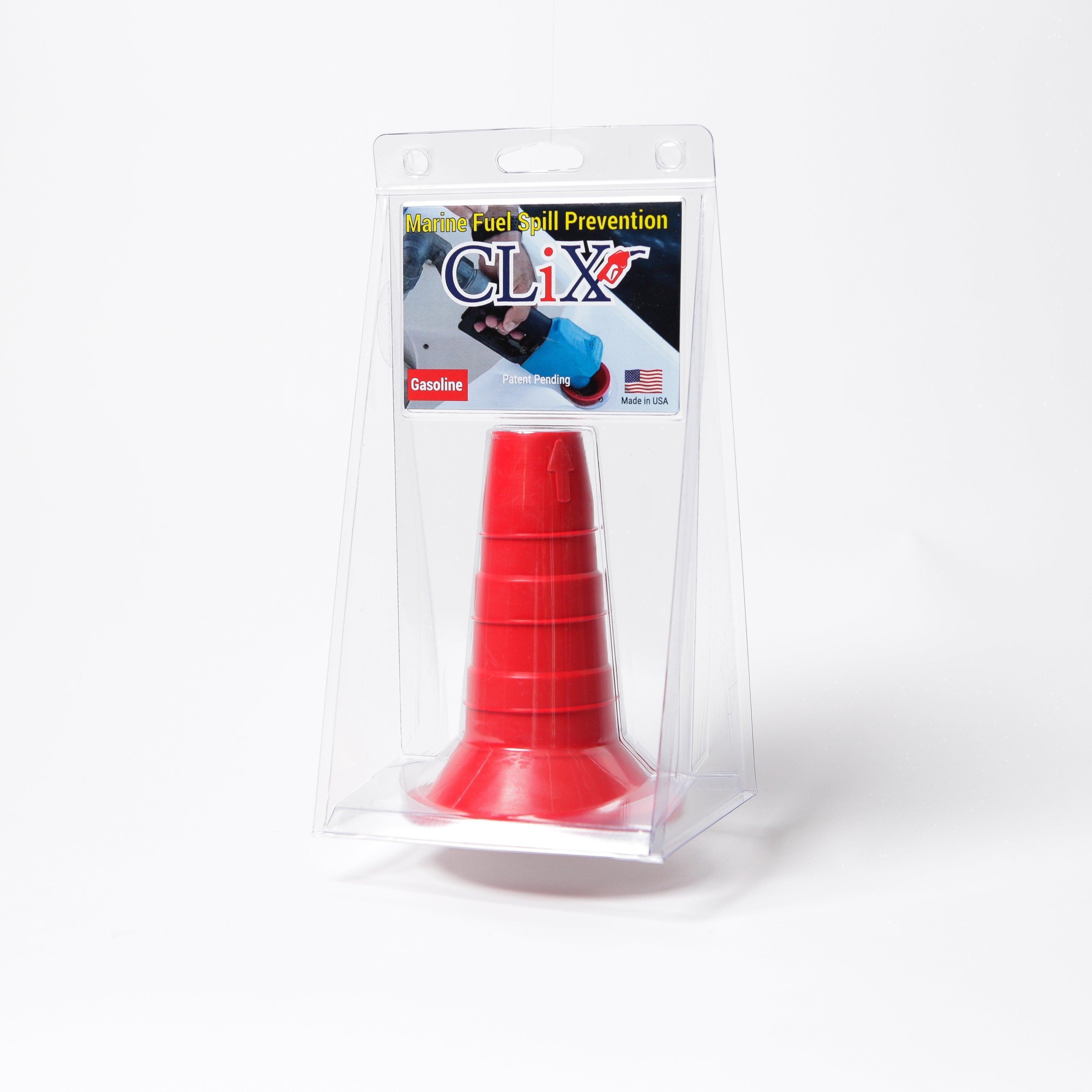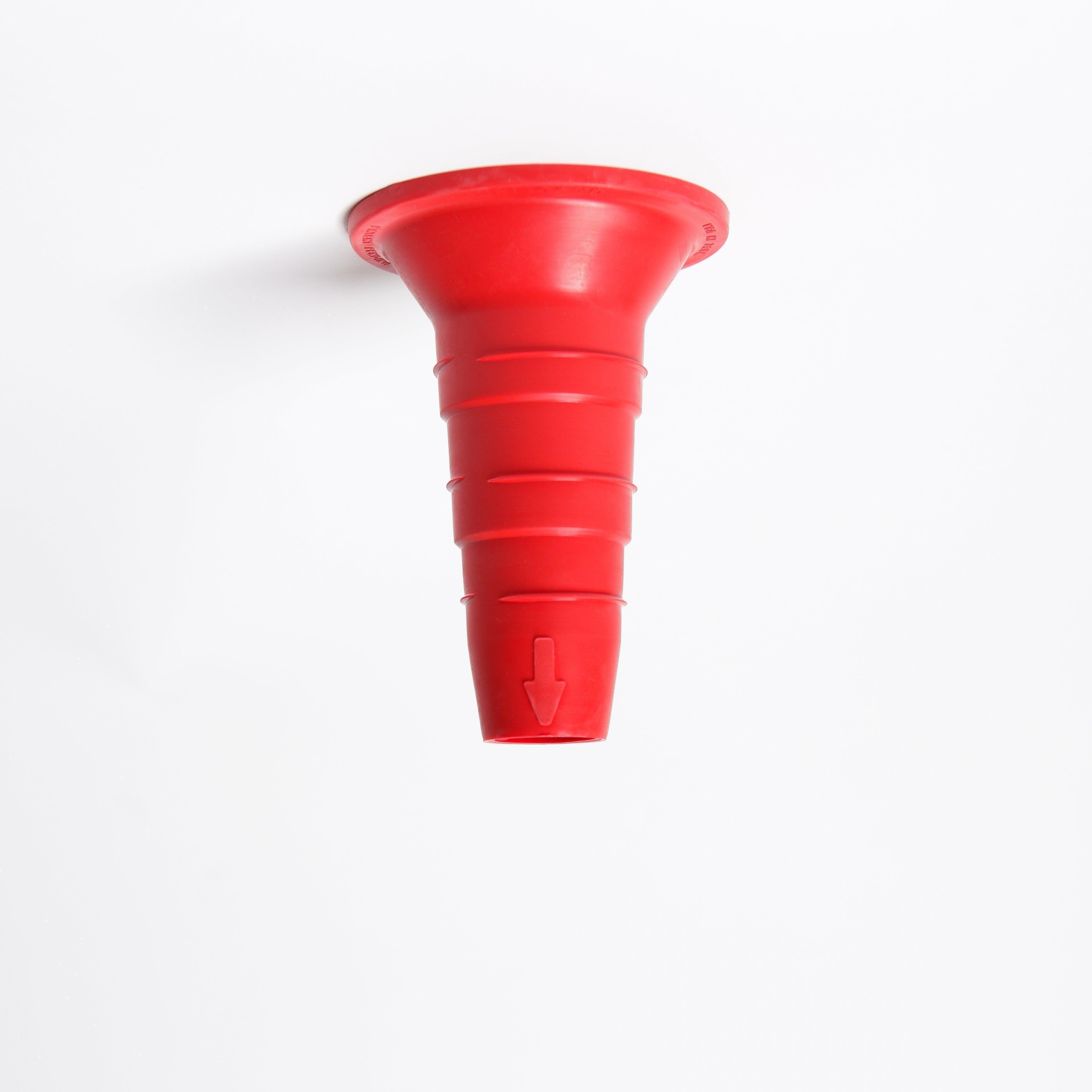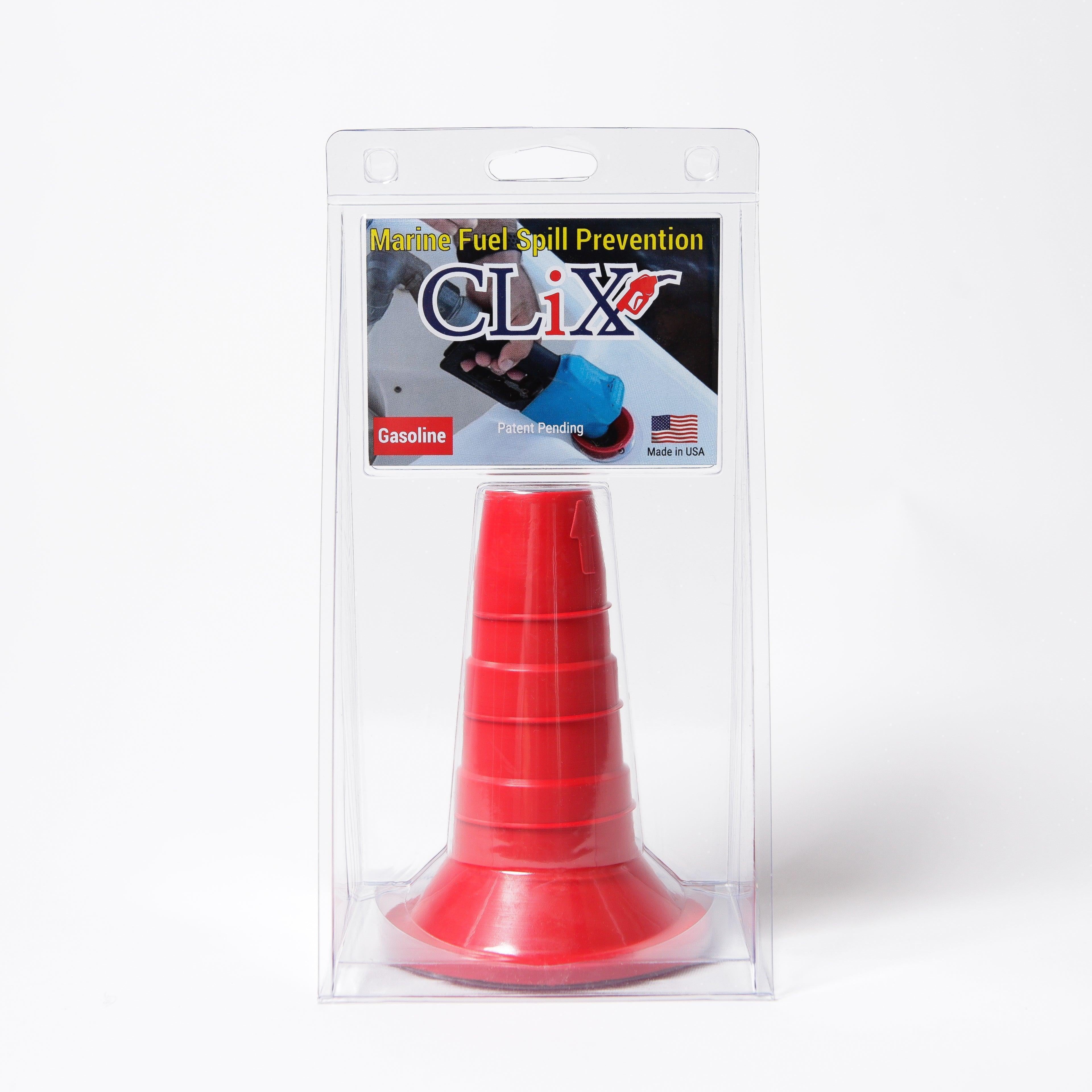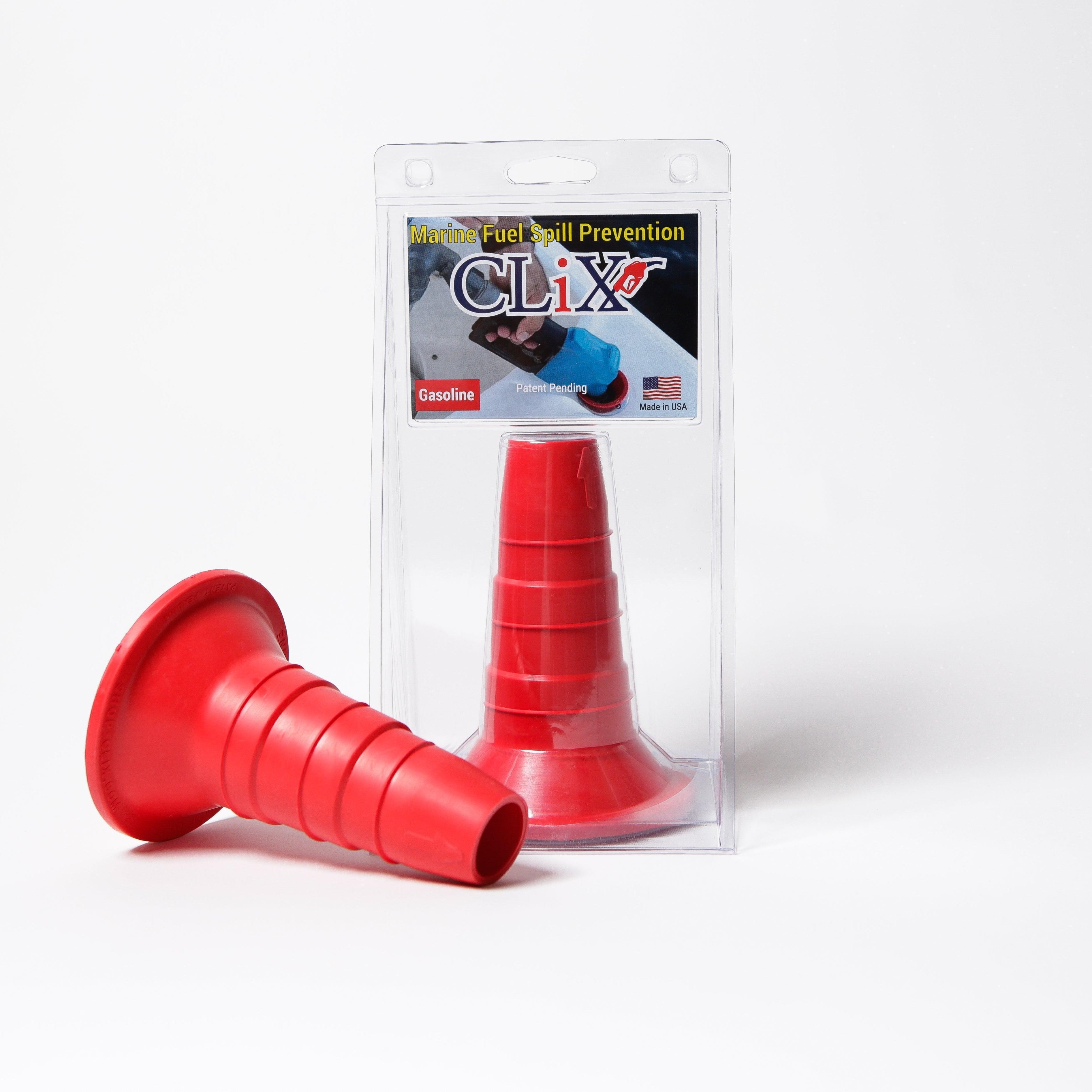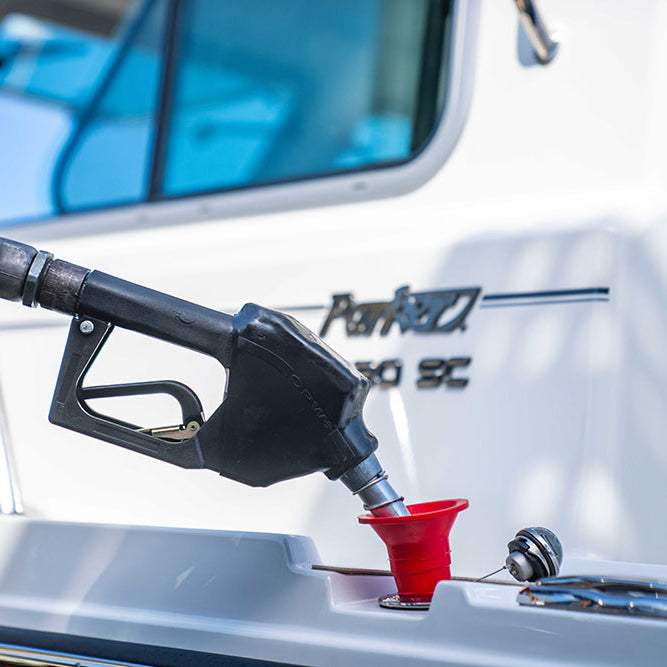
A funnel with a filter screen is a surprisingly simple yet powerful tool. It’s a two-in-one gadget that guides fuel into your tank while catching nasty contaminants like water, dirt, rust, and other debris before they ever get near your engine.
Think of it as the first line of defense for your boat's most critical component. For any boater, this is an absolutely essential piece of safety and maintenance gear.
Why Smart Boaters Never Fuel Without a Filter Funnel
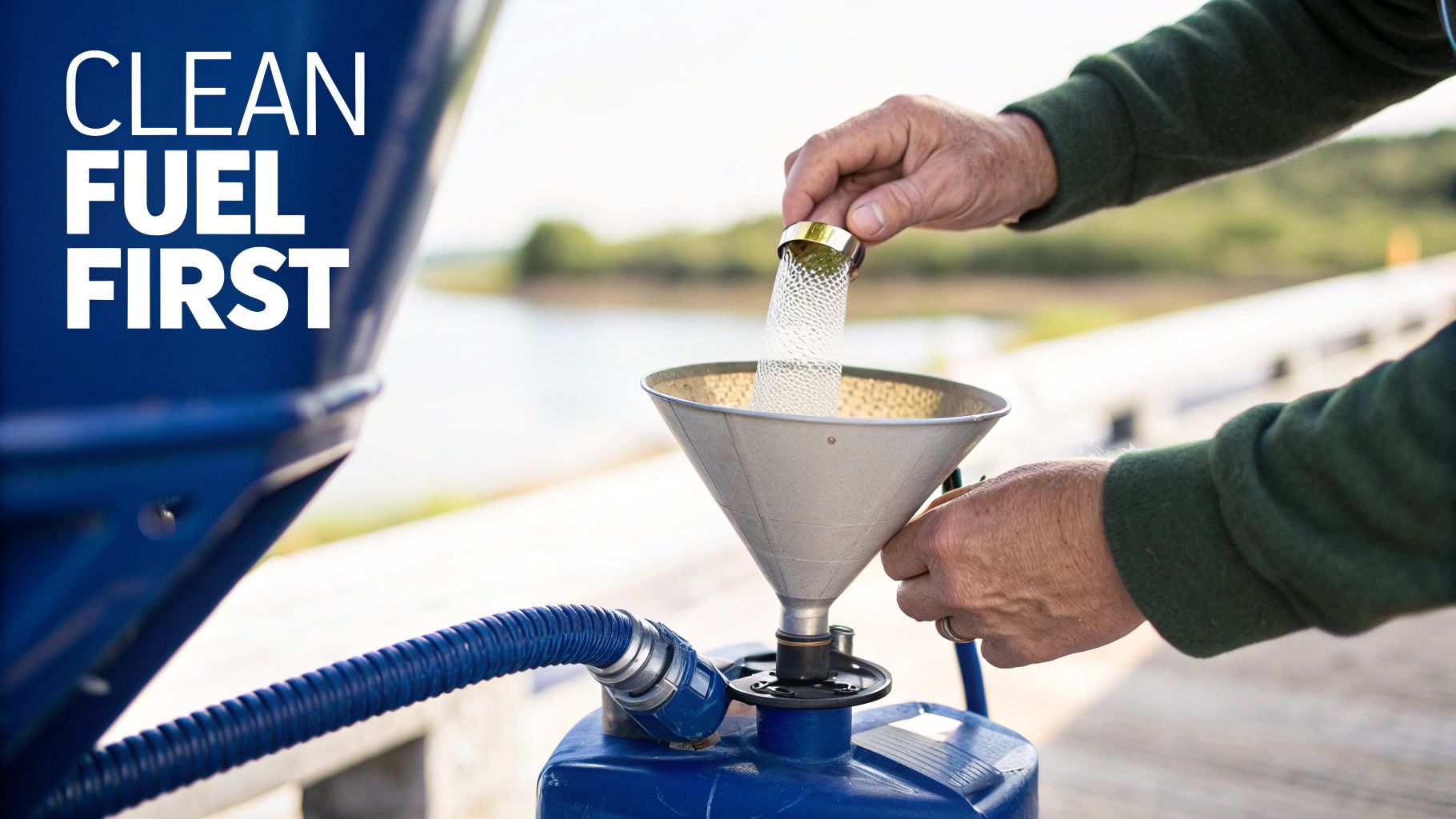
We’ve all been there. You’re at the fuel dock, carefully holding the nozzle, trying to listen for that tell-tale gurgle that means the tank is almost full. You’re praying you don’t get a messy, dangerous overflow. It’s a common moment of stress for every boater, but it’s also a big risk. One little splash can ruin your boat’s finish, and a spill pollutes the water we all love.
This is exactly where a funnel with a filter screen changes everything.
It’s not just a basic plastic funnel. It’s more like a high-tech strainer built specifically for your fuel. Sure, it directs the flow, but its real job is protection. As the fuel pours through, a fine mesh screen acts like a bouncer at a club, stopping the troublemakers that often hide in fuel tanks.
The First Line of Defense for Your Engine
Your marine engine is a precision machine, and it absolutely hates dirty fuel. Even tiny amounts of water, rust flakes from old storage tanks, or sediment can cause serious damage to its internal parts. These contaminants are often small enough to get past your boat's main fuel filter, leading to big headaches down the line.
A funnel with a built-in screen adds a crucial layer of pre-filtering, stopping these issues right at the source. It makes sure the fuel going into your tank is as clean as it can be. This simple step helps to:
- Prevent Clogged Injectors: By catching minuscule particles, it keeps your fuel injectors spraying cleanly and working at peak performance.
- Protect Carburetors: Grit and grime are stopped cold before they can gum up jets or cause other damage.
- Extend Engine Life: Nothing is more fundamental to a healthy, long-running marine engine than clean fuel.
A filter funnel isn't just an accessory; it's cheap insurance against some of the most common and expensive engine problems you can face. Preventing just one repair pays for the funnel many times over.
Beyond protecting your engine, using a funnel is also about being a responsible boater. It dramatically cuts down the risk of spills, which aren't just messy but are also incredibly harmful to marine life. If you're looking to take that a step further, learning how to prevent marine pollution is a great next step. This simple device is one of the easiest ways to protect both your investment and the waters you enjoy.
Protecting Your Engine and Our Waterways
Using a funnel with a filter screen is one of the smartest, simplest things you can do every time you refuel. Think of it as a two-for-one deal: you’re protecting your boat's pricey engine and doing your part for the fragile marine environment at the same time. It’s an essential piece of gear for any boater who takes pride in their vessel and the waters they enjoy.
Keeping Your Engine Healthy
First and foremost, let's talk about your engine. Even the cleanest fuel from a reputable marina can pick up nasty little contaminants. Tiny bits of sediment, rust from storage tanks, or even water from condensation can find their way into your fuel.
Once that gunk gets into your fuel system, it starts causing problems. It can clog up sensitive fuel injectors or gum up carburetor jets, which means poor performance, stalling, and eventually, a big repair bill. The fine mesh screen in the funnel is your first line of defense, catching these troublemakers before they even get into your tank.
A Commitment to Clean Water
Just as important as engine health is our responsibility to the environment. The funnel’s design is brilliant in its simplicity—it naturally prevents splashes and helps you avoid overfilling the tank, one of the biggest causes of fuel pollution in our waterways.
Every single drop of spilled fuel is toxic to marine life. A small spill creates that ugly, rainbow-colored sheen on the water that can harm fish, birds, and the tiny organisms that are the foundation of the entire aquatic food web. Using a funnel is a direct, hands-on way to stop that from happening.
This simple practice is more than just a good habit; it’s a commitment to responsible boating that helps you comply with regulations like the Clean Water Act and protect the waterways you enjoy.
Think about it: you're at a busy fuel dock, trying to eyeball your tank level. It’s a recipe for a spill. For boaters, using a funnel with a filter screen can slash spill risks by a whopping 70%. This aligns perfectly with the CLiX Fueling Solutions mission to make every fueling a spill-free event.
This simple tool not only protects your boat's deck from corrosive fuel but also plays a huge role in safeguarding our marine ecosystems. With over 12 million recreational boats in the U.S. alone, regulations like the Clean Water Act have required these preventive measures since 1972, and non-compliance can lead to fines averaging $14,000. You can learn more about the growth of marine fuel systems on Future Market Insights.
Proactive Environmental Stewardship
Preventing spills at the dock is a fantastic start, but being a true steward of our waters goes even further. Taking small, proactive steps to preserve our shared environment makes a huge difference.
For instance, reading a guide to cleaning up a river can offer great ideas on how our individual actions add up to a massive positive impact. When you combine smart fueling habits with a broader awareness of environmental care, you create a ripple effect that keeps our waters healthy for generations of boaters to come.
How to Choose the Right Funnel With Filter Screen
Picking the right funnel with a filter screen isn’t rocket science, but a little know-how goes a long way. The perfect funnel for your vessel will match your boat and how you fuel up, making the process cleaner, safer, and much more efficient. After all, the funnel you'd use for a small dinghy is worlds apart from what's needed for a large motor yacht.
Your choice really boils down to three things: what it's made of, how fast the fuel flows through it, and how fine the filter screen is. Get these three elements right, and you’re setting yourself up for success every time you head to the fuel dock.
This flowchart breaks down just how critical this simple tool is for keeping your engine happy.
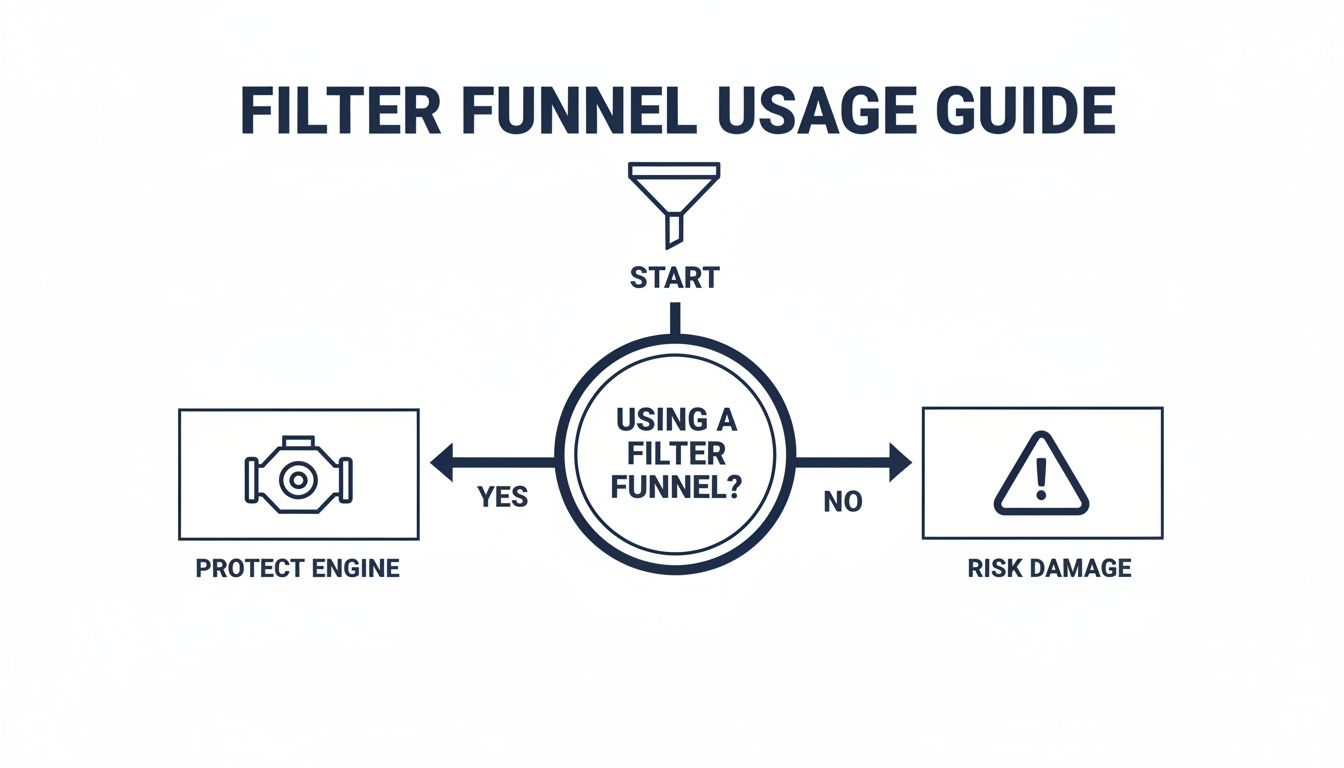
As you can see, using a filter funnel is a direct line to protecting your engine. Skipping it? That’s just rolling the dice on costly repairs down the road.
Material and Durability
The first fork in the road is material. Your main options are a tough, chemical-resistant plastic or a sturdy metal like stainless steel. Each has its place on board.
- Plastic Funnels: These are the go-to for most boaters. They’re lightweight, easy on the wallet, and often made with conductive polymers to prevent dangerous static buildup. They also won't rust or corrode in the harsh marine environment.
- Metal Funnels: For heavy-duty use, nothing beats metal. Stainless steel or coated metal funnels are built to last, making them ideal for commercial vessels or busy marinas where equipment is used all day, every day.
Flow Rate and Size
Next up is flow rate. A funnel that’s too slow will make fueling feel like an eternity, but one that’s too fast for your tank’s opening can cause a messy, wasteful splash-back. You want to find that sweet spot.
Big boats with high-speed pumps need a funnel with a wide mouth and a high flow rate to keep pace. For smaller boats or when filling portable tanks, a more compact funnel is much easier to manage and stow away.
A good rule of thumb is to choose a funnel with a spout that fits snugly into your fill pipe but still leaves room for air to vent. This simple trick prevents that "glugging" that can cause fuel to burp back out, creating a dangerous spill.
Funnel Feature Comparison for Boaters
To make it even easier, here’s a quick breakdown to help you match a funnel’s features to your specific needs.
| Feature | Material Type | Ideal Use Case | Key Benefit |
|---|---|---|---|
| Conductive Polymer | Carbon-Infused Plastic | Fueling gasoline-powered boats of any size. | Prevents static sparks, a major fire hazard. |
| High Flow Rate | Large-mouth Plastic or Metal | Large yachts, commercial vessels with big tanks. | Speeds up fueling by matching high-speed pumps. |
| Compact Size | Small Plastic | Dinghies, personal watercraft, portable fuel cans. | Easy to handle and store in tight spaces. |
| Ultra-Fine Screen | Stainless Steel or Teflon-Coated | Diesel engines, areas with questionable fuel quality. | Catches the smallest debris and separates water. |
| Heavy-Duty Build | Stainless Steel | Marina fuel docks, commercial fishing fleets. | Extreme durability for constant, rugged use. |
This table should help you zero in on the features that matter most for your boat, ensuring you get a tool that’s not just good, but perfect for the job.
It’s interesting to think that these simple-looking funnels have a long history. After WWII, as the boating population exploded to 5 million in the U.S. by 1960, these tools became essential. Early versions with basic mesh screens could still trap 99% of particles over 100 microns, preventing the very same injector clogs that can sideline modern engines. That legacy of protection is more critical than ever, especially as the marine fuel injection market is expected to grow from USD 5.8 billion in 2024 to USD 8.3 billion by 2034.
Thinking about efficiency isn’t limited to boats, either. It’s a lot like how kitchen tap aerators use a simple screen to improve performance and reduce waste. For a more detailed guide on finding the perfect model, take a look at our article on choosing a fuel funnel for a boat.
Best Practices for Using and Maintaining Your Filter Funnel
Owning a good funnel with filter screen is a great start, but knowing how to use it is what really protects your engine and the water. A little bit of technique and a simple maintenance routine can make sure your funnel does its job perfectly every time you fuel up.
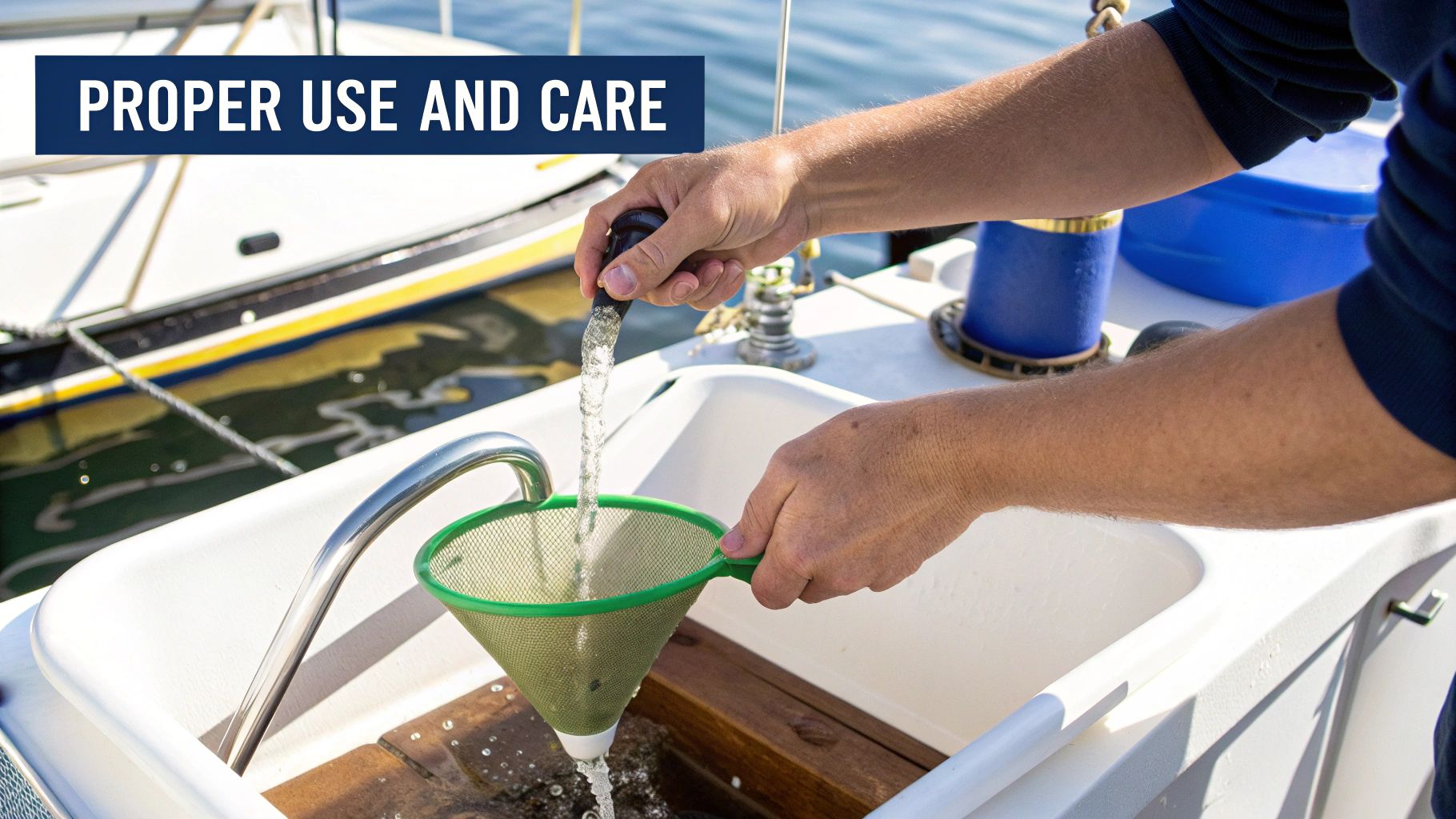
Think of it like using a strainer in the kitchen. You wouldn't just dump everything in at once. You pour slowly and carefully to make sure only the good stuff gets through. The same idea applies here. Building these simple habits now will save you from major headaches later on.
Proper Funnel Usage at the Dock
Before you even pick up the fuel nozzle, take a second to get everything set. A few moments of prep can be the difference between a clean fill-up and a dangerous, messy spill.
-
Get a Solid Fit: First things first, make sure the funnel is sitting securely in the fuel fill opening. It should be snug and level, so you don’t have to hold it. This frees up both of your hands to handle the nozzle.
-
Control Your Pour: Start slow. A steady, controlled flow is what you’re aiming for. If you pour too fast, you can overwhelm the filter screen, causing fuel to splash back and make a mess.
-
Watch the Flow: Keep an eye on the filter as you're fueling. If you see the flow slowing to a trickle, the screen might be getting clogged. It’s always better to stop and check than to try and force fuel through a blocked filter.
A clean funnel is an effective funnel. By making post-fueling maintenance a non-negotiable part of your routine, you guarantee your equipment is always ready to protect your engine from contamination.
Simple Maintenance for Longevity
What you do after you’re done fueling is just as important. A dirty funnel can just introduce old contaminants into your next tank of clean fuel. A quick clean-up is all it takes to prevent this.
Here's a simple checklist to run through after every use:
- Rinse It Out: Right after you finish, use a small amount of clean fuel or a solvent your funnel's manufacturer recommends to rinse out any gunk from the funnel and the screen.
- Let It Air Dry: Shake out the excess liquid and let the funnel dry completely in the open air. This stops moisture from getting trapped inside, which you definitely don't want mixing with your fuel.
- Store It Smart: Once it’s dry, put your funnel with filter screen away in a clean, dry spot. A dedicated locker or even a sealed plastic bag works perfectly to keep it free of dust and grime until next time.
Pairing Your Funnel With an Automatic Shutoff System
A funnel with a filter screen is one of the smartest, simplest tools a boater can own. It’s your engine's first line of defense, making sure that every drop of fuel going into your tank is clean and free of junk that could cause major headaches down the road. Think of it as a gatekeeper, protecting your engine's sensitive parts from gunk and water.
But here’s the thing: that filter funnel is only doing half the job. Its purpose is to guarantee clean fuel, not to prevent a messy, dangerous, and expensive overfill. Stopping the flow at the perfect moment? That's still all on you, requiring your full, undivided attention.
This is where teaming up your funnel with an automatic shutoff system creates a truly complete fueling solution. It's like having a two-part security system for your boat. The filter funnel takes care of fuel quality, while a system like CLiX handles the quantity, making sure you never spill a single drop.
When you put them together, you've effectively neutralized the two biggest risks in marine fueling: contamination and overfills.
The Ultimate Fueling Duo
Picture this: you're at the fuel dock, pouring diesel or gas through your trusty filter funnel. You know the screen is doing its job, catching any sediment or water before it gets into your tank. But you're still hunched over, listening intently for that gurgle that tells you the tank is almost full, ready to yank the nozzle out at a moment's notice.
Now, let's add an automatic shutoff device to that same scene.
The funnel is still doing its vital filtration work, but you're not on high alert anymore. You can actually relax a bit. The shutoff system is standing guard, monitoring the fuel level for you and instantly clicking the nozzle off the second your tank is full.
This combination gives you genuine peace of mind:
- Contamination is Blocked: Your funnel ensures only pristine fuel makes it into the tank.
- Spills are Eliminated: The shutoff system acts as a foolproof backstop against overflows.
- Stress is Removed: No more guessing games or last-second panics. The whole process just became safer and a lot more pleasant.
By combining these two tools, you shift from a reactive fueling process to a proactive one. You're not just hoping to prevent problems—you're building a system where contamination and spills are virtually impossible.
Solutions like CLiX really amplify this synergy. By automatically stopping the fuel nozzle, users have reported zero spills over 1,000 uses. We also know from historical data that simply using filtered fuel can extend engine life by as much as 25%. With the marine fuel injection market projected to hit $5.33 billion, avoiding the 15% failure rate caused by dirty fuel is more critical than ever. You can dig into these marine fuel system market trends on Market.us if you're interested.
At the end of the day, the funnel purifies while the shutoff device protects. To get a better handle on how the technology works, check out our guide on the automatic fuel shut-off valve. This powerful duo really is the future of smart, responsible boating.
A Smart Investment for Every Boater
It’s easy to look at a funnel with a filter screen and see it as just another piece of gear to stow away. But that’s missing the bigger picture. Think of it less as an accessory and more as an essential investment with an immediate and obvious payback. This simple tool is one of the cheapest and most effective ways to look after your boat, your budget, and the waters you love.
For any boat owner, the math is simple. If this funnel prevents just one single instance of engine trouble caused by bad fuel, it could save you thousands in repair bills. On top of that, it helps you avoid messy, wasteful overfills that can damage your boat's finish, helping to preserve its value and appearance.
The Financial and Environmental Payoff
The benefits aren't just for individual boaters; marina operators have a lot to gain, too. Encouraging boaters to use filter funnels cuts down on the environmental liability that comes with fuel spills. It makes the entire dock safer and helps build a great reputation with customers who care about the environment. It's a small change that signals a big commitment to responsibility.
The numbers here are pretty staggering. While we often think of huge tankers when it comes to marine fuel, recreational boaters deal with their own version of fuel waste. Overfills alone are estimated to waste 20% of fuel, which costs the 12 million boaters in the U.S. something like $500 million every year.
And that's not all. Unfiltered fuel can push engine emissions 12% over IMO limits, putting you at risk for some hefty fines. The U.S. Coast Guard has data showing that simply filtering your fuel can cut engine breakdowns by a whopping 35%—a clear sign of how much protection this simple step offers. You can dive deeper into propulsion system trends at GMI Insights.
Ultimately, this inexpensive device isn't a cost—it's savings in a box. It prevents expensive repairs, conserves fuel, and protects our environment, making every trip to the fuel dock safer and more enjoyable.
Making this part of your fueling routine is a win-win for everyone involved. It’s a tiny adjustment to how you do things, but it delivers real, measurable benefits for a safer, cleaner, and more efficient day on the water.
Frequently Asked Questions
Even with a tool as straightforward as a funnel with a filter screen, a few questions always pop up. Here are some clear, simple answers to the most common things we hear from boaters, designed to help you fuel up cleanly and safely.
Do I Really Need a Filter Funnel if My Boat Already Has One?
Yes, absolutely. Think of the funnel's filter as your first line of defense. It’s a pre-filter that catches the bigger junk—dirt, debris, and water—right at the source, before it even has a chance to get into your fuel tank.
Taking this first step keeps your boat's main fuel filter from getting clogged up so fast, which makes it last longer and saves you money. It's a whole lot easier and cheaper to clean out a funnel screen than it is to deal with gunk that's already made its way into your fuel system.
How Do I Clean and Maintain My Filter Funnel?
Keeping your funnel in good shape is dead simple and takes just a minute. After each use, just rinse the funnel and its screen with a little bit of clean fuel or a good solvent to get rid of any trapped residue.
Let it air dry completely, then store it somewhere clean and dry, like in a dedicated locker or a sealed bag. This keeps dust and moisture out and makes sure your funnel with a filter screen is ready to go next time. Every so often, give the screen a quick look-over for any damage or stubborn clogs to make sure it’s still doing its job.
Are Filters Different for Gasoline and Diesel?
You bet. The type of fuel makes a big difference. Some funnels are built just for diesel and might have special coatings or finer mesh screens that are hydrophobic—meaning they let fuel pass through but block water. This is a huge deal for stopping the dreaded "diesel bug" (microbial growth) before it starts.
Gasoline funnels, on the other hand, are designed to handle its unique additives and flow. Always check the label to make sure the funnel you grab is made for your type of fuel. It’s the only way to get the best and safest results.
A filter funnel keeps the fuel going into your tank clean. But if you look away for a second, it can't stop an overfill. A complete system needs to solve both problems.
Why Do I Need CLiX if I Already Use a Filter Funnel?
This is a great question because a filter funnel and CLiX solve two different, but equally critical, problems at the fuel dock. The funnel takes care of fuel quality, making sure what goes into your tank is clean. But it does absolutely nothing to stop a spill if you get distracted or misjudge how much fuel you need.
That's where CLiX comes in. It complements the funnel by automatically shutting off the fuel nozzle the second your tank is full, guaranteeing you never have a spill. When you use them together, you get the complete, worry-free solution: clean fuel from the funnel and zero spills from CLiX.
Ready to make spills a thing of the past? Pair your filter funnel with the ultimate automatic shutoff device from CLiX Fueling Solutions for a totally stress-free day on the water. Discover the CLiX difference today!