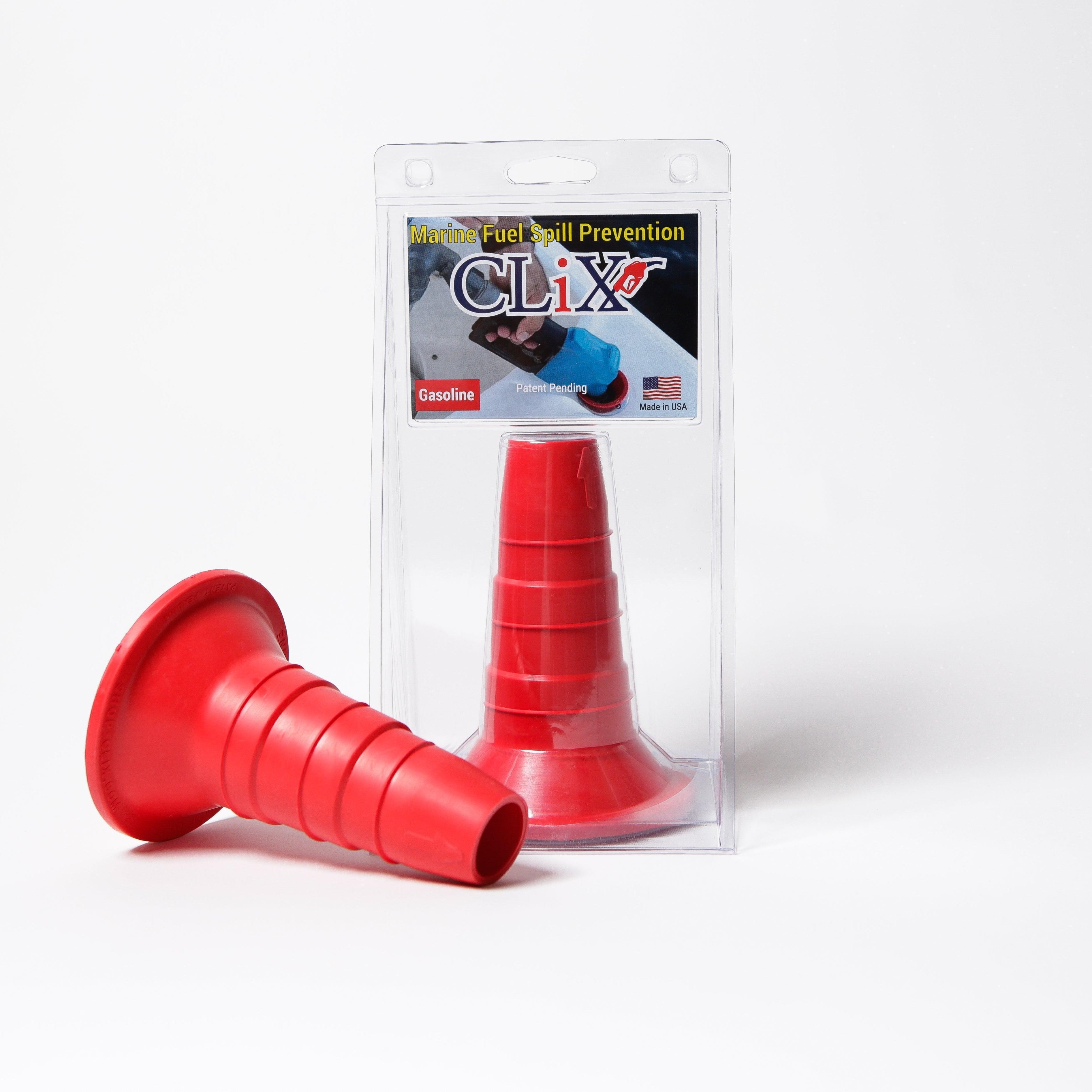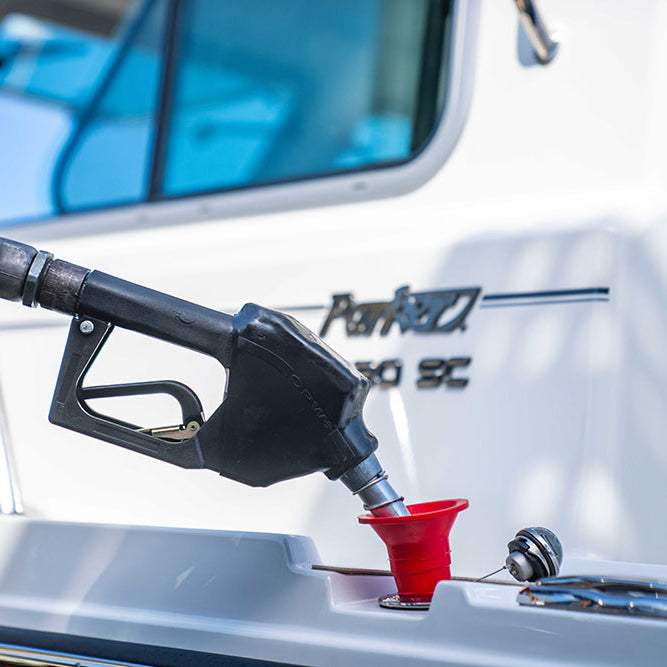
For decades, refueling a boat meant one thing: wrestling with heavy, awkward gas cans. Every boater knows the feeling—the strained back, the shaky pour, and the inevitable spill that stains the deck or, worse, slicks the water. It’s a clumsy, inefficient ritual that's long overdue for an upgrade.
An electric portable gas pump is that upgrade. It’s a modern, common-sense tool that makes refueling safer, cleaner, and a whole lot easier. Instead of relying on brute force and a bit of luck, you get a controlled, effortless way to transfer fuel. For any serious boater or marina operator, it’s a game-changer.
Why Manual Fueling Is a Thing of the Past
Let's be honest, the old way of fueling is just plain terrible. It’s not just an inconvenience; it’s a recipe for disaster.
Here’s what you're really dealing with when you lift those cans:
- Risk of Injury: A full 5-gallon gas can tips the scales at over 30 pounds. Lifting that repeatedly is a great way to strain your back and shoulders.
- Costly Spills: One little slip and you've got gasoline all over your boat's beautiful fiberglass or teak. That's a mess that requires immediate, and often expensive, cleanup.
- Environmental Harm: Even small spills add up, polluting the water we all enjoy. It's bad for marine life and can even lead to fines for violating environmental laws.
The Modern Alternative to Manual Labor
An electric portable gas pump takes all that hassle and risk out of the equation. Instead of tipping and pouring, these compact devices use a small motor to do the work for you, moving fuel directly from the can into your boat's tank.
It’s like switching from hauling buckets of water to using a garden hose. The job gets done faster, with a fraction of the effort, and without the mess.
The market backs this up. The global fuel transfer pump industry was valued at USD 1.71 billion in 2021 and is projected to reach USD 2.51 billion by 2030. That kind of growth tells you one thing: people are tired of the old way and are actively seeking out smarter, safer solutions. You can dig deeper into these numbers over at Grandview Research.
This isn't just about getting a new gadget; it’s about fundamentally changing how you fuel your boat. It turns a dreaded chore into a quick, clean, and safe task, freeing you up to spend more time actually enjoying the water.
To give you a clearer picture, let's compare the old and new methods side-by-side.
Manual Fueling vs Electric Pump Fueling
| Aspect | Traditional Methods (Lifting Cans) | Electric Portable Gas Pump |
|---|---|---|
| Effort | High physical strain; requires lifting 30+ lbs. | Minimal; the pump does all the work. |
| Spill Risk | Very high; relies on unsteady pouring. | Extremely low; provides a controlled flow. |
| Speed | Slow and cumbersome. | Fast and efficient. |
| Safety | Risk of back injury, spills, and fumes. | Greatly improved safety, no heavy lifting. |
| Convenience | Low; awkward and messy. | High; simple, clean, and easy to use. |
The difference is night and day. Moving away from outdated, inefficient methods is a smart move for any boater. If you’ve ever struggled with older equipment, you know the frustration. You can learn more about those challenges in our guide on the manual gasoline transfer pump.
By adopting a tool like an electric pump, you're not just making your life easier. You're protecting your investment, prioritizing your safety, and doing your part to keep our waters clean.
How Does an Electric Fuel Pump Actually Work?
To really get why an electric portable gas pump is such a game-changer for safety and convenience, it helps to peek under the hood. You don't need an engineering degree—just think of it as a small, powerful heart for your fuel can, built to move gas from point A to point B without any drama.
At its core, the pump is just a few key parts working together perfectly. Each piece has a specific job, and when you flip the switch, they all kick into gear to make fueling smooth and controlled.
The Key Players Inside Your Pump
Let's break down the main components. Once you see what each part does, the whole process makes perfect sense.
- The Electric Motor: This is the muscle of the whole operation. It runs off a 12V DC source, like your boat's battery, and provides the spinning force that gets the fuel moving.
- The Impeller: Picture a tiny water wheel or a set of paddles tucked inside the pump. When the motor spins, the impeller spins with it, grabbing the fuel and forcefully pushing it through the hose. This is what creates the suction and flow.
- The Intake Hose: This is simply the "straw" that goes into your gas can. It's always made from fuel-grade materials that won't break down from contact with gasoline or diesel.
- The Nozzle: Think of this as the "faucet." It gives you total control over the flow of fuel. The best ones have an auto shut-off feature, which is a lifesaver for preventing messy and dangerous overfills.
This image really drives home how much safer and cleaner this process is compared to the old way of doing things.
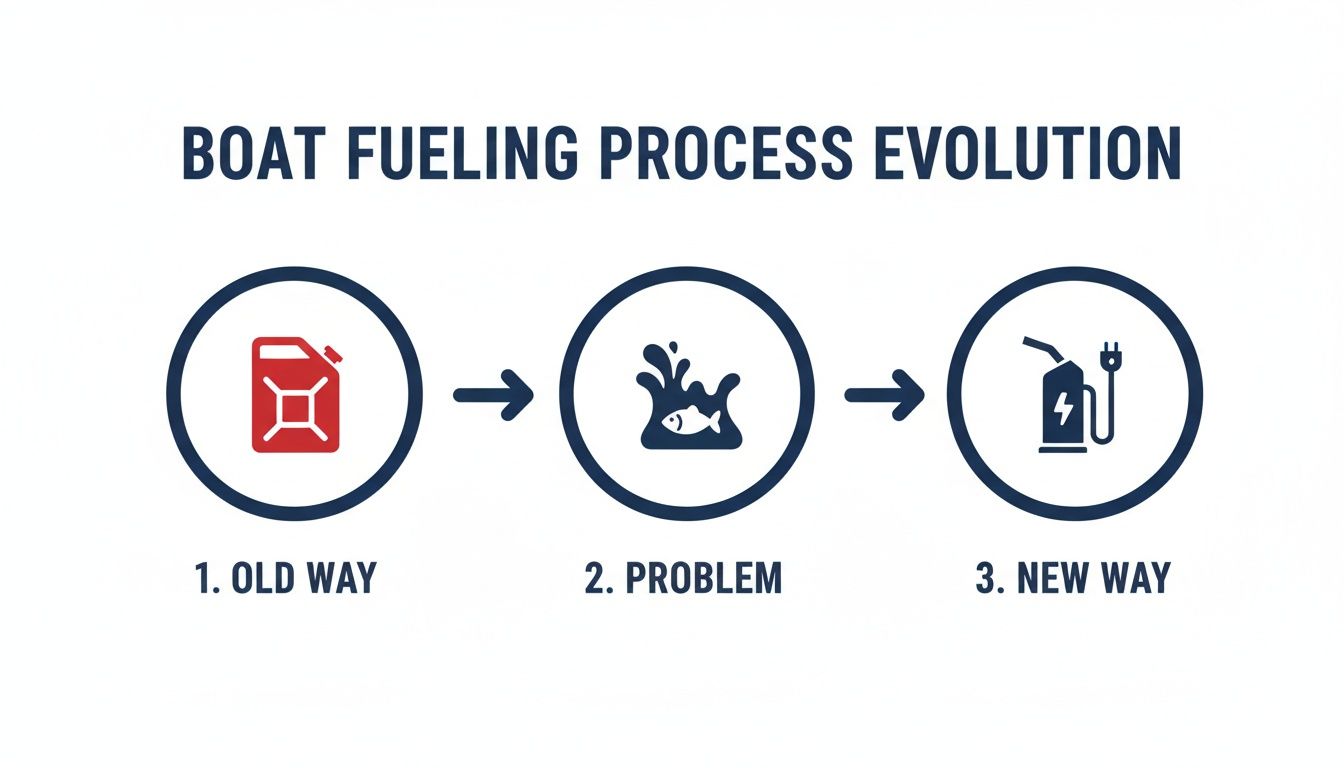
You can instantly see how the pump takes the risk of spills right out of the equation. No more lifting and tilting heavy, sloshing cans.
The Fueling Process, Step-by-Step
Seeing how these parts come together makes it all click. The whole operation is designed to be dead simple.
- Power Up: First, you connect the pump's clips to your boat's 12V battery terminals—red to positive, black to negative. This gives the motor the juice it needs.
- Get in Position: Next, drop the intake hose into your portable fuel can and place the nozzle securely into your boat's fuel tank.
- Start the Flow: Flip the switch, and the electric motor whirs to life. It spins the impeller, which starts pulling fuel up the intake hose and sending it toward the nozzle almost instantly.
- Transfer with Control: The fuel moves at a nice, steady rate, usually somewhere between 2 to 4 gallons per minute (GPM) depending on the pump. This predictable stream is way safer than the "glug-glug-splash" you get from pouring a can by hand.
The real beauty of an electric portable gas pump isn't its complexity—it's the exact opposite. It turns a chore that was awkward, physically demanding, and risky into a quick, clean, and controlled task anyone can handle safely.
This straightforward mechanism is what makes modern fueling so much better. While the basic design is simple, there are many different models out there. If you're curious, you can check out our guide to the top electric fluid transfer pump solutions for a closer look at what's available. By understanding these core ideas, you can really appreciate the smart engineering that makes your time on the water safer and a lot more enjoyable.
Key Benefits for Safety and Peace of Mind
Moving to an electric portable gas pump isn't just a minor upgrade. It’s a complete game-changer for your safety, your boat, and your overall peace of mind on the water. The advantages are about so much more than just saving a few minutes at the dock. We're talking about your health, protecting the environment, and making boating genuinely more enjoyable.
Think about it: instead of wrestling with a heavy, clumsy gas can, you're using a tool built for precision and control. This one change gets rid of nearly every frustration that comes with old-school manual fueling.
Prioritizing Your Personal Safety
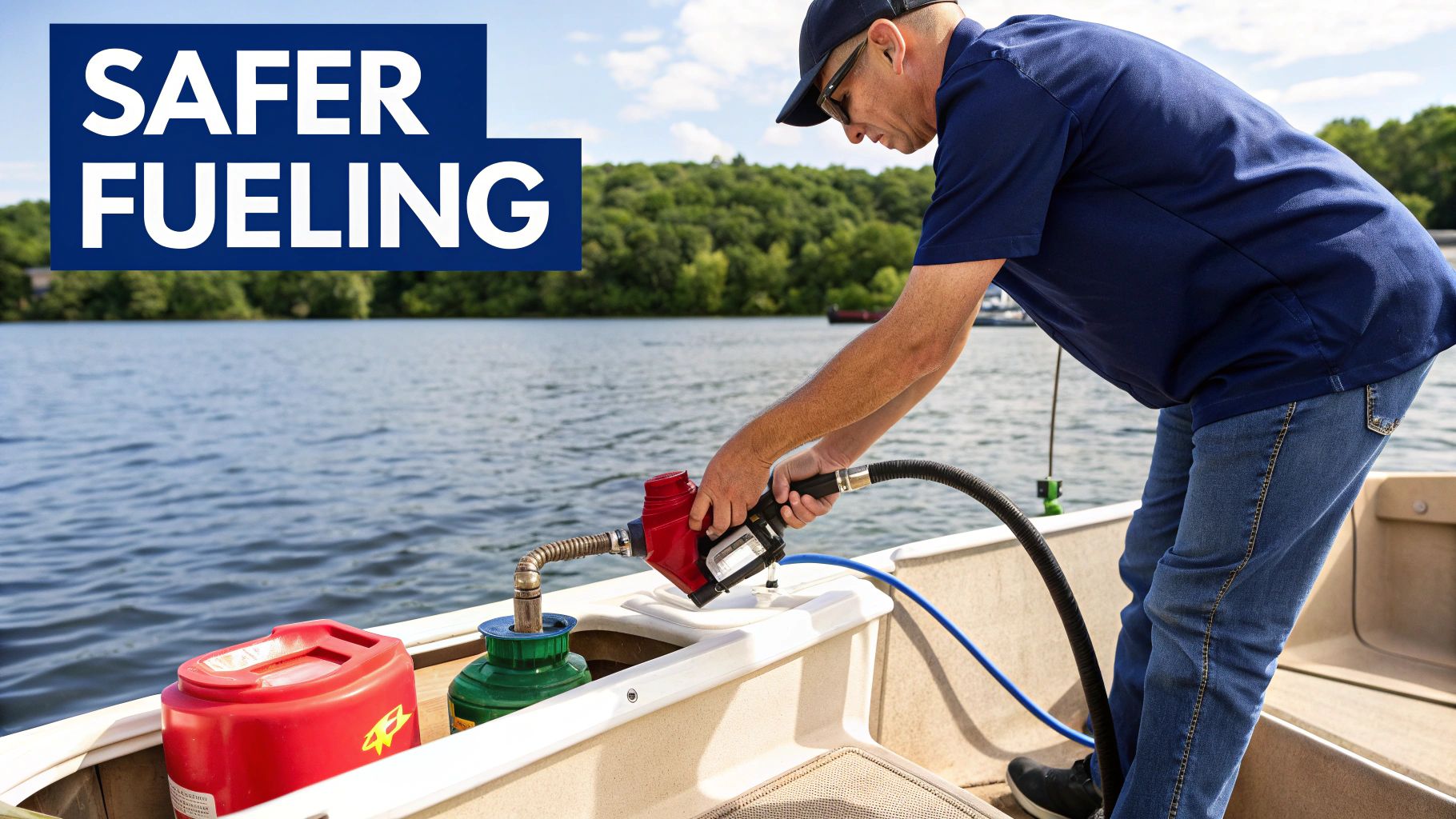
The first thing you’ll notice is the relief of not having to do any heavy lifting. A standard 5-gallon gas can tips the scales at over 30 pounds. Trying to hoist and pour that on a rocking boat or a wet dock is just asking for a pulled muscle or a serious back injury. An electric pump takes care of that heavy work for you, turning a real physical chore into a simple, effortless task.
This isn’t just about making life easier; it’s about preventing injuries that can completely derail your weekend on the water.
But it goes beyond just avoiding physical strain. These pumps are designed from the ground up to prevent dangerous fuel spills. Models with an auto-shutoff nozzle are a revelation. They work just like the pump at your local gas station, automatically cutting the flow the second your tank is full. No more overflows that slick your deck with flammable liquid and create nasty, hazardous fumes. You simply can't get that kind of control when pouring by hand. For more on this, check out our complete guide on boat fueling safety.
Protecting the Marine Environment
Every boater has a duty to look after the waters we all love. It doesn't take much—even tiny fuel spills can wreck fragile marine ecosystems, harming fish, plants, and wildlife. An electric portable gas pump is one of the best tools you can have for being a good steward of the environment.
By giving you a controlled, steady flow and stopping overflows before they happen, these devices dramatically reduce the amount of fuel that ends up in the water. This also helps you stay on the right side of environmental laws like the Clean Water Act, which carries hefty fines for fuel discharge, no matter how small. A spill-free fueling routine isn't just good practice—it's your legal and ethical responsibility.
An electric pump changes fueling from a high-stakes guessing game into a clean, precise, and repeatable process. It's the difference between crossing your fingers and guaranteeing a safe, spill-free outcome every single time.
The Unbeatable Advantage of Convenience
Let's not forget the incredible convenience. Refueling becomes quicker, cleaner, and far less of a headache. You can stop spending your time trying to balance a heavy can and then cleaning up the drips that always seem to happen. Instead, you can fuel up in a fraction of the time and get right back to what you came for—being on the water.
This kind of efficiency is exactly why this technology is booming. The wider market for portable fuel transfer pumps, valued at USD 2.01 billion in 2025, is expected to jump to USD 3.05 billion by 2032. That growth is coming from industries like agriculture and construction, where fast, mobile fueling is essential.
For boaters, the takeaway is simple: more time for cruising, fishing, or just relaxing with family. When you have the peace of mind that comes from a safer and cleaner way to fuel, you can truly enjoy your boat, knowing you’ve done the right thing for yourself, your vessel, and the environment.
How to Choose the Right Electric Portable Gas Pump
Picking the right electric portable gas pump is a lot like choosing the right tool for a critical job on your boat. The best choice really comes down to your specific needs. With so many models out there, focusing on a few key things will make sure you end up with a pump that’s safe, efficient, and a perfect fit for your vessel.
Think about it this way: a small fishing boat has completely different fueling needs than a large cruiser. Your pump should reflect that. By looking at factors like flow rate, your power source, and crucial safety features, you can make a decision you'll be happy with for years to come.
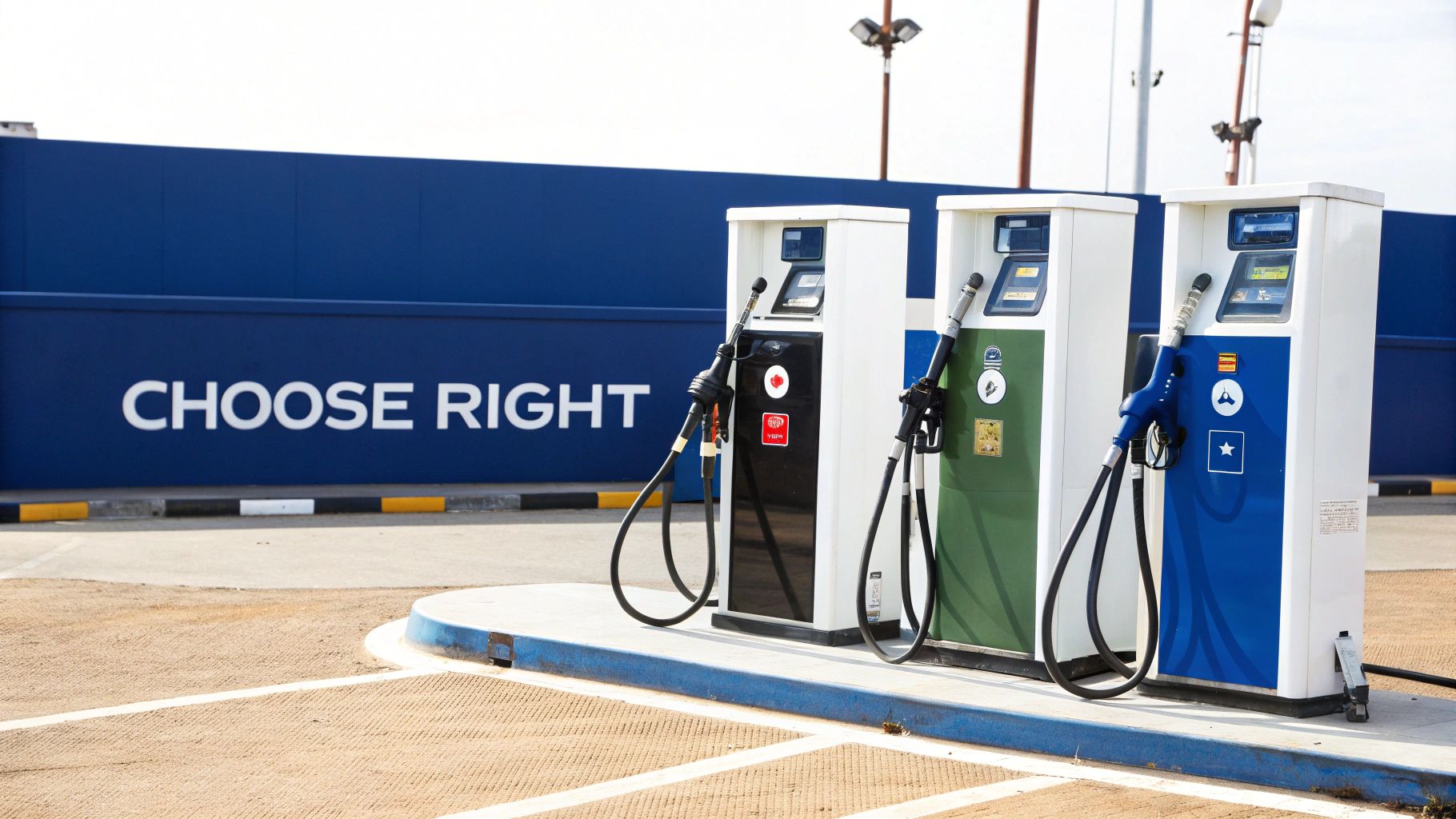
Evaluate the Flow Rate in GPM
The first spec you should always check is the flow rate, measured in Gallons Per Minute (GPM). This simply tells you how fast the pump moves fuel. A higher GPM means you’ll be done fueling faster, but don’t assume that bigger is always better.
For a small boat with a 10-gallon tank, a pump with a modest 2-3 GPM flow rate is plenty. It gives you a controlled, easy-to-manage stream that helps prevent splashes and overflows. On the other hand, if you're filling up a 50-gallon tank on a larger vessel, a higher flow rate of 4-5 GPM will save you a ton of time at the dock.
The sweet spot is finding a balance. You want a pump that’s quick enough to be convenient but not so powerful that it becomes a hassle to handle.
Consider Your Power Source
Next up, think about where you'll be doing most of your refueling. This is the biggest factor in deciding between an AC or DC-powered model.
- 12V DC Pumps: These are hands-down the most versatile option for boaters. They hook right up to your boat’s battery, letting you refuel on the water, at a remote mooring, or anywhere you can't just plug into a wall. Their portability makes them the go-to choice for almost any recreational boat.
- AC Pumps: These models need a standard wall outlet to run. While they aren't as portable, they're a great choice for marina operators or boaters who always fuel up at a dock with reliable shore power. They tend to offer a strong, consistent flow without putting any drain on your boat's battery.
Hose Length and Material Quality
The hose and nozzle are where the rubber meets the road—or in this case, where the fuel meets the tank—so their quality is something you can't compromise on. Look for a hose that’s long enough to comfortably reach from your fuel can to your boat’s tank without being stretched tight or getting kinked. A length of 8 to 12 feet usually does the trick.
Just as important is what it's made of. Make sure both the hose and nozzle are built from durable, fuel-grade materials specifically designed to handle gasoline and diesel. Cheaper plastics can break down over time, and that can lead to dangerous leaks.
Prioritize Critical Safety Features
When you're dealing with fuel, safety has to be number one. A good electric portable gas pump will have several key safety features built in to protect you, your boat, and the environment.
Look for models that include:
- Explosion-Proof Motors: This is a non-negotiable. These motors are completely sealed to stop any internal sparks from igniting fuel vapors.
- Automatic Shut-Off Nozzles: This is arguably the most important safety feature of all. It can sense when the tank is full and automatically stops the fuel flow, preventing those dangerous and messy overfills.
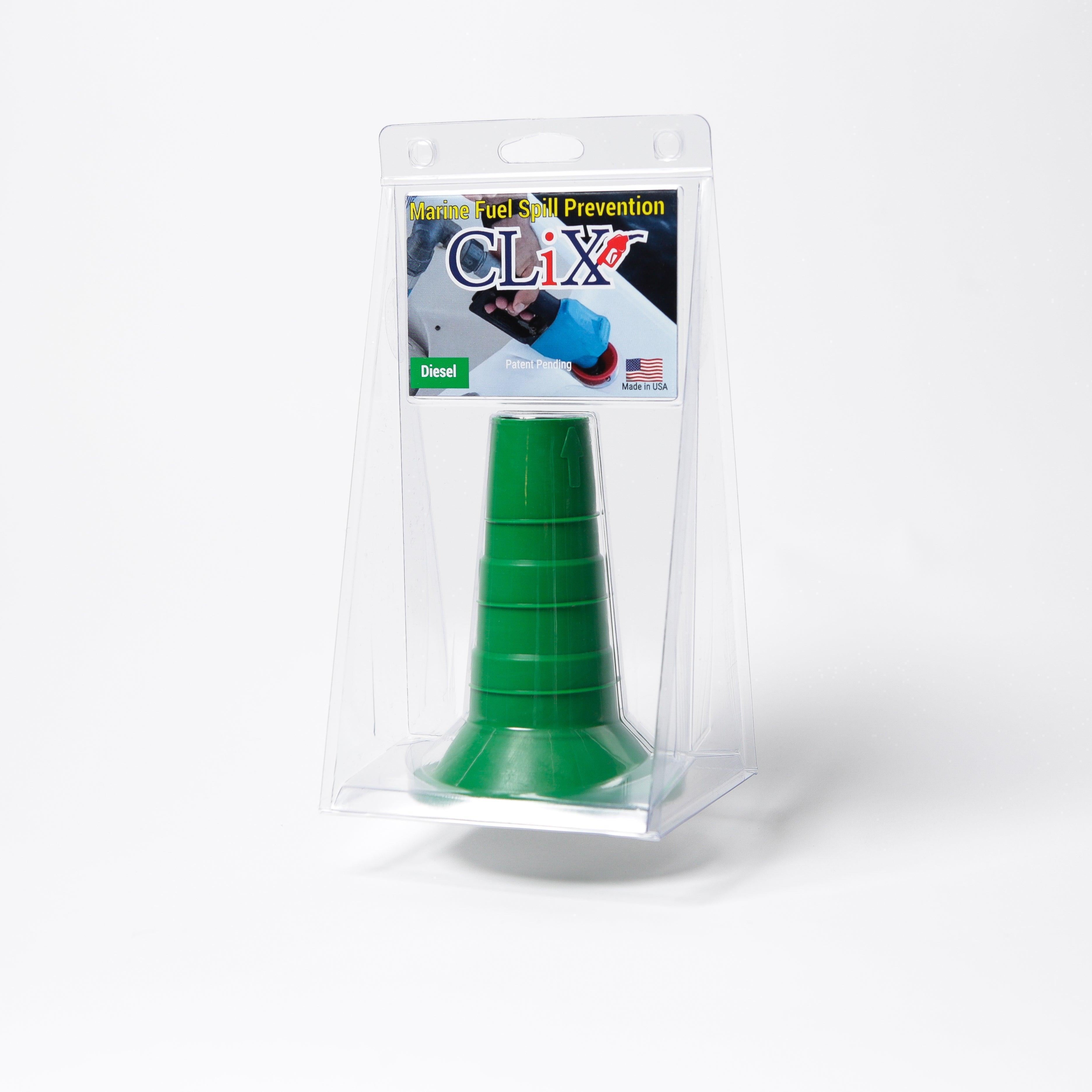
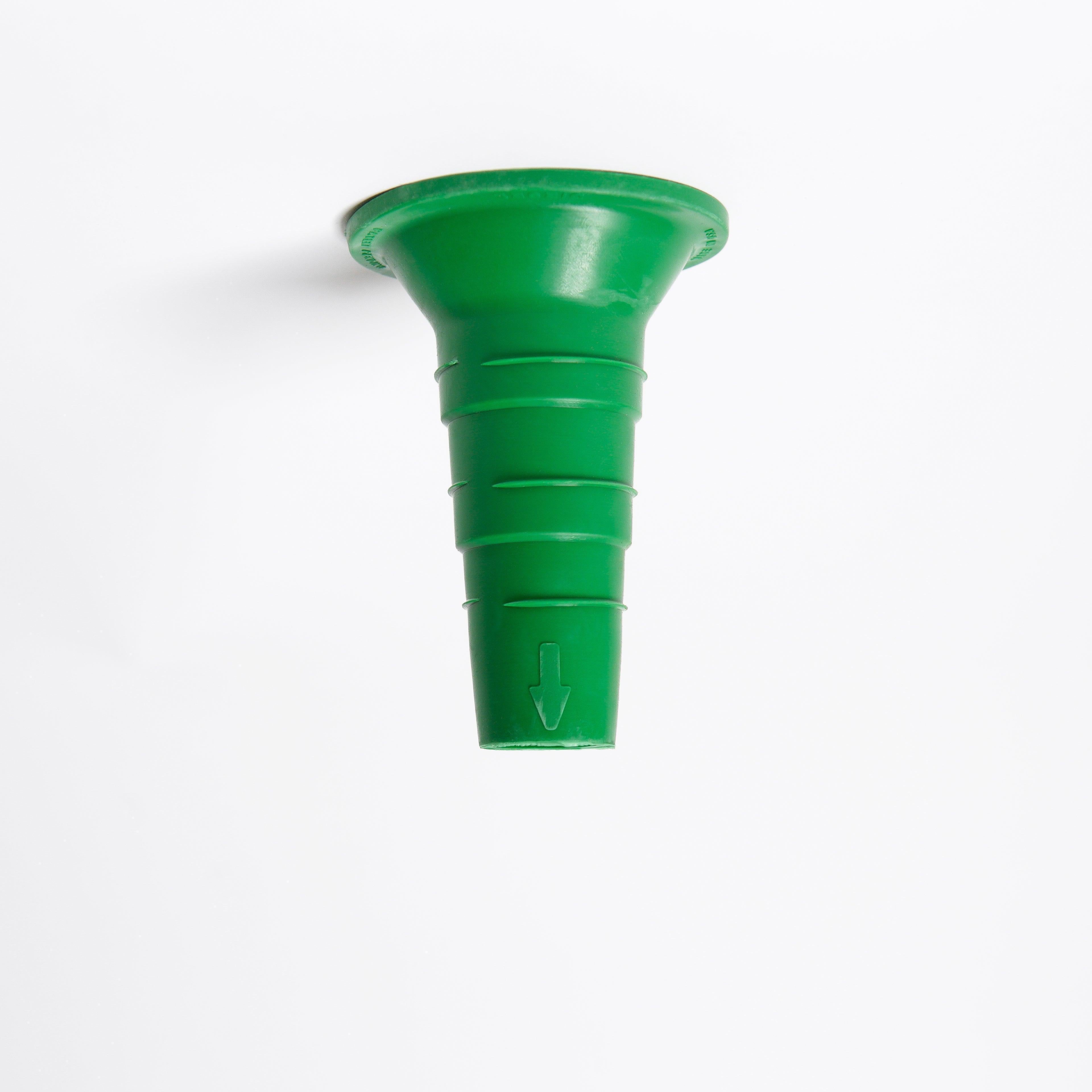
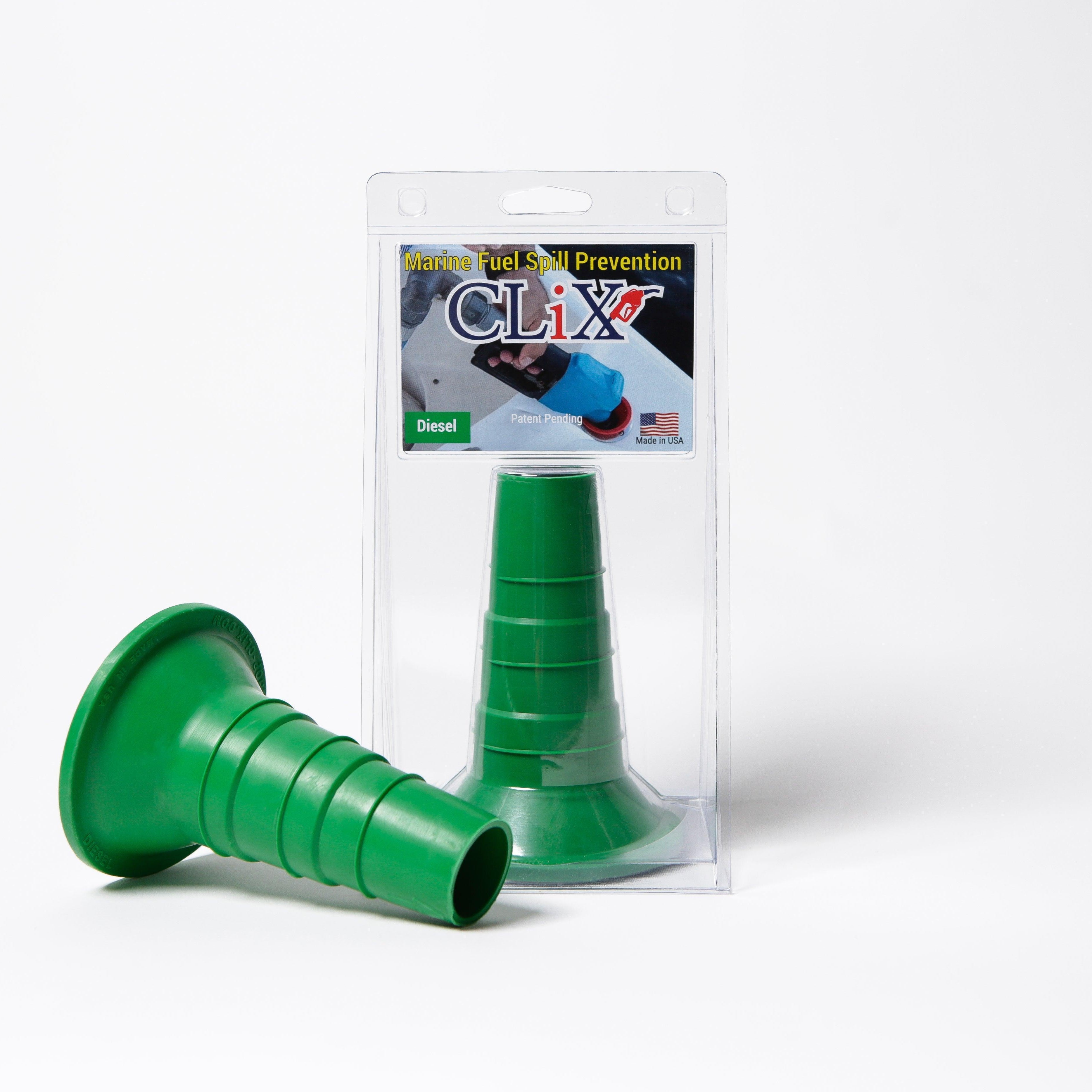
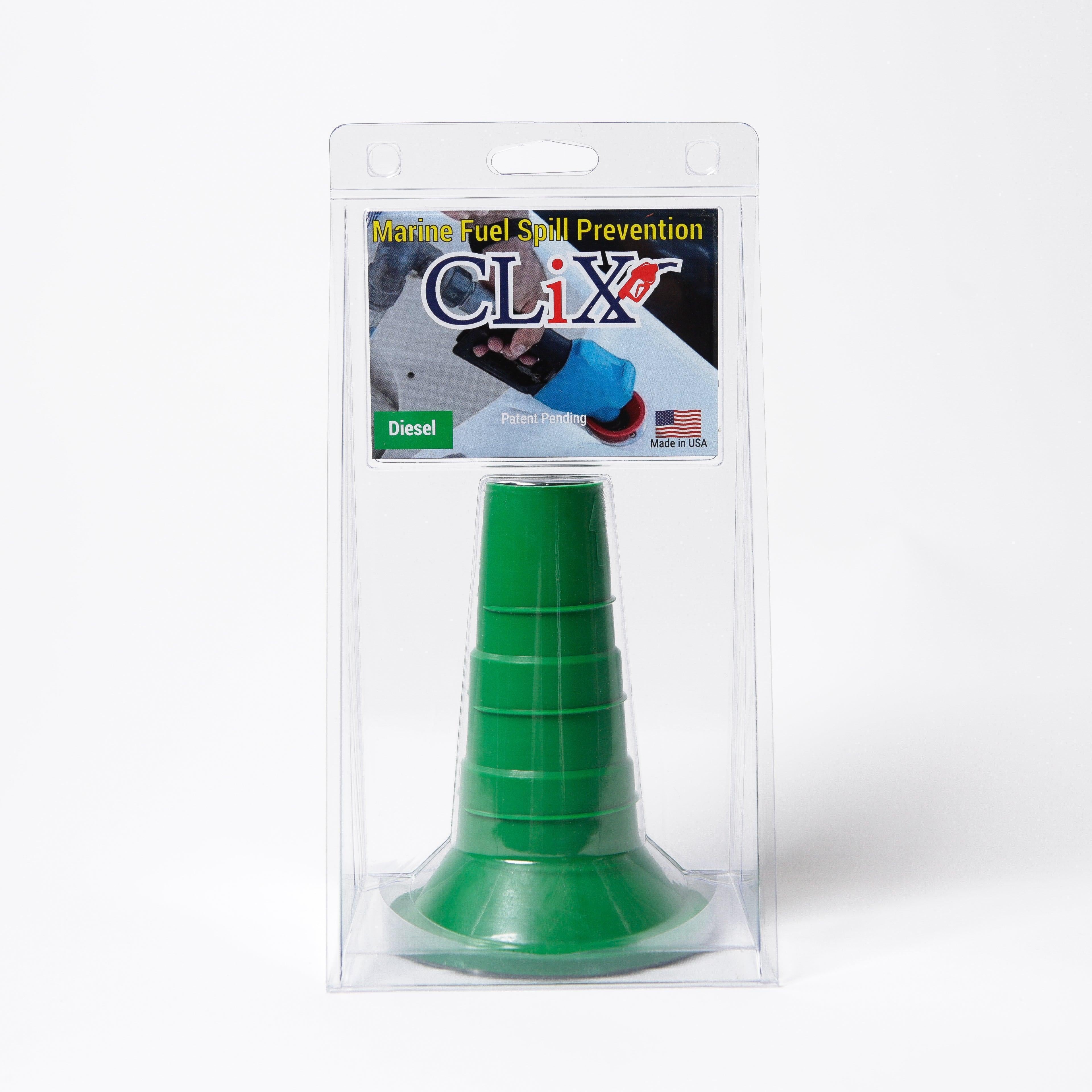
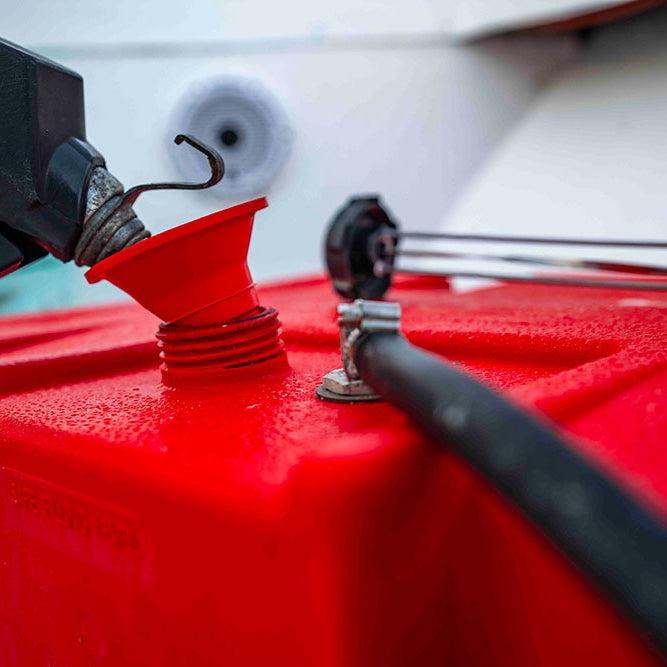
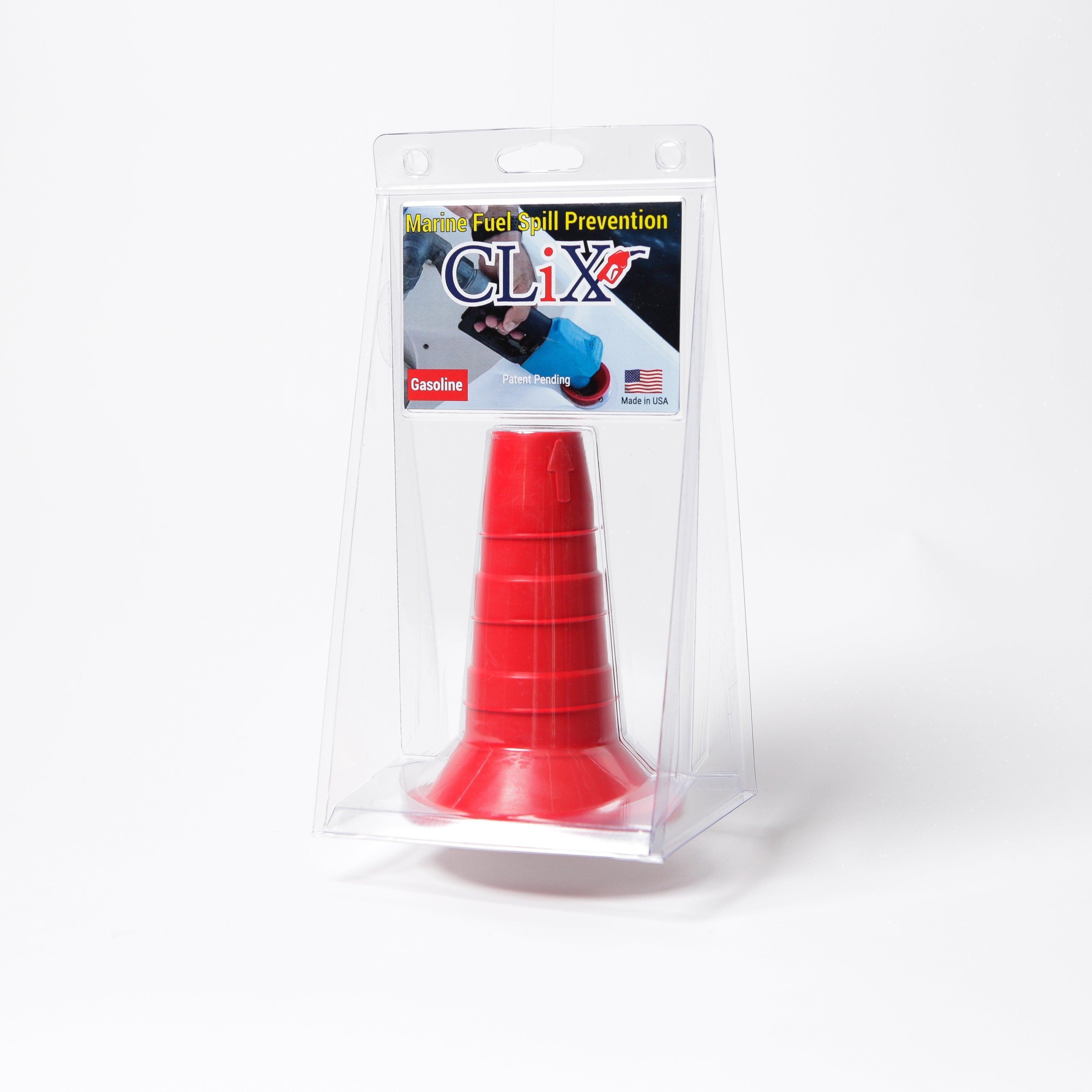
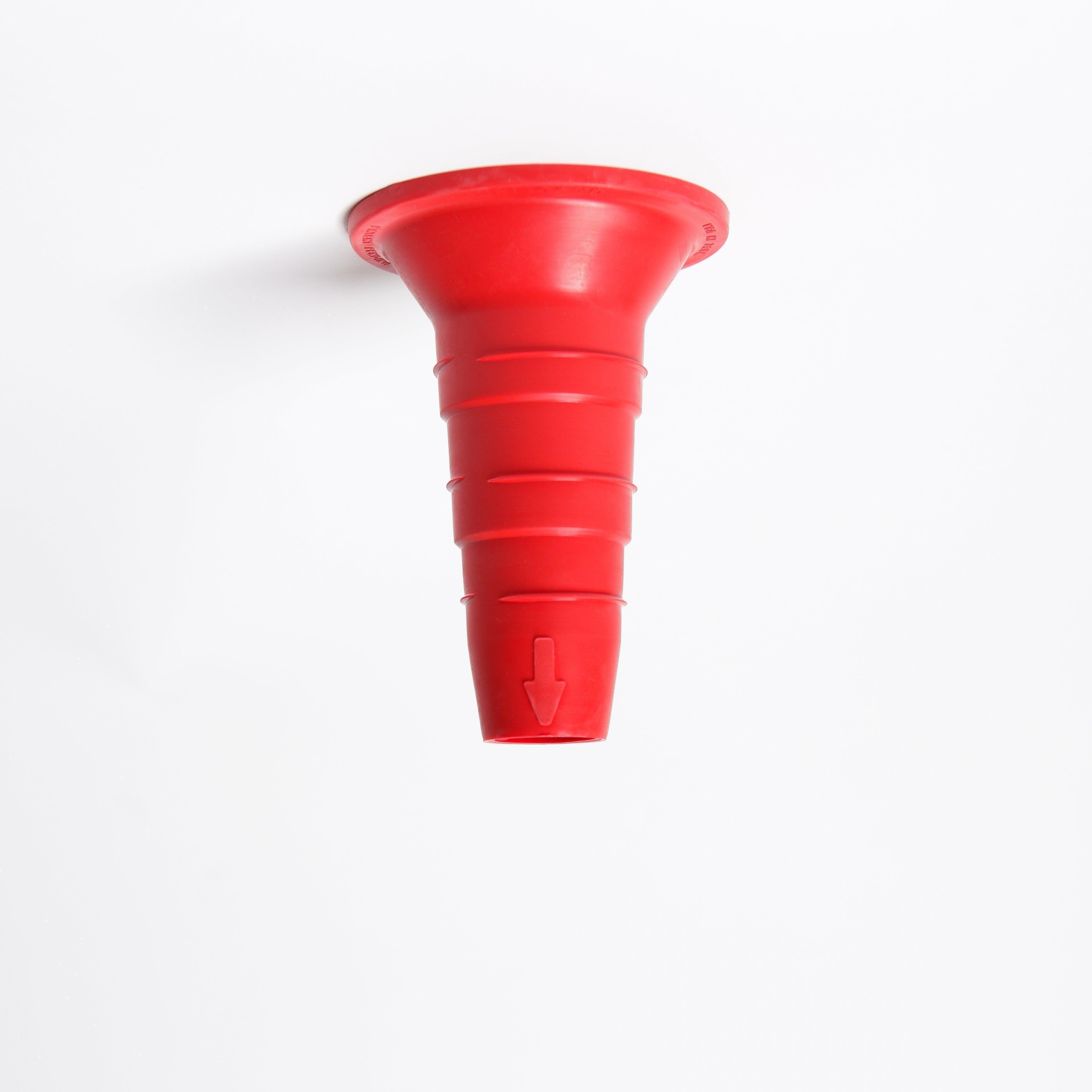
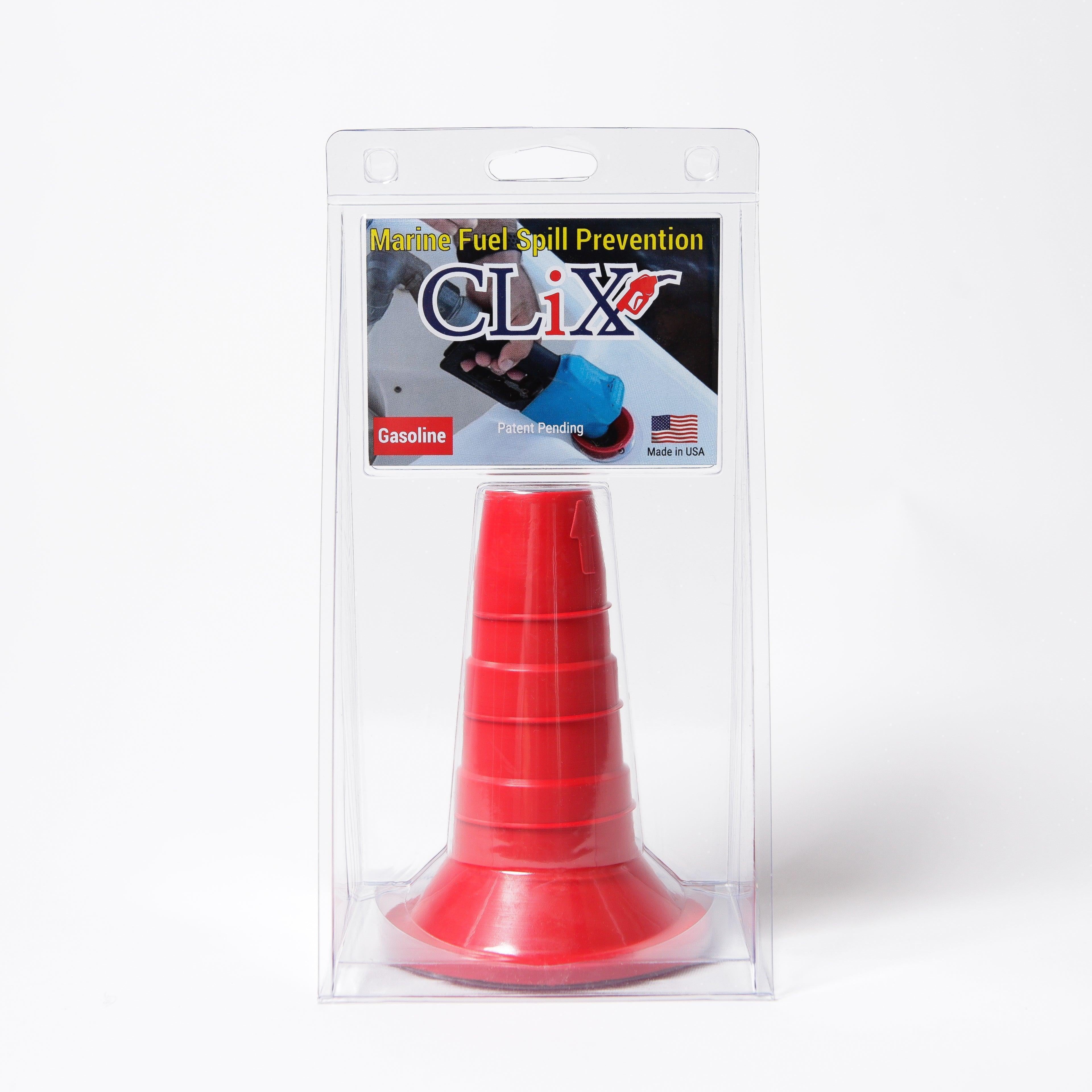
Specialized systems like CLiX Fueling Solutions take this to the next level with patented, spill-proof technology designed specifically for marine environments. This gives you the highest level of safety and compliance, for total peace of mind.
The demand for reliable, mobile fueling equipment like this is growing fast. The fuel transfer pumps market, which was valued at around US$2.1 billion in 2023, is projected to climb to US$2.8 billion by 2030. This growth is really being driven by industries where off-grid refueling is the norm, showing just how important dependable and safe portable solutions are. You can read more about these market trends on Fairfield Market Research. By choosing a pump with proven safety tech, you’re investing in a solution that meets the highest standards in the industry.
Electric Portable Gas Pump Feature Checklist
To simplify your search, here's a quick checklist you can use to compare different models. It breaks down the most important features to help you make a smart buying decision.
| Feature | What to Look For | Why It Matters for Boaters |
|---|---|---|
| Flow Rate (GPM) | 2–3 GPM for small tanks; 4–5 GPM for larger tanks. | Matches pump speed to your tank size, preventing spills and saving time. |
| Power Source | 12V DC for portability; AC for dockside use. | Ensures you have the right power for where you'll be fueling most often. |
| Hose Length | 8–12 feet of flexible, non-kinking hose. | Provides enough reach to fuel safely without stretching or straining the hose. |
| Materials | Fuel-grade, corrosion-resistant metals and plastics. | Prevents leaks and material breakdown from fuel and marine conditions. |
| Safety Features | Explosion-proof motor and automatic shut-off nozzle. | These are essential for preventing fires, explosions, and costly fuel spills. |
| Portability | Lightweight design with a sturdy carrying handle. | Makes it easy to transport and use the pump, whether on the dock or on the water. |
Ultimately, taking a moment to review these features against your own needs will ensure you end up with a pump that not only works well but also keeps every fueling-up session safe and stress-free.
Simple Upkeep for Long-Lasting Performance
An electric portable gas pump is built to be tough, but just like any critical piece of gear on your boat, a little care goes a long way. Think of proper upkeep less as a chore and more as a crucial part of responsible boating—one that guarantees your pump works safely and reliably for years to come. A simple routine is all it takes to head off common problems and make sure your pump is ready when you need it.
Your Initial Setup Checklist
Before you ever use your pump, a quick but thorough setup check is non-negotiable. This isn't just about making sure it turns on; it's about making sure it operates safely. Think of it as your pre-flight check before hitting the water.
Getting the initial setup right prevents the vast majority of issues down the road. It sets the stage for safe, clean refueling every single time.
Here are the critical steps to walk through:
- Secure All Connections: Give the intake and discharge hoses a good twist to confirm they're fastened tightly to the pump. Even a slightly loose connection can cause a dangerous leak or kill the pump's efficiency.
- Inspect the Power Cable: Look over the 12V DC power cord and its battery clamps. You're looking for any frays in the wire or corrosion on the clamps, as both can interfere with a solid electrical connection.
- Confirm Proper Grounding: Grounding is your number one defense against a static spark igniting fuel vapors. Always follow the manufacturer's instructions for grounding the unit, which usually involves a specific grounding wire. This step is an absolute must-do for safety.
A Simple Pre-Use Maintenance Routine
Getting into the habit of a quick pre-fueling check is the secret to a long-lasting pump. This whole routine takes less than a minute but can save you from a world of frustration later on. It’s all about catching small problems before they have a chance to become big ones.
This proactive mindset keeps your pump in peak condition, ensuring a safe and spill-free experience every time.
Think of your pump's maintenance like checking the oil in an engine. It's a small, repeatable action that prevents catastrophic failure and ensures the equipment performs exactly as intended when you need it most.
Before you start fueling, run through this simple checklist:
- Hose Inspection: Quickly scan the entire length of the hoses for any visible cracks, kinks, or signs of wear. Fuel-grade hoses are durable, but constant exposure to sun and use will eventually take a toll.
- Electrical Connector Check: Glance at the battery clamps and any other electrical connections. Any hint of corrosion should be cleaned off immediately, as it can disrupt the power supply.
- Nozzle Function Test: Squeeze the nozzle handle a few times to make sure it moves freely and doesn't stick. A sticky nozzle might not shut off correctly, which is a recipe for a dangerous overfill.
Proper Cleaning and Storage Techniques
How you store your pump is just as important as how you use it. When you’re finished fueling, take a moment to wipe down the pump's exterior and hoses with a clean, dry cloth to get rid of any fuel residue. This simple step prevents the materials from breaking down over time and keeps your gear clean.
For storage, find a well-ventilated spot away from direct sunlight or extreme heat. A dedicated storage box or a locker on your boat works perfectly. Just never store the pump in a sealed container where fuel vapors could build up. These straightforward habits will keep your electric portable gas pump a safe and reliable tool for many seasons to come.
Staying on the Right Side of Fueling Regulations
When you're fueling up your boat, you're not just filling the tank—you're also handling a hazardous material in a sensitive environment. It's a task that comes with some serious responsibility, backed by important safety and environmental rules. While the legal language can get dense, the main idea is straightforward: keep the fuel where it belongs and out of the water.
The biggest rule in the book for boaters is the Clean Water Act. This is a federal law, and it's crystal clear: it is illegal to discharge any amount of fuel that leaves that tell-tale rainbow sheen on the water's surface. And they mean any amount. Even a few drops of gas or diesel are enough to land you in hot water.
What You Need to Know About Spills and Fines
Under the Clean Water Act, any spill that creates a sheen is considered a "reportable quantity." That means you're legally required to report it to the National Response Center. The penalties for failing to report a spill can actually be much worse than the fines for the spill itself.
And those fines are no joke. They can easily run from hundreds to thousands of dollars, climbing even higher if the spill was caused by carelessness. This is a serious financial risk, and it highlights just how crucial a clean, spill-free fueling process is every single time.
Think of these regulations less as a burden and more as a shared standard of care for our waterways. The good news? Meeting that standard is surprisingly easy when you have the right gear.
This is where a quality electric portable gas pump really shines. It's one of the simplest and most effective ways to make sure you stay compliant. These pumps are designed to give you a controlled, steady flow, which all but eliminates the sloshing and overfills that are so common when you're trying to pour from a heavy gas can.
Better yet, modern systems like CLiX Fueling Solutions feature automatic shut-off nozzles. This technology is your best friend at the pump, making it almost impossible to overfill your tank. The moment the tank is full, the flow stops—no guesswork, no mess. By using equipment like this, you're not just making a chore easier; you're actively choosing to meet and exceed safety standards, protecting both the environment and your wallet.
Got Questions? We’ve Got Answers.
It's smart to have questions before you buy any new gear for your boat, especially something as important as a fuel pump. After all, you need to be sure you're making the right call. We get it.
Let's walk through some of the most common questions boaters and marina operators have about electric portable gas pumps. We'll give you straight, simple answers to help clear things up so you can choose with confidence.
Can I Use the Same Pump for Both Gas and Diesel?
This is a big one, and the answer is a hard no—unless the pump is specifically designed and certified for both. Gasoline and diesel are completely different animals. They have different chemical makeups and, critically, different flash points.
Trying to pump gasoline with a diesel-only pump is asking for trouble. It can create a serious ignition risk. Always, always check the manufacturer’s label. A proper electric portable gas pump for gasoline will have specific components, like an explosion-proof motor, built to handle its volatility. Stick to the right pump for the right fuel; it's a non-negotiable safety rule.
What’s the Best Power Source for My Boat?
For most boaters out on the water, a 12V DC pump is the way to go. It’s the most practical and flexible option by far. These pumps hook right up to your boat’s battery, meaning you can refuel just about anywhere—at anchor, on a mooring ball, or miles from the nearest fuel dock. That’s freedom.
AC-powered pumps are great, but they need a standard wall outlet. That makes them a better fit for stationary setups, like your personal dock or a dedicated slip at the marina where you’ve got reliable shore power. For fueling on the move, 12V DC wins every time.
Are Automatic Shut-Off Nozzles Really Necessary?
Absolutely. Think of an automatic shut-off nozzle as a must-have, not just a nice-to-have. It works just like the one at the gas station, automatically stopping the flow the second your tank is full.
This single feature is your best line of defense against messy overfills and hazardous spills. It protects your boat, the water, and takes all the stressful guesswork out of knowing when to stop. We can't recommend this feature enough—insist on a model that has it.
How Do These Pumps Prevent Static Sparks?
Good question. Preventing a static spark is job number one when handling fuel. Quality pumps tackle this in a couple of ways. First, they come with a grounding wire or a built-in grounding system that you must use correctly every single time. The instructions will show you how.
Second, proper technique is key. Always keep the metal fuel nozzle in direct, continuous contact with your boat’s fuel fill opening the entire time you're pumping. This simple action prevents static electricity from building up and creating a dangerous spark.
Ready to make every fueling experience safe, clean, and stress-free? CLiX Fueling Solutions offers the ultimate spill-proof technology designed for boaters who demand safety and reliability.