When you think of a fuel tank with a hand pump, picture the trusty multitool in your boat’s emergency kit. It’s a completely self-contained, portable fueling system that doesn't need any electricity to work—simple, reliable, and always ready when you need it most.
The Essential Role of Manual Fuel Pumps in Boating
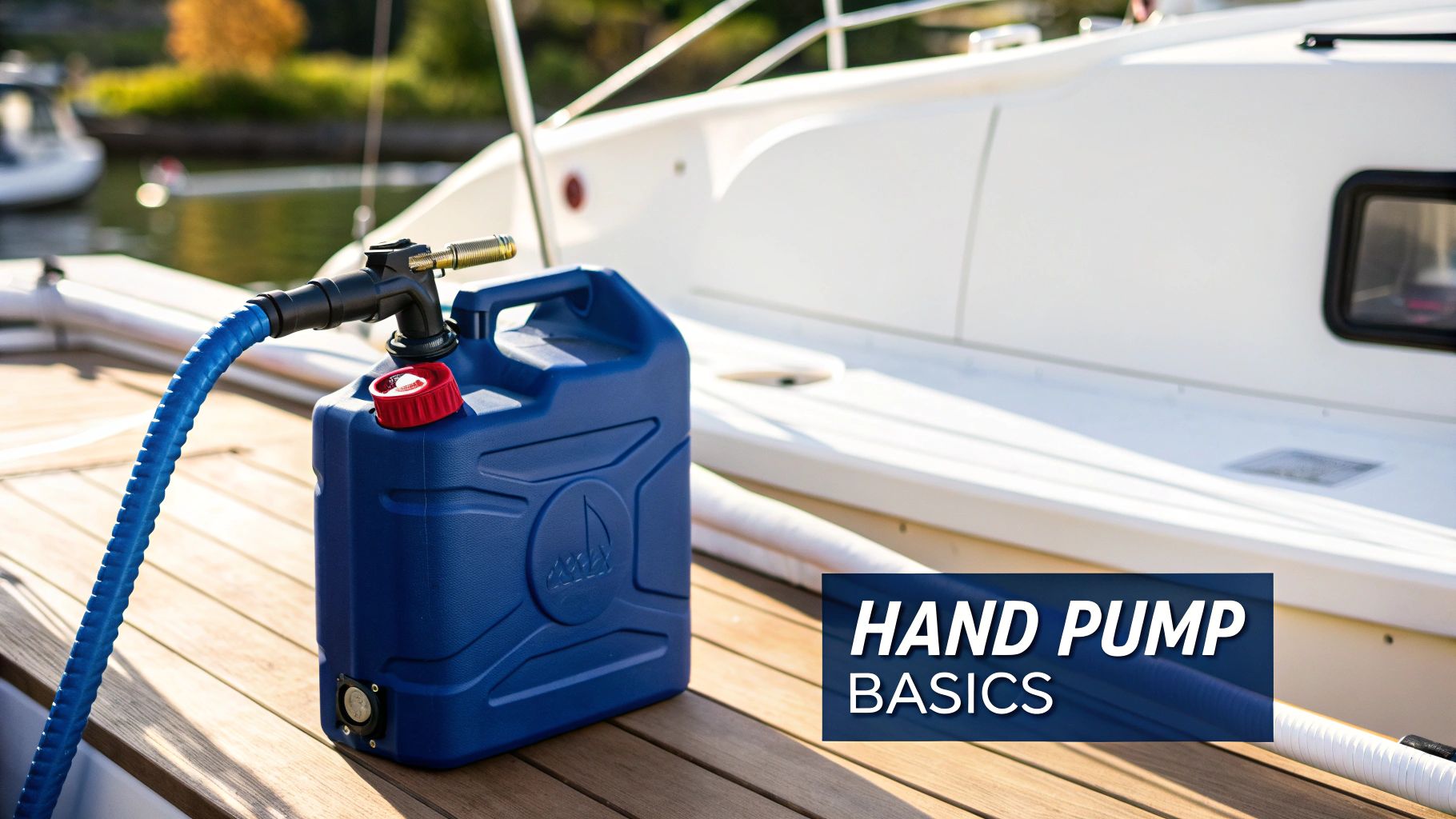
The magic behind a fuel tank with a hand pump is its brilliant simplicity. It works a lot like an old-school bicycle pump, but instead of pushing air, you’re moving fuel. By squeezing a bulb, turning a crank, or working a lever, you create a vacuum that pulls fuel right out of the container. This straightforward design is exactly what makes it so valuable, giving boaters total control without relying on a single bit of power.
Common On-the-Water Applications
This tool really proves its worth in a few common situations out on the water. Its portability is perfect for transferring fuel from a jerry can into your boat's main tank, especially when you're anchored far from a proper fuel dock. It’s a much safer and cleaner alternative to precariously pouring fuel, which almost always ends in messy, hazardous spills. You can find more details in our guide to different types of boat fuel tanks.
But it’s not just for basic transfers. A hand pump is a boater’s best friend for a few other critical jobs:
- Engine Priming: Got a stubborn engine that won’t start? A hand pump lets you manually push fuel through the lines, getting it right to the carburetor or injectors.
- Emergency Backup: If your main electric fuel pump ever gives out, a manual pump can be the difference between being stranded and getting back to shore safely. It's a real trip-saver.
- Fuel Draining: When it's time to winterize your boat or perform maintenance that requires an empty tank, this is the tool for the job.
Why Simplicity Still Matters
You might be surprised to learn just how popular these simple devices are. The hand fuel transfer pump market was valued at a whopping USD 1.2 billion and is expected to climb to USD 2.5 billion by 2034. That’s a steady annual growth of 7.5%, which shows just how much boaters continue to rely on these non-electric solutions.
For any boater who prides themselves on being self-reliant, a manual hand pump is non-negotiable. It’s your guarantee that even if every last electronic system on your boat fails, you still have a way to handle your fuel.
This deep-rooted trust in simplicity and control is why the humble hand pump remains an essential piece of gear for mariners everywhere, even with all the advanced fueling technology available today.
The Real-World Pros and Cons of Pumping by Hand
There’s no denying the utility of a fuel tank with a hand pump, but it's crucial to be realistic about its strengths and weaknesses. For many boaters, it’s a fantastic piece of kit that balances reliability with control. But knowing both sides of the coin helps you understand exactly when to reach for it and when to look for a better way.
The biggest win for a manual pump is its sheer, unwavering reliability. You've got no electronic parts, no wires, and no fuses waiting to fail you at the worst possible moment. If your boat’s power goes out, that pump still works. This simple, mechanical nature also makes it incredibly affordable—cheap to buy and virtually zero cost to maintain.
Another thing it does really well is give you precise control over small amounts of fuel. When you just need to add a gallon or two from a jerry can, a hand pump provides direct, physical feedback. You can feel the flow, letting you add just the right amount with an accuracy most powered systems can't touch.
The Downside of Doing It Yourself
Of course, that manual approach has its own set of headaches. The most obvious one? The workout. Pumping five gallons of fuel by hand is one thing, but trying to fill a large tank can get old, fast. It can turn a simple task into a real chore.
Then there's the speed—or lack thereof. The slow transfer rate is a major issue when you're dealing with anything more than a few gallons. A fill-up that takes a couple of minutes at a fuel dock could feel like an eternity with a hand pump, making it totally impractical for your main refueling needs.
But the biggest risk, hands down, is human error. It only takes one moment of distraction while you're pumping to cause a messy and dangerous fuel spill. That’s a threat to your boat’s gelcoat, your wallet, and the water we all enjoy.
Finding the Sweet Spot Between Manual and Modern Fueling
This is exactly where you start to see the limits of manual pumping, especially when you're filling up at the marina. A hand pump is a lifesaver for emergencies or small top-offs, but it does nothing to solve the number one problem at the fuel dock: overfills and spills.
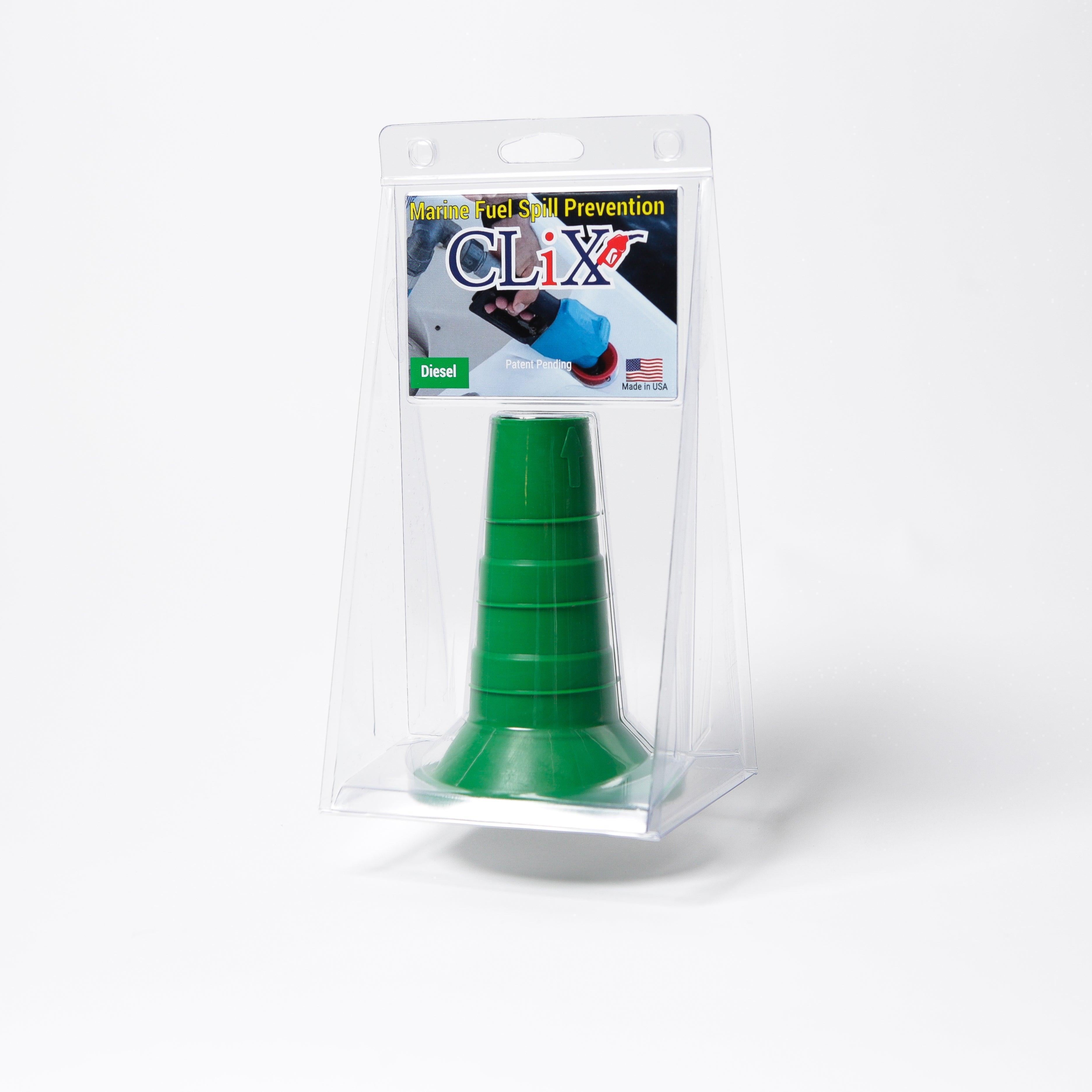
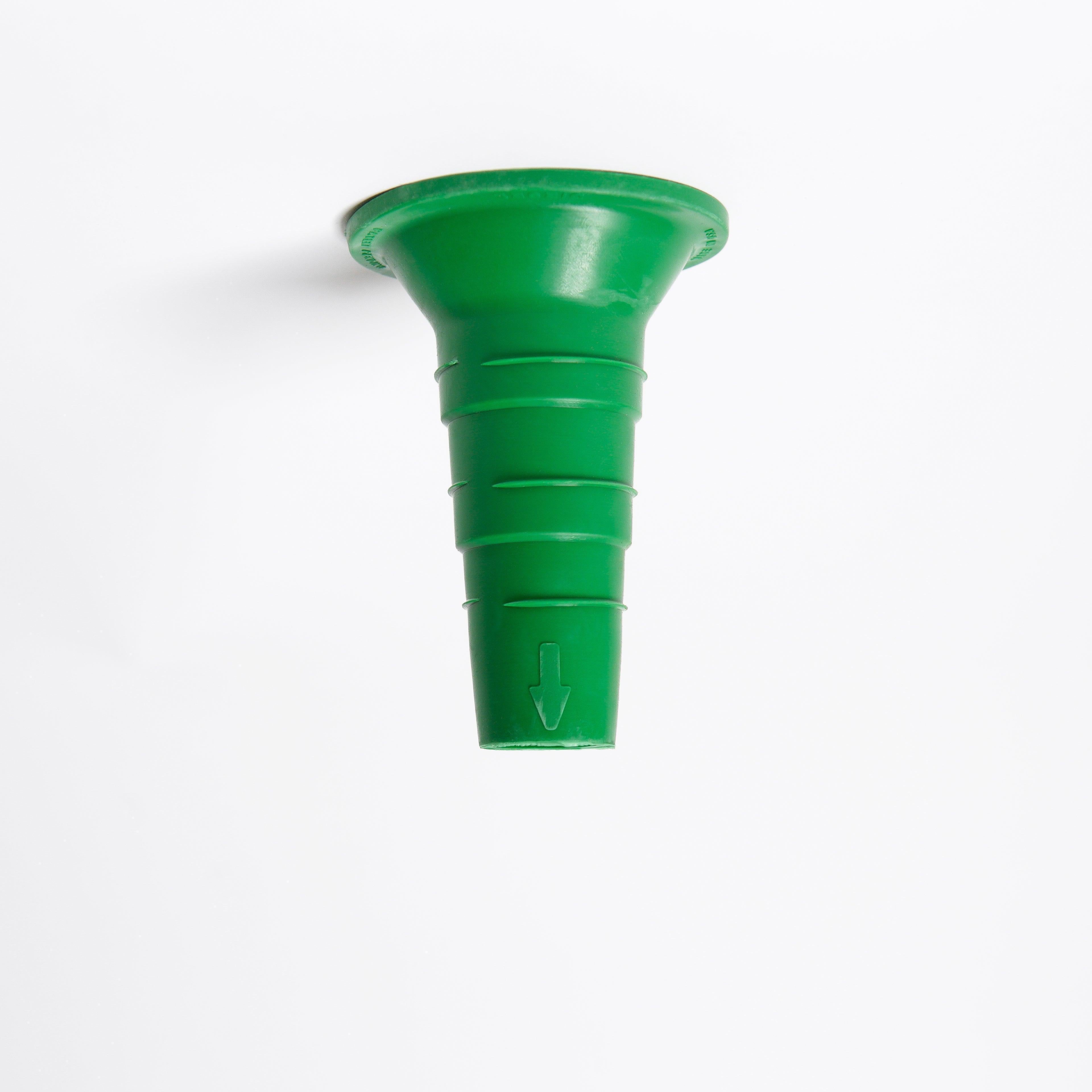
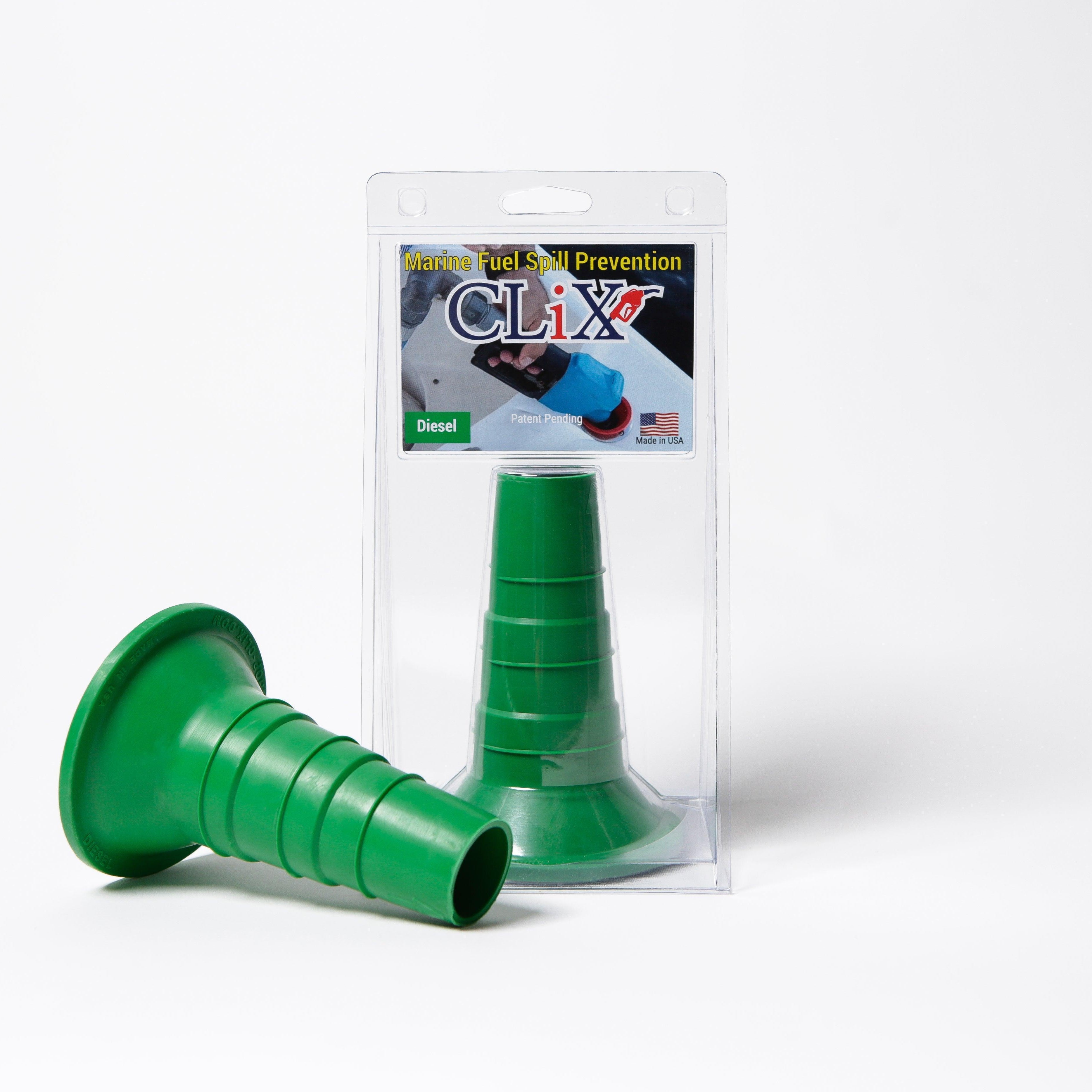
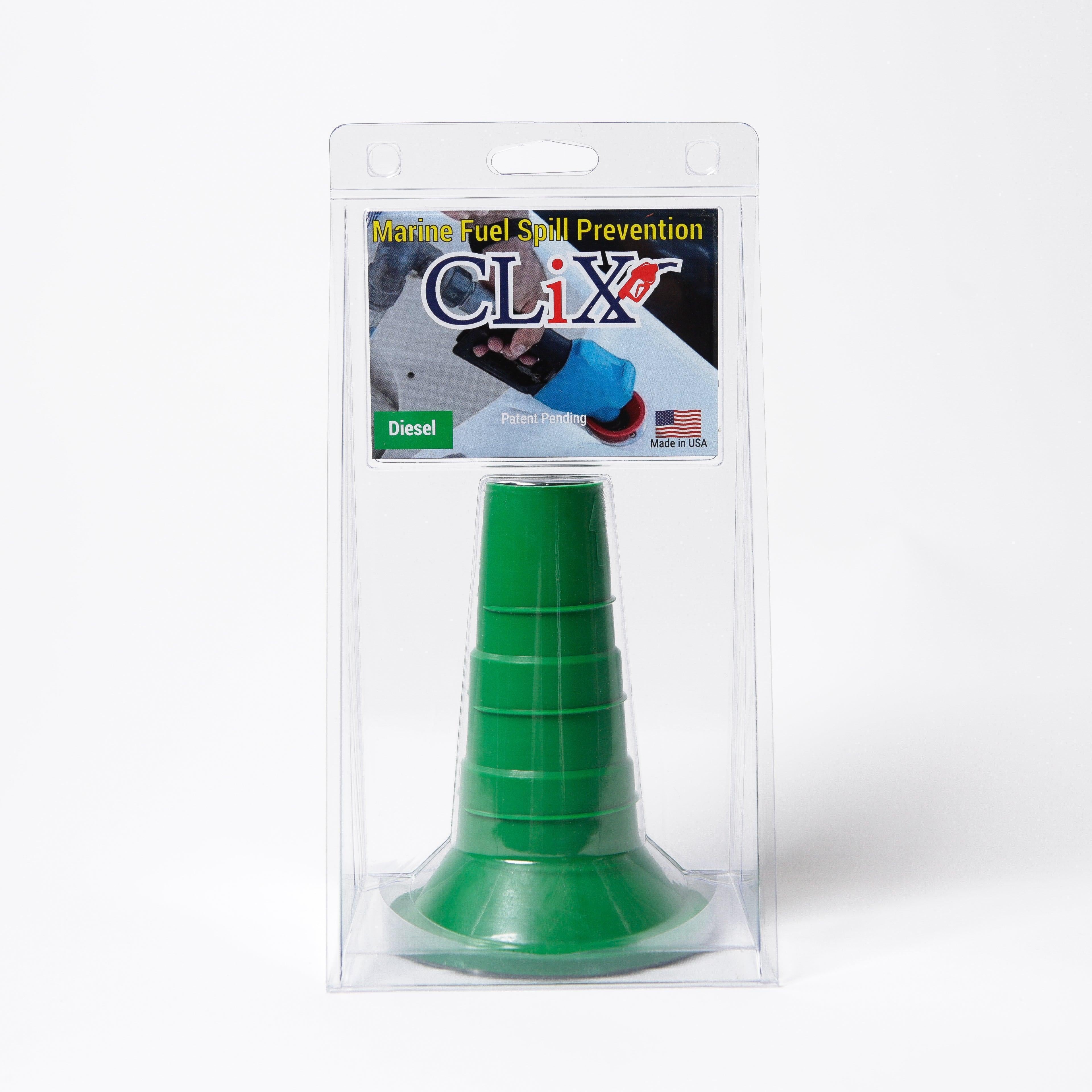
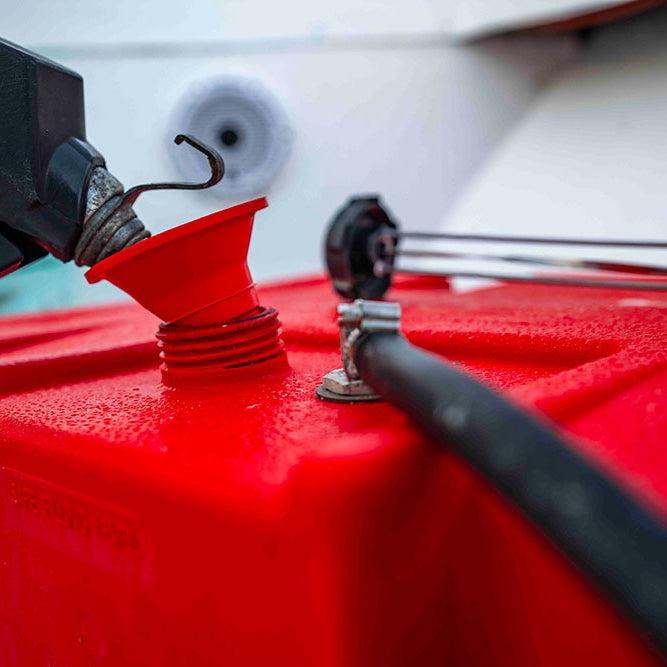
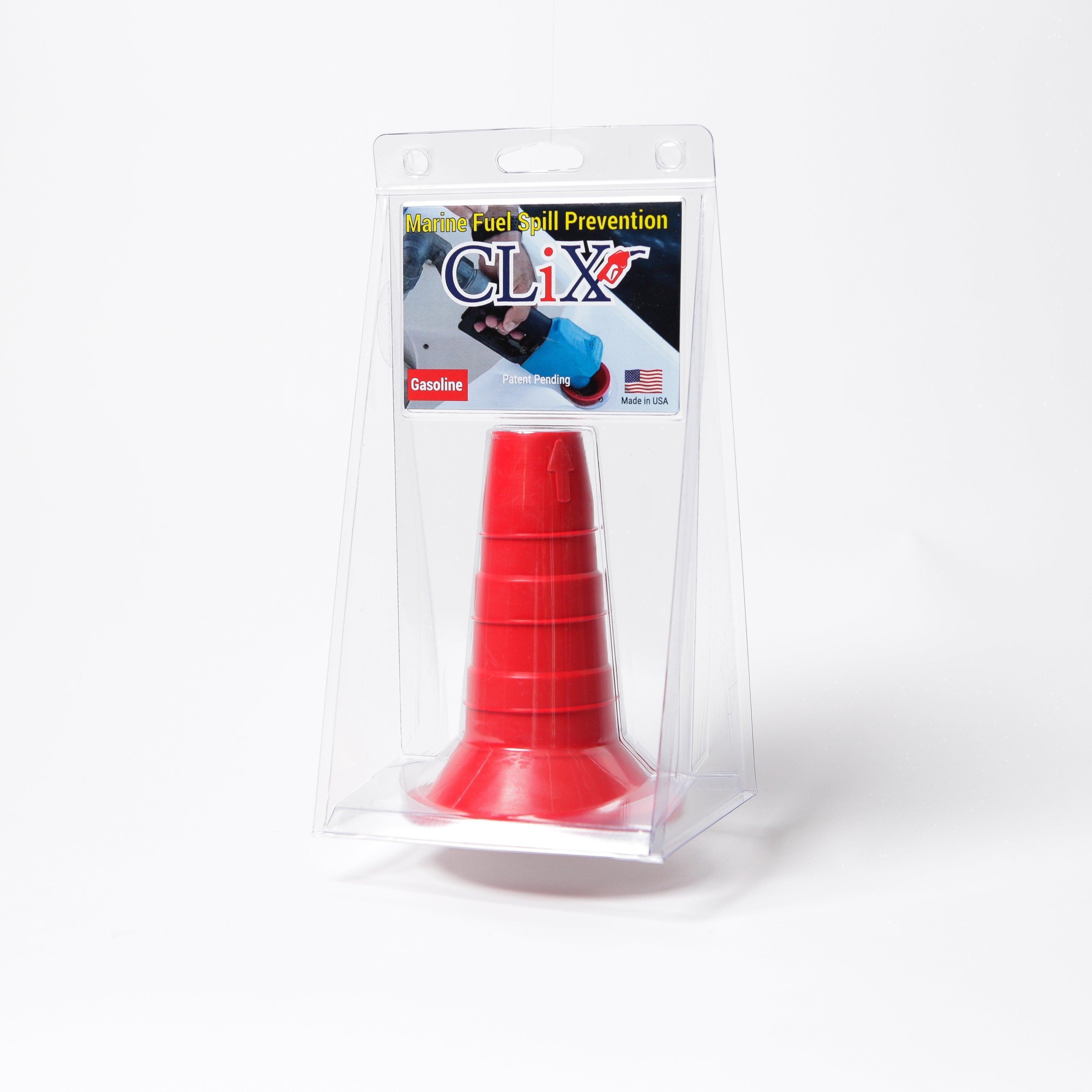
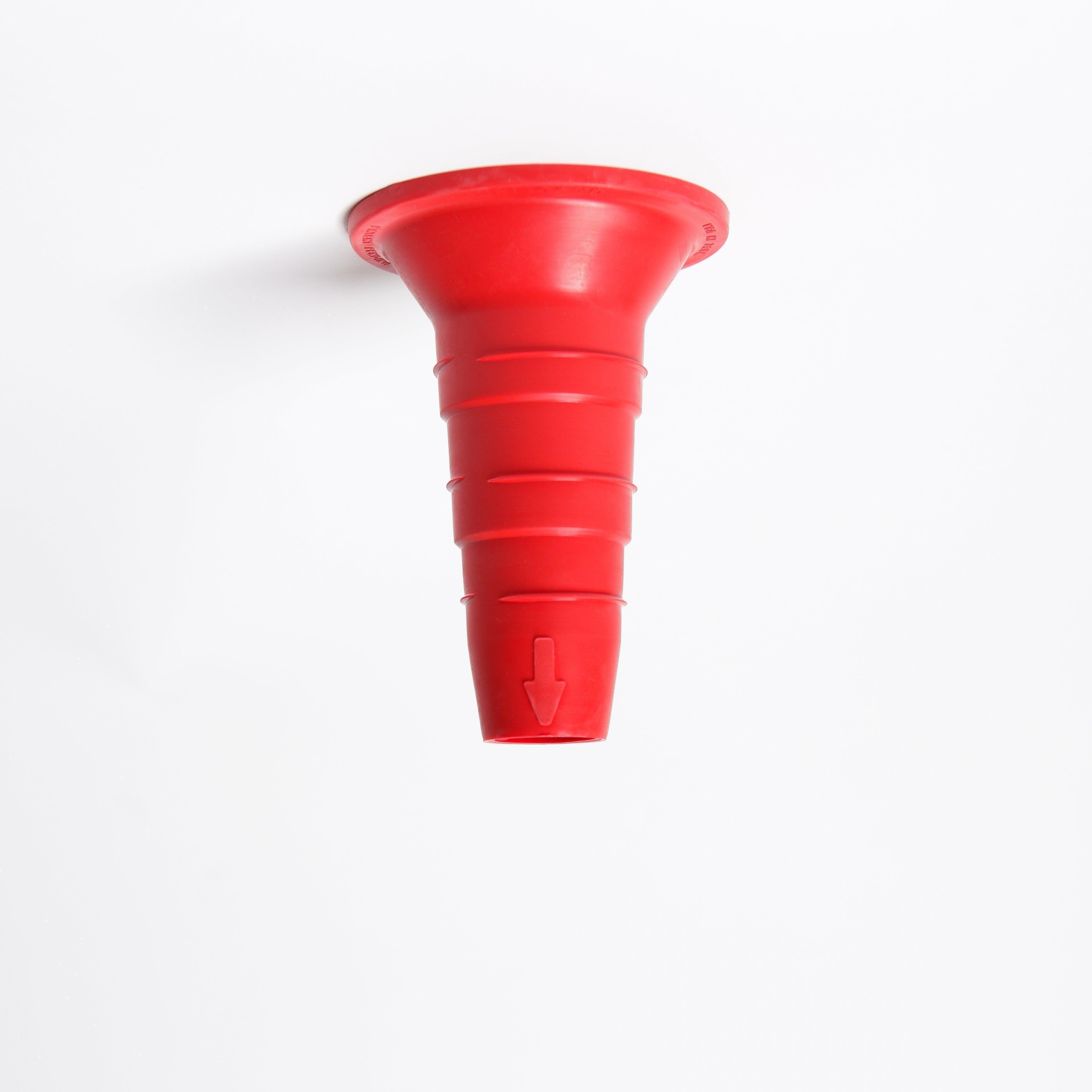
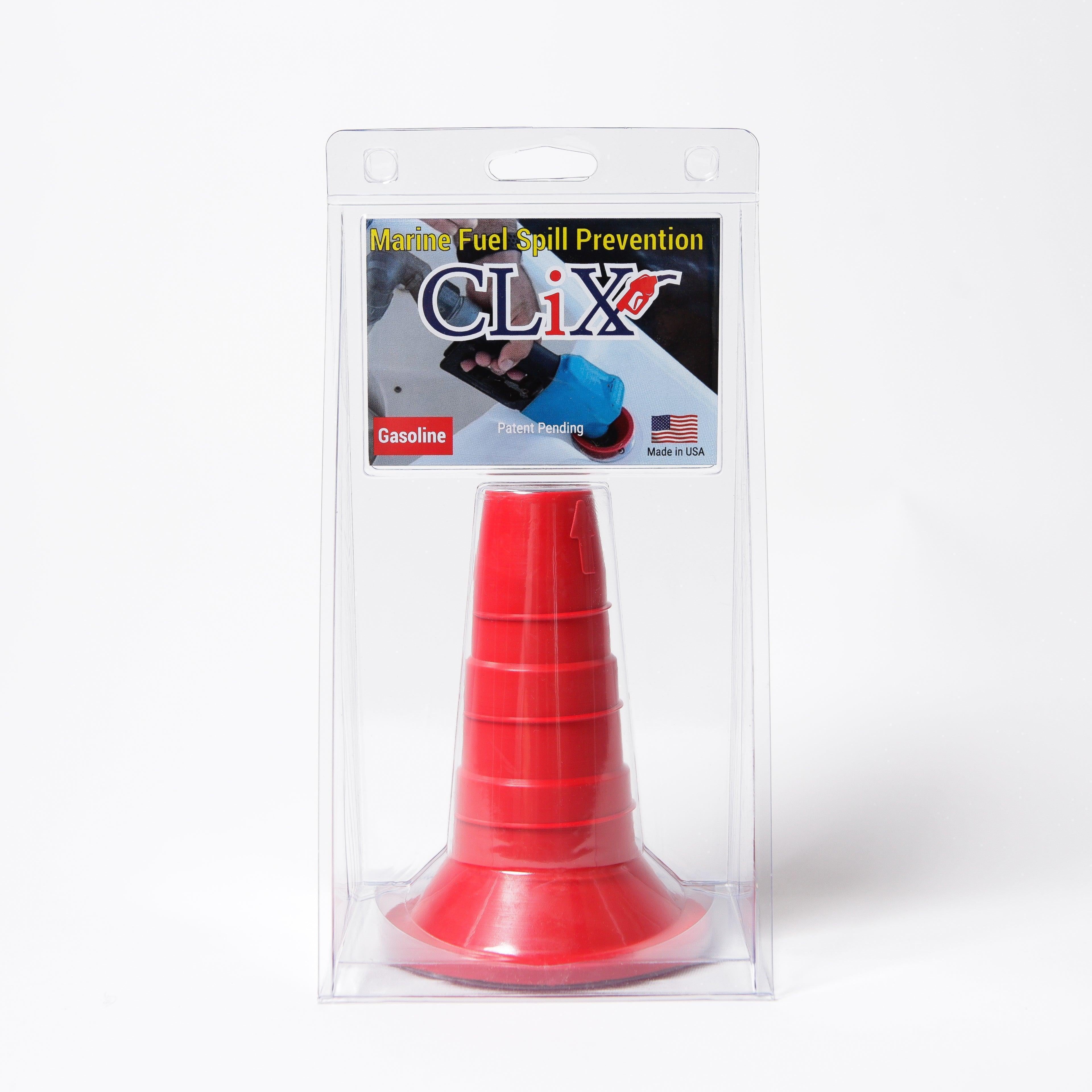
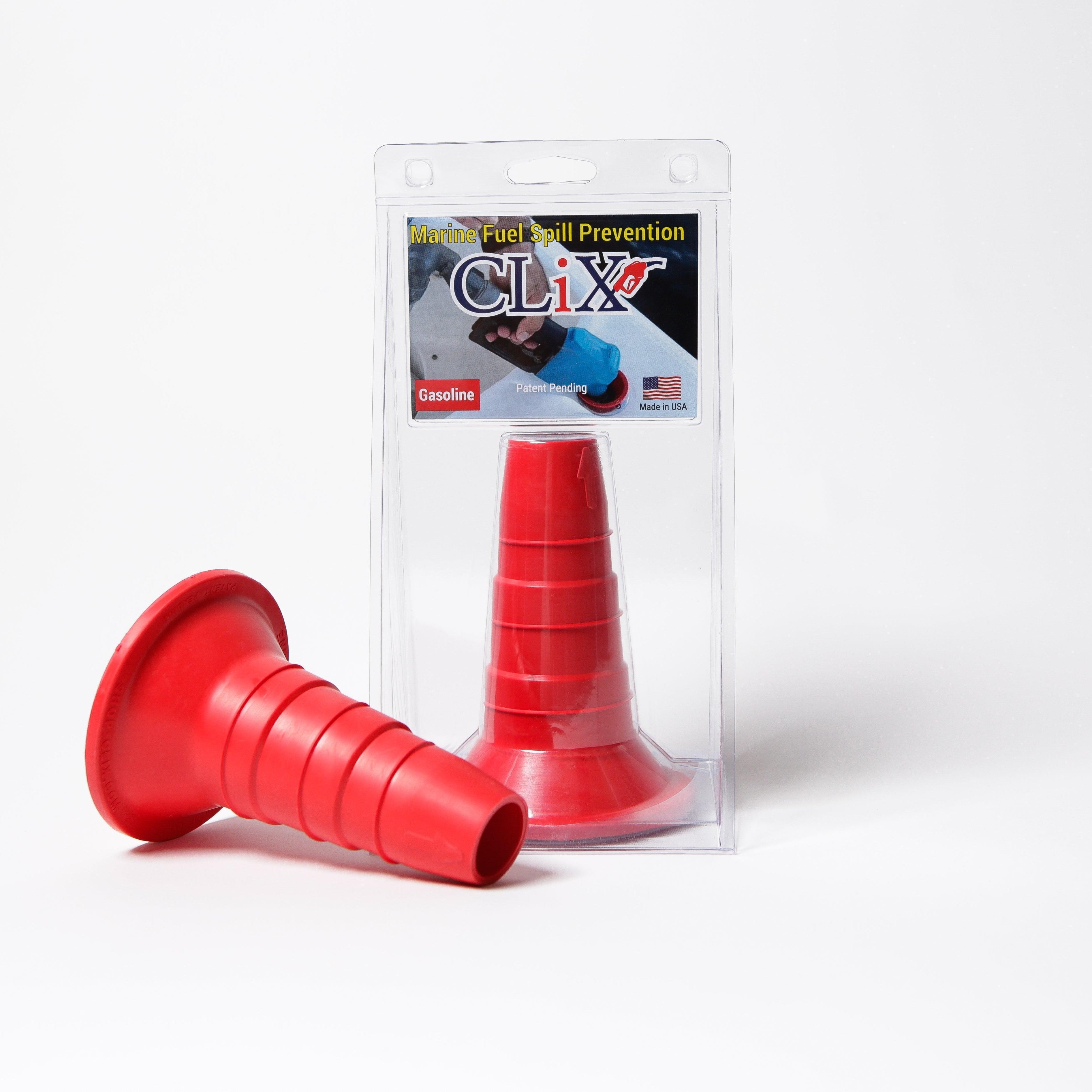
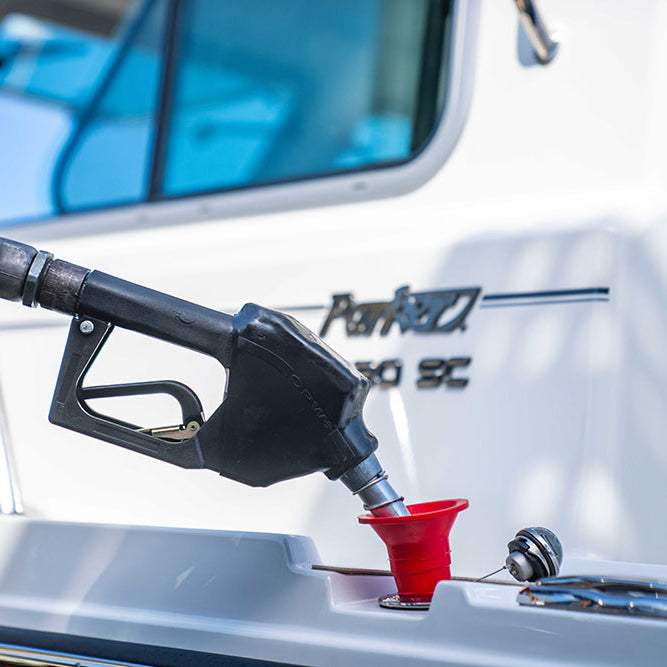
That's the very gap the CLiX fueling system was built to fill. It gives you a foolproof, automatic shutoff that stops the flow before an overfill can ever happen. It takes all the guesswork and stress out of trying to listen for that "gurgle" that tells you the tank is almost full.
Think of how these two tools fit into your overall boating strategy:
- Fuel Tank with Hand Pump: This is your go-to for siphoning fuel from a jerry can, priming a stubborn engine, or as your non-negotiable emergency backup if the power dies. It’s your problem-solver.
- CLiX System: This is what you use for every routine fill-up at the dock. It ensures fueling is safe, clean, and completely stress-free, protecting your boat and the environment from preventable spills.
By combining the rugged simplicity of a fuel tank with hand pump for specific jobs with the smart, automated safety of CLiX for regular fueling, you build a truly complete system. It’s about having the best of both worlds: old-school dependability when you need it and modern protection where it counts most. You get peace of mind, knowing you’re ready for anything.
How to Choose the Right Hand Pump for Your Boat
Picking the right hand pump for your boat isn't something you should do on a whim. It's a key decision that affects how safe, efficient, and hassle-free your time on the water will be. With so many options out there, it’s easy to get overwhelmed, but focusing on a few key things will help you land a reliable tool that’s a perfect match for your boat. A little thought now can save you a world of frustration later.
First Things First: Material Compatibility
Your number one priority has to be material compatibility. Fuel is nasty stuff—it corrodes and eats away at materials that aren't up to the job. The last thing you want is a pump that degrades and starts leaking fuel all over your deck.
- For Gasoline: You need a pump made from nitrile or other specialized plastics. These are built to handle the aggressive additives in modern gasoline without falling apart.
- For Diesel: While diesel is a bit less harsh, your pump still needs tough seals. Look for materials like Viton that won’t get brittle or break down from constant exposure.
Seriously, never use a pump for a fuel it isn't rated for. It's a huge safety gamble.
Does the Pump’s Performance Fit Your Boat?
Next up, think about how much fuel you'll be moving and how quickly you want to do it. A pump's flow rate, often measured in gallons per minute (GPM) or strokes per gallon, tells you a lot about its performance.
If you just need to top off a small dinghy with a gallon or two, a simple little siphon pump will do the trick. But if you're trying to transfer fuel on a larger boat, a more powerful rotary or double-action piston pump will get the job done without giving you a workout.
Don’t forget about the physical size. Make sure the hose is long enough to easily reach from your fuel can to your boat’s tank without being pulled tight or kinking. The hose diameter matters, too—a wider hose usually means a faster flow, but it can also be tougher to get primed and pumping.
It's clear that boaters are taking this seriously. The demand for safe and reliable fueling gear has skyrocketed. The global fuel transfer pump market has ballooned from USD 1.71 billion to USD 6.49 billion, and North America makes up nearly 27% of that. That’s a massive jump, showing just how important this equipment has become.
Comparing the Different Pump Styles
Hand pumps generally fall into a few common categories, and each one has its own set of pros and cons. Knowing the difference is key to making the right call.
- Siphon Pumps: These are the most basic option, usually just a hose with a squeeze bulb to get things started. They're cheap and perfect for small, infrequent fuel transfers.
- Lever-Action Piston Pumps: A solid step up. These give you more power and better control, making them a great middle-of-the-road choice for boaters who need a bit more muscle.
- Rotary Pumps: If you're moving a lot of fuel, this is what you want. You turn a crank, and it delivers a smooth, steady flow. They make big jobs much, much easier.
Want to see some specific recommendations? Check out our guide on the top manual transfer pumps for fuel in 2025. And while fuel pumps are a special case, it can be interesting to see how the basic principles apply across other tools by looking into manual pump sprayer technology.
By taking the time to weigh these factors—the materials, the flow rate, and the pump style—you can find a hand pump that you can count on for years of service.
Safe and Responsible Manual Fueling Practices
When you’re handling fuel, there’s no room for error. It demands your full attention and a healthy respect for its dangers. Whether you're using a fuel tank with a hand pump for a small top-off or an emergency transfer, following a strict safety protocol is non-negotiable. It’s about protecting yourself, your boat, and the water we all enjoy.
Your first and most important rule is to kill any potential ignition sources. Gasoline fumes are sneaky—they're heavier than air and can creep along the deck, looking for a spark you might not even see. Before you start, shut down engines, generators, and all electrical gear. That also means no smoking, and make sure any open flames from the galley are completely out.
Good ventilation is your best friend here. Always fuel up in an open area where fumes can dissipate safely. Never, ever try to transfer fuel in a closed cabin or a poorly ventilated space where vapors can concentrate. A good pair of nitrile gloves and some safety glasses will also protect you from splashes and skin contact.
A Step-by-Step Safety Checklist
To keep things safe and simple every time, just run through this quick checklist. It breaks the process down, making it much harder to miss a critical step.
- Get Ready: Before you even think about unscrewing a fuel cap, have absorbent pads or a spill kit right next to you.
- Stay Grounded: Keep one hand in contact with the fuel can and the other on the boat's fuel deck plate. This simple action prevents static electricity from building up and creating a spark.
- Pump Slowly: This isn't a race. A smooth, steady pumping motion is what you want. It minimizes splashing and lets you keep a close eye on the fuel level.
- Use Your Ears: Listen to the sound of the fuel going into the tank. You'll hear the gurgling sound change as it gets close to full—that's your cue to slow down.
- Clean Up Spills: If you do have a small drip or spill, wipe it up immediately with your absorbent pads. Make sure you dispose of them properly according to your local marina or waste regulations.
Choosing the right pump is the first step toward a safe transfer, and this flowchart breaks down the decision-making process.
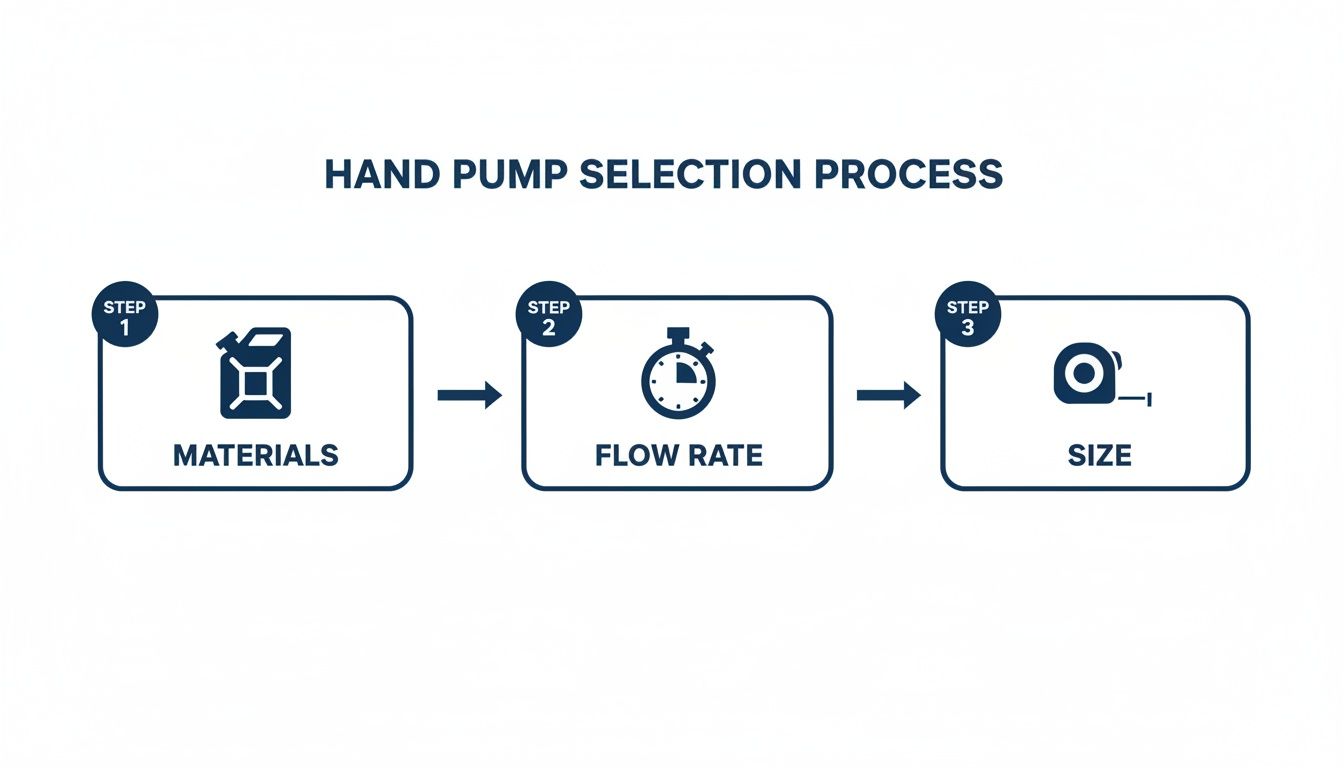
As the visual guide shows, getting the material, flow rate, and size right is the foundation for an effective and safe manual setup.
Reducing Risks with Modern Tech
Even if you follow every rule perfectly, the risk of a spill from manual pumping is always there. All it takes is a moment of distraction. This is where newer technology provides a safety net that older, manual methods just can't match. To get a better feel for your boat's plumbing, it's a good idea to understand the components of a standard marine fuel fill system.
The biggest weakness of manual fueling is that it’s 100% dependent on human attention. There’s no automatic shut-off to save you if you get distracted or guess the tank’s remaining capacity wrong.
This is exactly why systems like CLiX are gaining ground. The CLiX device gives you that automatic shutoff, stopping the fuel flow from the marina pump the second your tank is full. It’s a simple, foolproof safeguard that prevents the very spills we try so hard to avoid with manual pumping, protecting both your boat and the marine environment.
Keeping Your Hand Pump in Top Shape
Your fuel tank with a hand pump is one of those simple tools that just needs to work when you need it. Think of it like a spare tire—you don't use it every day, but when you do, it has to be reliable. A little bit of attention to its setup and a simple maintenance routine are all it takes to make sure it's ready for action, especially in a pinch.
Getting it set up correctly from the start is half the battle. For most portable pumps, this is a quick job. Just attach the intake and outlet hoses securely. The most important thing here is to make sure those connections are completely airtight. Even a tiny air leak can kill the vacuum the pump needs to pull fuel, leaving you high and dry.
Make sure the intake hose is long enough to hit the bottom of your fuel can and the outlet hose can easily reach your boat's fuel fill. You don't want it stretched tight or, even worse, kinked. A sharp bend in the hose is a classic rookie mistake that will stop fuel flow dead in its tracks.
A Simple Routine for Long-Term Reliability
Consistent upkeep is what makes a tool dependable. The whole idea is to keep the pump’s insides clean and its seals and hoses in good shape. Fuel, especially modern blends with ethanol, can be pretty tough on rubber and plastic parts over time, causing them to degrade.
Regular inspections are your best friend. A quick once-over before and after you use the pump can help you spot small issues before they turn into major headaches out on the water.
Here’s what to keep an eye on during your check:
- Hoses: Feel for any cracks, brittle sections, or mushy spots. UV rays from the sun are notorious for breaking down hoses, making them likely to split.
- Seals and Gaskets: Look for any signs of drying out, cracking, or swelling where the parts connect. A bad seal isn't just a leak; it's a serious fire hazard.
- Pump Body: Check the main housing for any cracks or damage. You don't want the body to fail under pressure.
To make this even easier, here’s a simple checklist you can follow.
Your Hand Pump Maintenance Checklist
A quick, regular check is the best way to ensure your pump is always ready to go. Use this table as a guide for your inspections.
| Check Point | Recommended Action | Frequency |
|---|---|---|
| Hoses | Visually inspect for cracks, brittleness, or kinks. Squeeze gently to check for soft spots. | Before and after each use |
| Connections | Ensure all hose clamps and fittings are tight and secure. Check for any signs of weeping fuel. | Before each use |
| Seals & Gaskets | Look for cracking, drying, or swelling around all connection points. | Monthly and after use |
| Pump Action | Give the pump a few test squeezes (without fuel) to ensure it moves smoothly. | Before each use |
| Cleaning | Drain all residual fuel from the pump and hoses completely. | After every use |
| Storage | Store in a cool, dry, ventilated area away from sunlight, inside a sealed container. | After every cleaning |
Following these simple steps will dramatically extend the life of your pump and give you confidence that it will work when it matters most.
Post-Use Care and Smart Storage
Once you're done transferring fuel, don't just toss the pump in a locker. Take a minute to clean and store it properly. First, drain every last drop of fuel from the pump and hoses. Leaving fuel inside is not only a safety risk but also speeds up the breakdown of the internal parts.
Properly storing your pump is just as important as cleaning it. A pump left out on the deck, exposed to sun and salt spray, will have a drastically shorter lifespan than one stored correctly.
Find a cool, dry place with good airflow for storage, far away from direct sunlight or any potential spark sources. A great habit to get into is placing the clean, dry pump and its hoses inside a sealed, fuel-resistant bag or container. This little step helps contain any lingering fumes and protects your essential fuel tank with hand pump from getting banged up, making sure it’s always ready for its next job.
The Future of Boating Beyond the Hand Pump
While a trusty fuel tank with a hand pump will always have a spot in a boater's emergency kit, the future of marine fueling is clearly steering toward something better. We're moving towards greater safety, more convenience, and a bigger sense of environmental responsibility. New ideas are changing how we refuel, driven by a real demand for smarter and cleaner ways to get things done on the water.
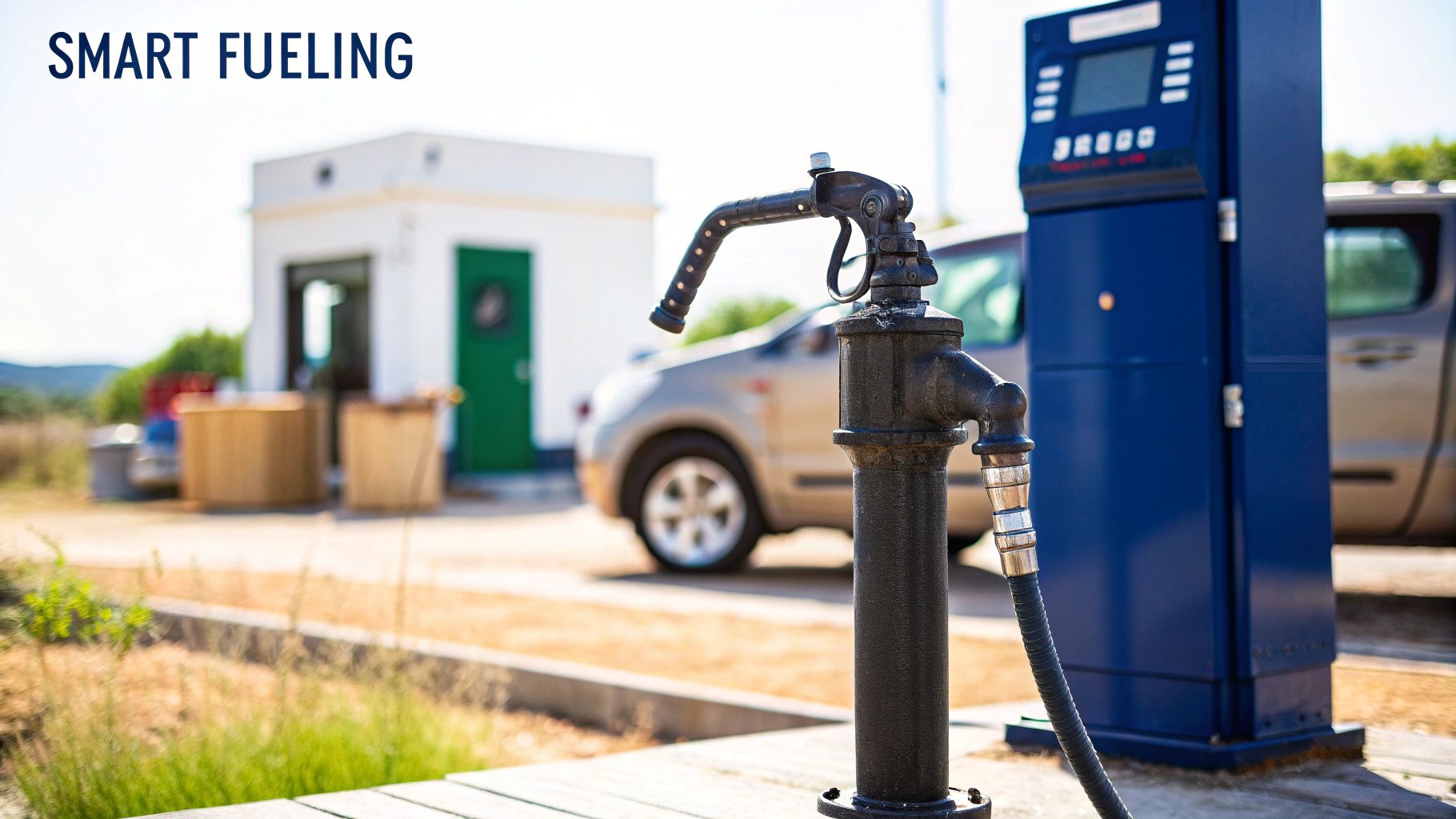
This shift isn't just a matter of preference; it's happening across the entire market. The whole fuel transfer industry is growing, pushed forward by automation, digital tools, and a stronger environmental conscience. Key trends point toward adopting better technology to meet tougher regulations and using automated systems to cut down on human error. You can read more about these market shifts in fuel transfer pump technology.
Setting a New Standard for Marina Fueling
This is exactly where smart, automated technologies are making their mark. Systems like CLiX Fueling Solutions are leading the charge, directly tackling the biggest headaches and risks that come with old-school fueling methods. A hand pump demands your full attention to avoid a messy overfill, but CLiX offers an automatic shutoff that takes all the guesswork and stress out of the equation.
The core difference really comes down to proactive prevention versus reactive cleanup. A hand pump is a great tool for a controlled, manual job, but automated systems are built from the ground up to prevent the number one cause of fuel spills at the dock—the accidental overfill.
This distinction perfectly explains where both tools fit in a modern boater's arsenal.
-
The Hand Pump's Role: It's still your essential backup. It’s the perfect tool for specific jobs, like priming an engine or moving a small amount of fuel from a jerry can. Think of it as the reliable multitool for situations that need your direct control.
-
The CLiX System's Role: This is your go-to solution for every routine fill-up at the marina. Its whole purpose is to make each fueling event safer, cleaner, and completely spill-free, protecting both your boat and the water around it.
By having both on hand, boaters really get the best of both worlds. You have the self-reliant security of a manual pump for odd jobs and emergencies, plus the intelligent, automatic protection for everyday peace of mind at the fuel dock.
Got Questions? We've Got Answers.
Even something as simple as a fuel tank with a hand pump can leave you scratching your head. Let's clear up a few of the common questions we hear from boaters to make sure you're handling your fuel safely and getting the most out of your gear.
Can I Use the Same Hand Pump for Gasoline and Diesel?
You really shouldn't. Using the same pump for both gasoline and diesel is a recipe for cross-contamination, which can lead to some serious engine trouble down the line.
The best and safest approach is to have two separate pumps, one for each fuel type, and label them clearly. It completely removes the risk of a costly mix-up. If you find yourself in a real bind and have no other choice, you’d have to flush the pump thoroughly with a special solvent. But even then, there's no guarantee you'll get every last drop, so it's a risk not worth taking.
How Do I Start a Siphon with a Manual Pump?
Getting a siphon started with a manual pump is usually pretty straightforward. Most have a simple squeeze bulb or a plunger right on the hose.
Here’s how it works:
- Get the Hose in Position: Stick the intake end of the hose well into your fuel can.
- Give It a Few Pumps: Squeeze the bulb or work the plunger a few times. This is what gets the fuel moving up and into the hose.
- Let Gravity Do the Rest: Once the fuel gets past the highest point in the hose, gravity takes over. It'll create a steady flow as long as your fuel can is sitting higher than the tank you're filling.
Ready to make every fill-up at the dock spill-free and stress-free? Discover how CLiX Fueling Solutions provides an automatic shutoff for peace of mind. Learn more at clixfueling.com.